Saturday 6 April 2019
Morocco — Atlas Mountains & Sahara
About the Tour
In April 2019 we took a Nature tour put together by Spainbirds to the Atlas and deserts region. At the end of it we had two extra days in Marrakesh.
The information to prepare us for our trip received from Spainbirds was very good. It told us clearly what kind of temperatures to prepare for and there were five pages of traveller information provided both by PDF ahead of time, and printed in a book on arrival.
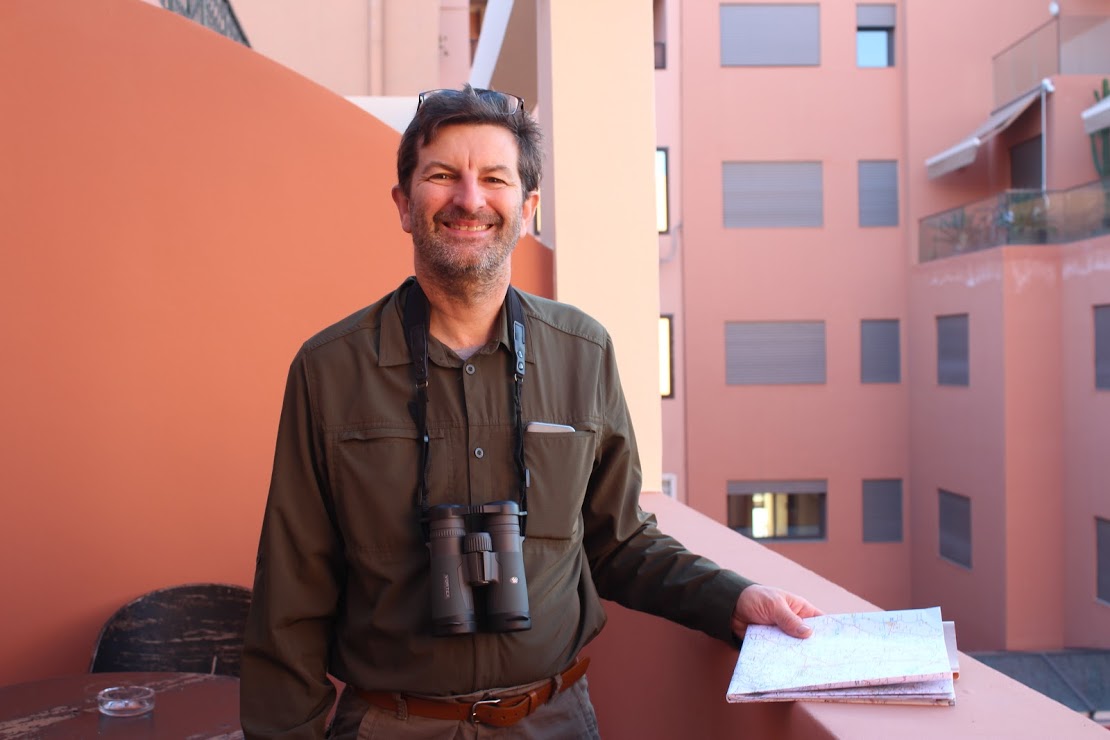
Our guide for the whole trip was John Muddeman — a very knowledgeable guide who made the trip the success it was.
Accommodation
We stayed in five hotels during our entire trip, returning to the first hotel in Marrakesh for the last four nights of the holiday.
Hotel Della Rosa, Marrakesh
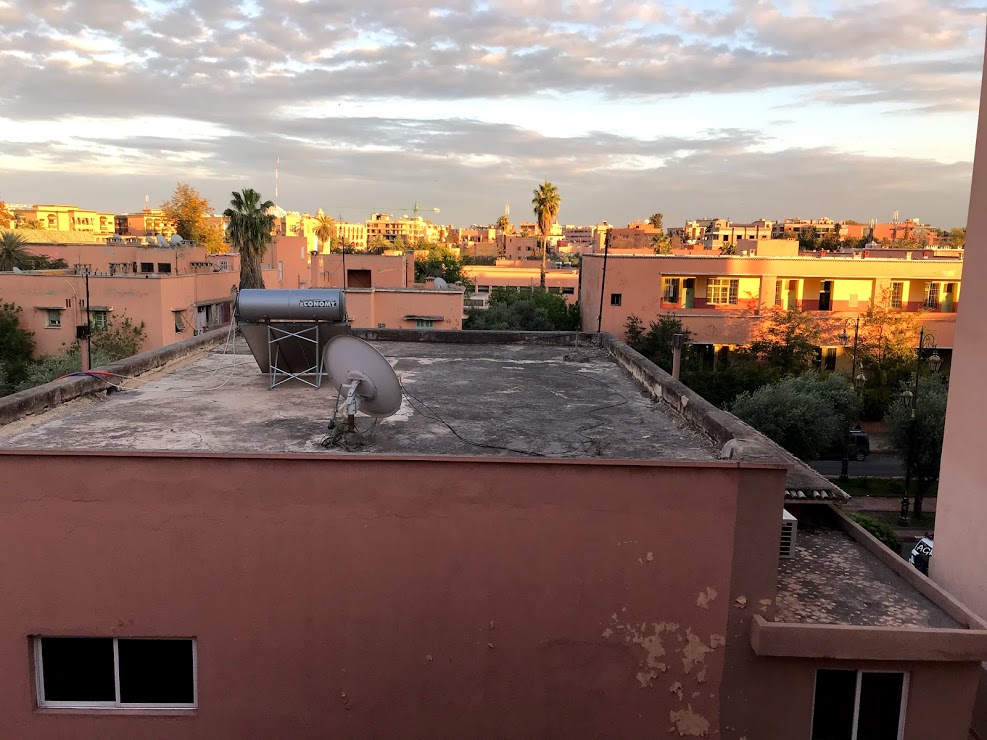
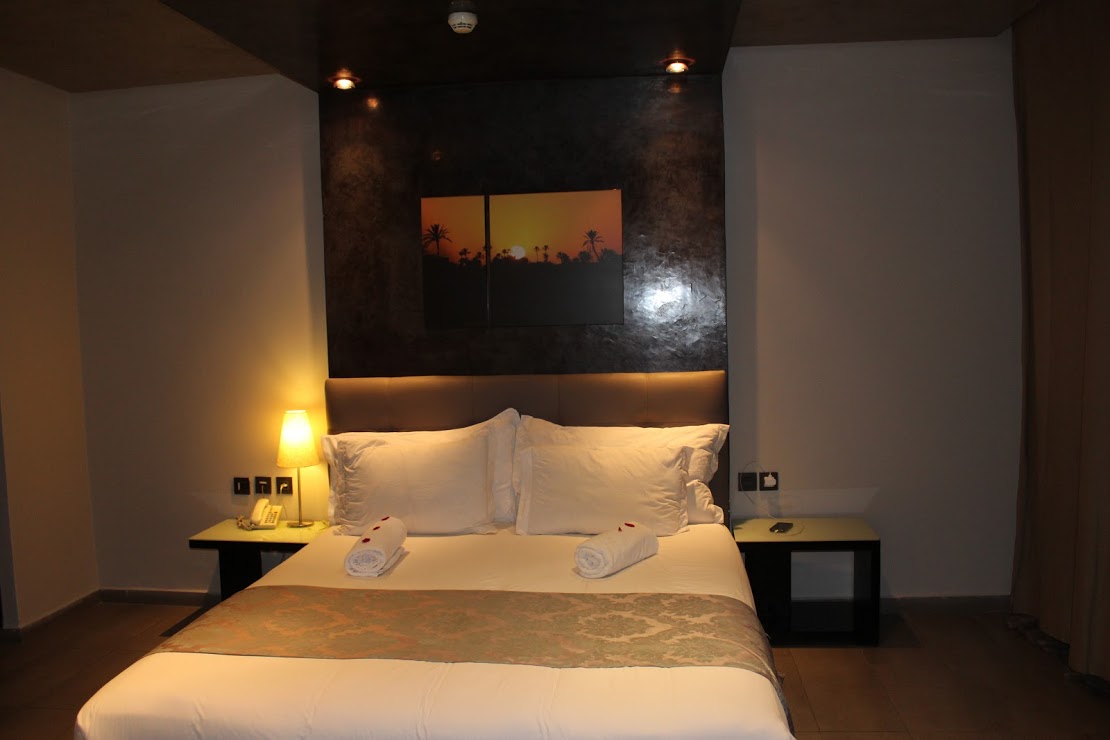
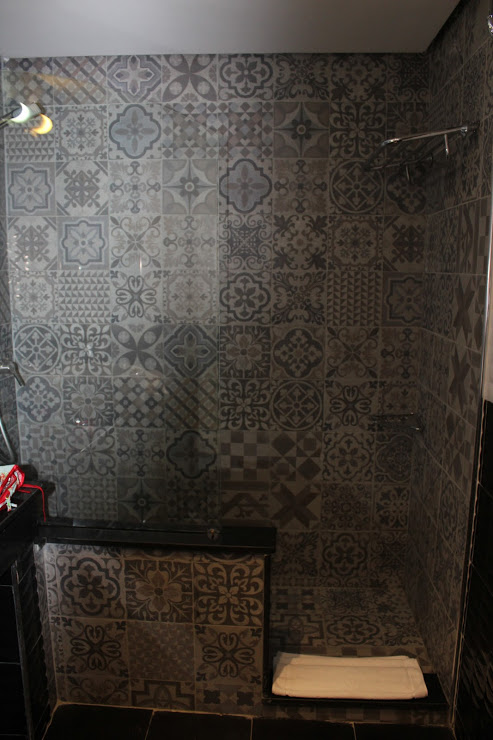
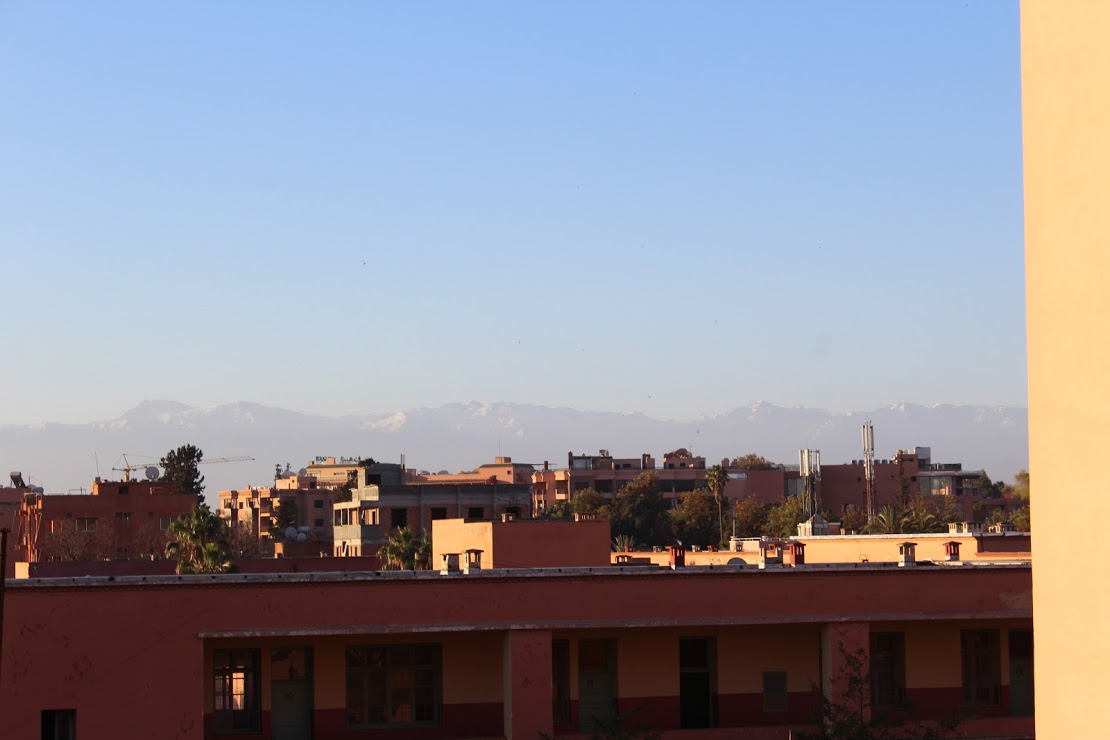
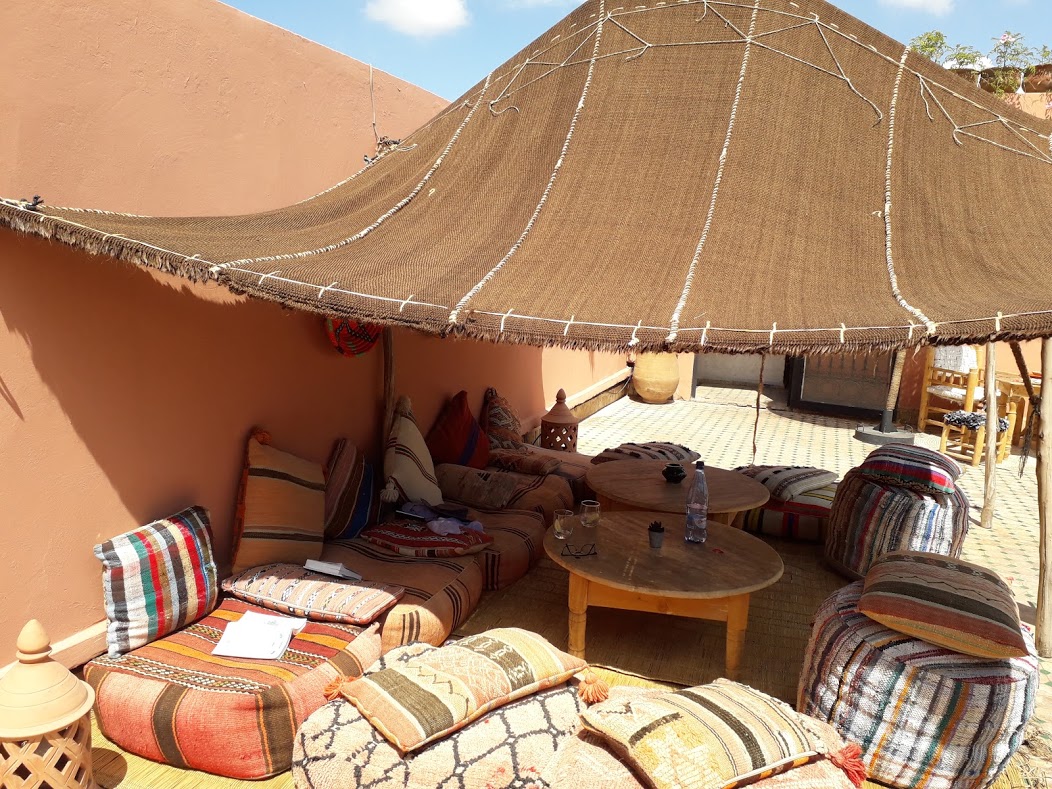
This hotel was lovely and we stayed for one night at the beginning of the trip and for four nights at the end. It felt like the best one of all of them, but that was because it was a city hotel and had plenty of facilities for weary travellers. There may have also been something in the fact we had a bit more time to spend there.
During our final few days at the Della Rosa we were able to enjoy the roof top garden and I took advantage of the spa and indulged in the Hammam experience.
Hotel Dar Chamaa, Ouarzazate
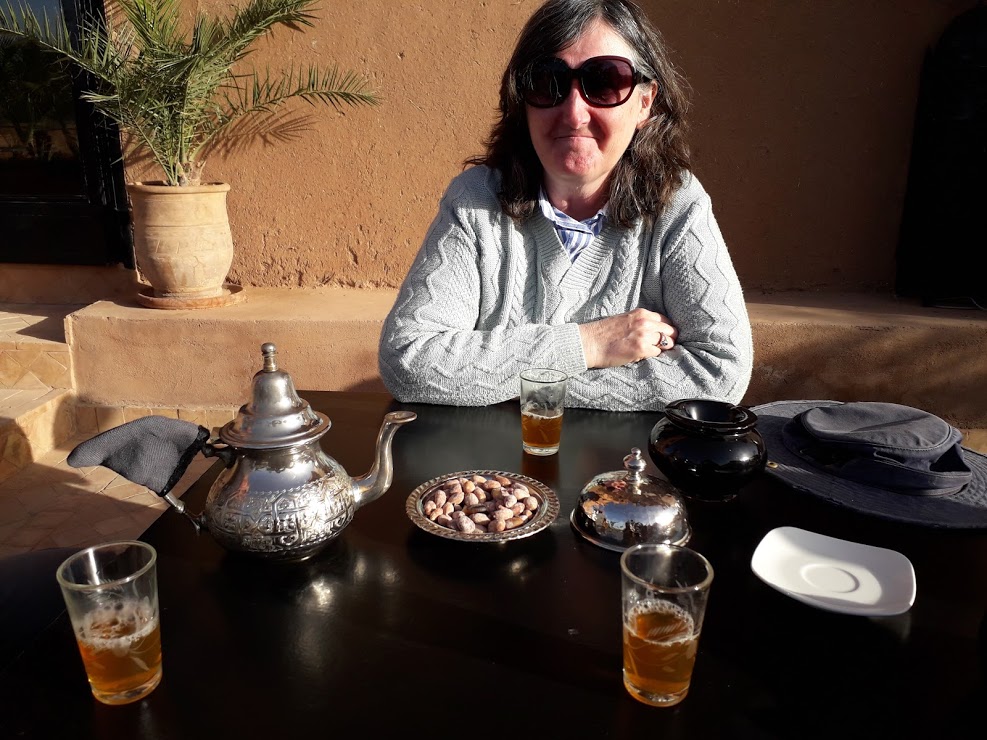
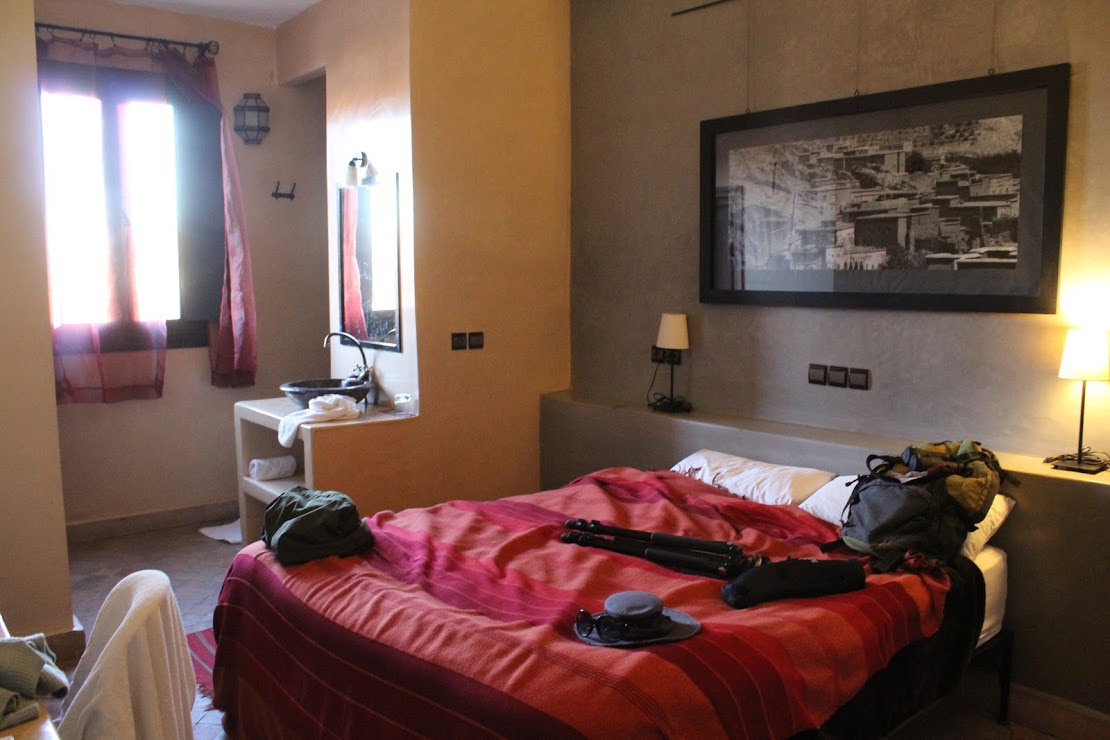
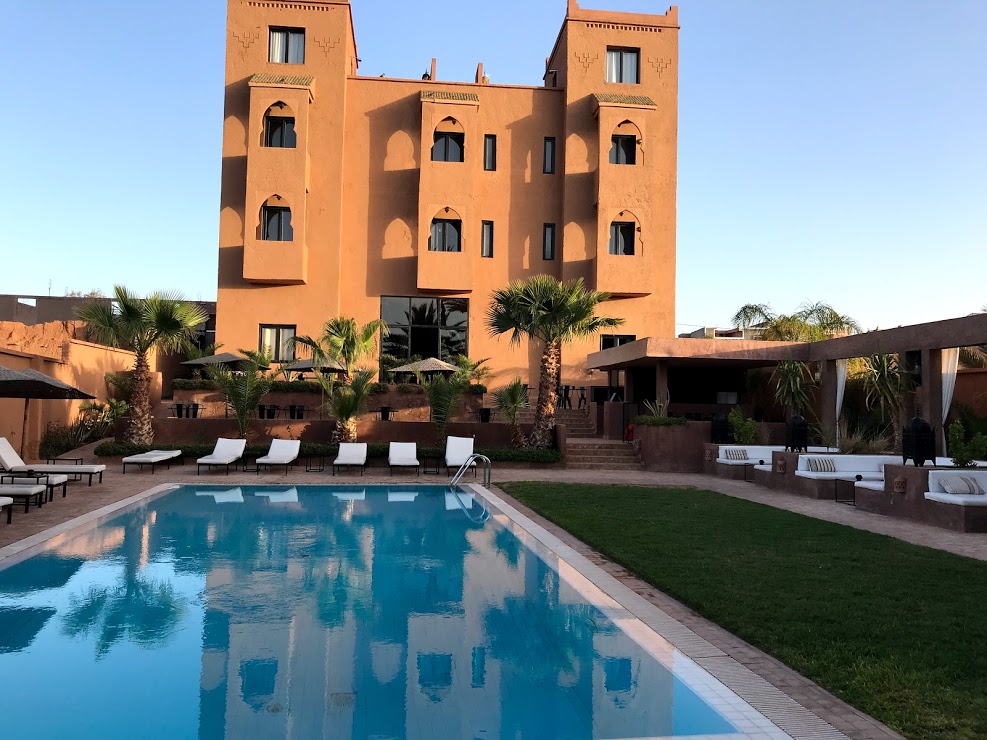
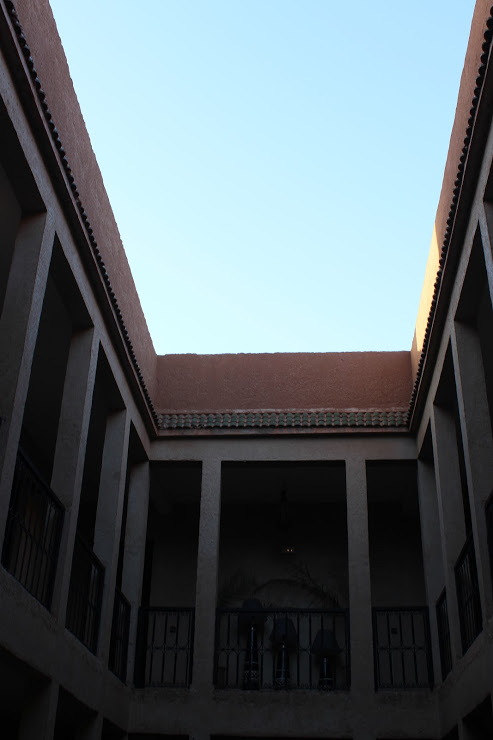
We did not have very long to enjoy this small hotel. We arrived early evening and were on our way again quite quickly the next morning.
Hotel Xaluca Dades, Boumalne Dades
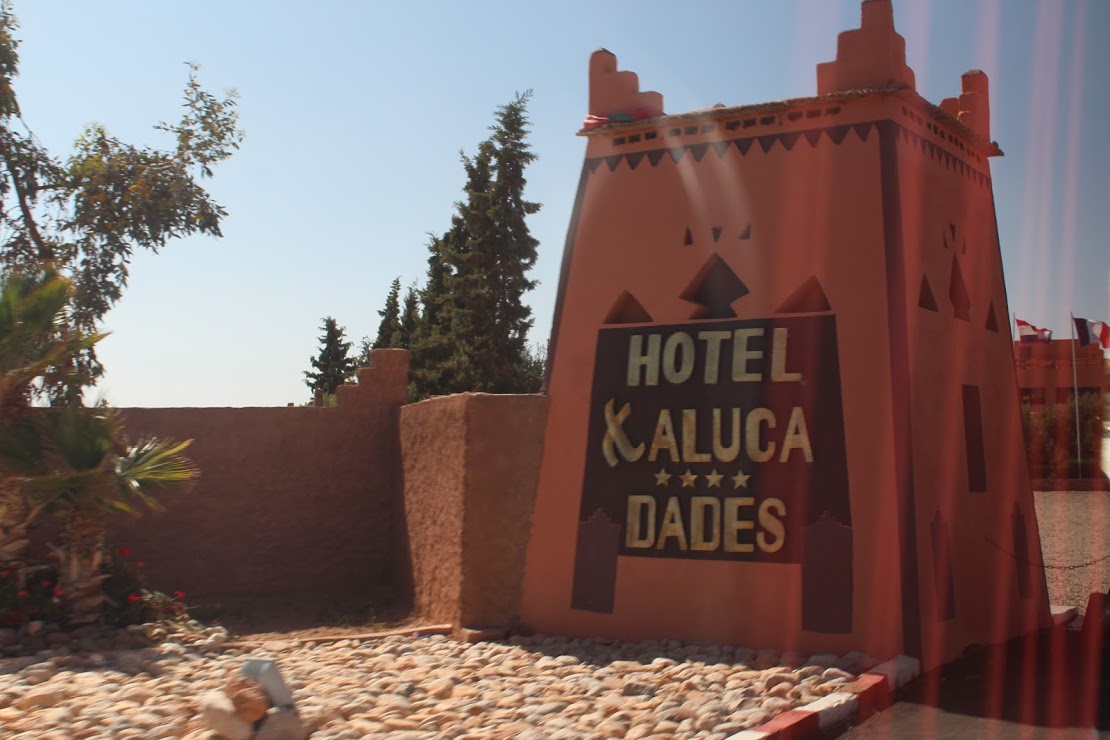
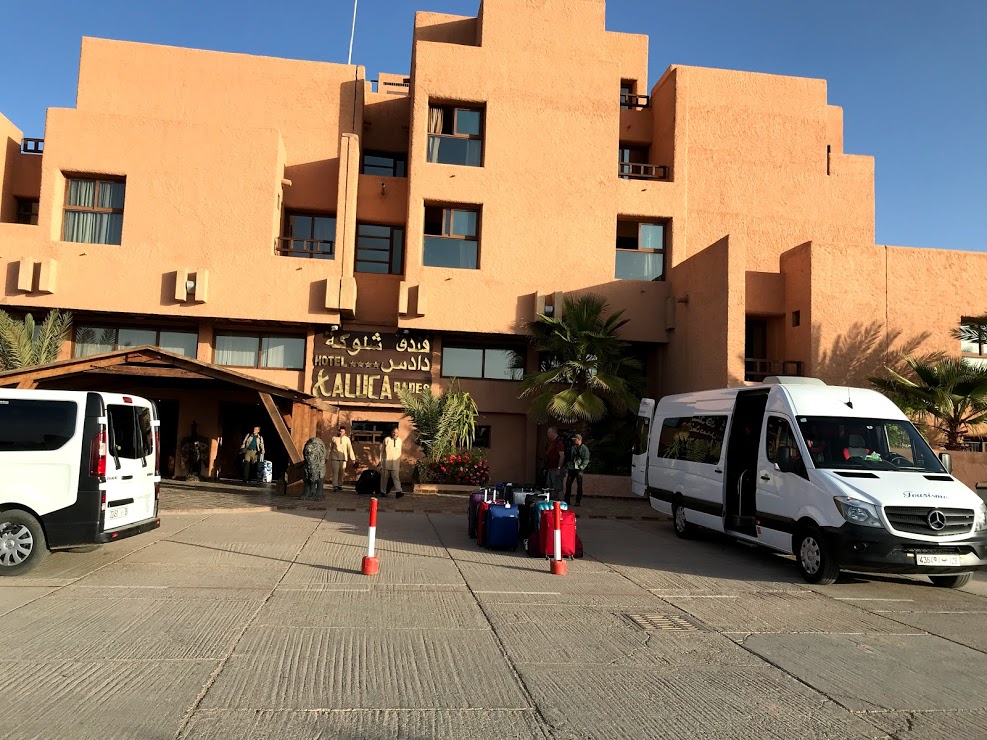
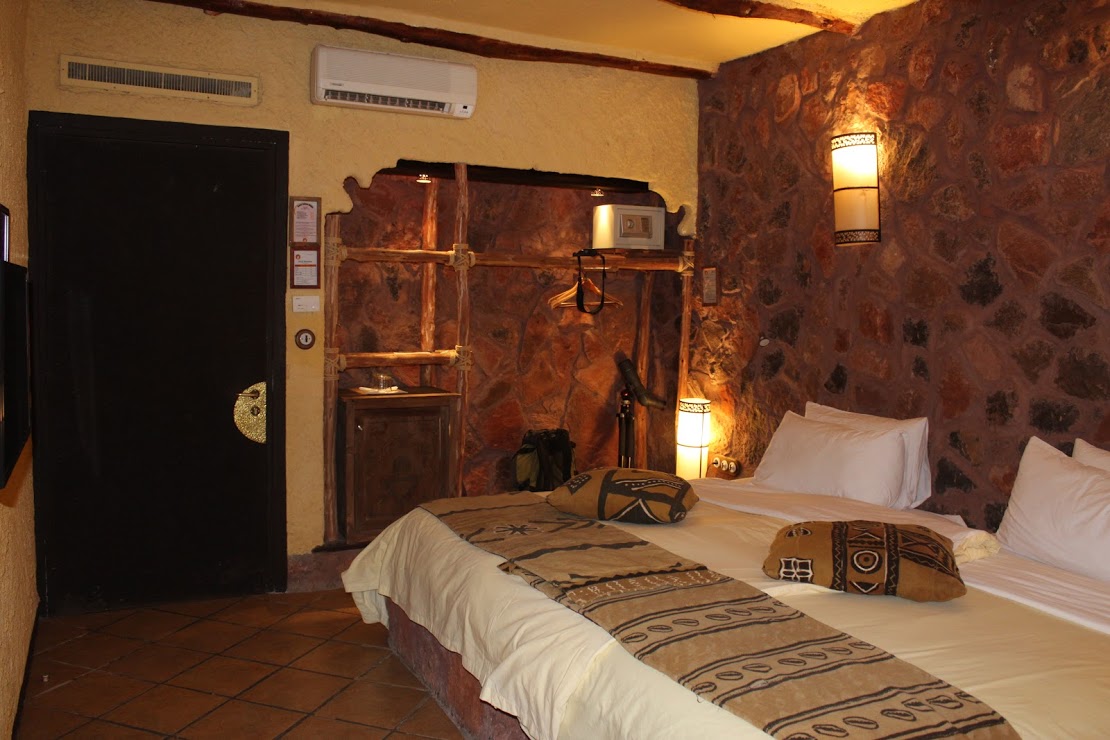
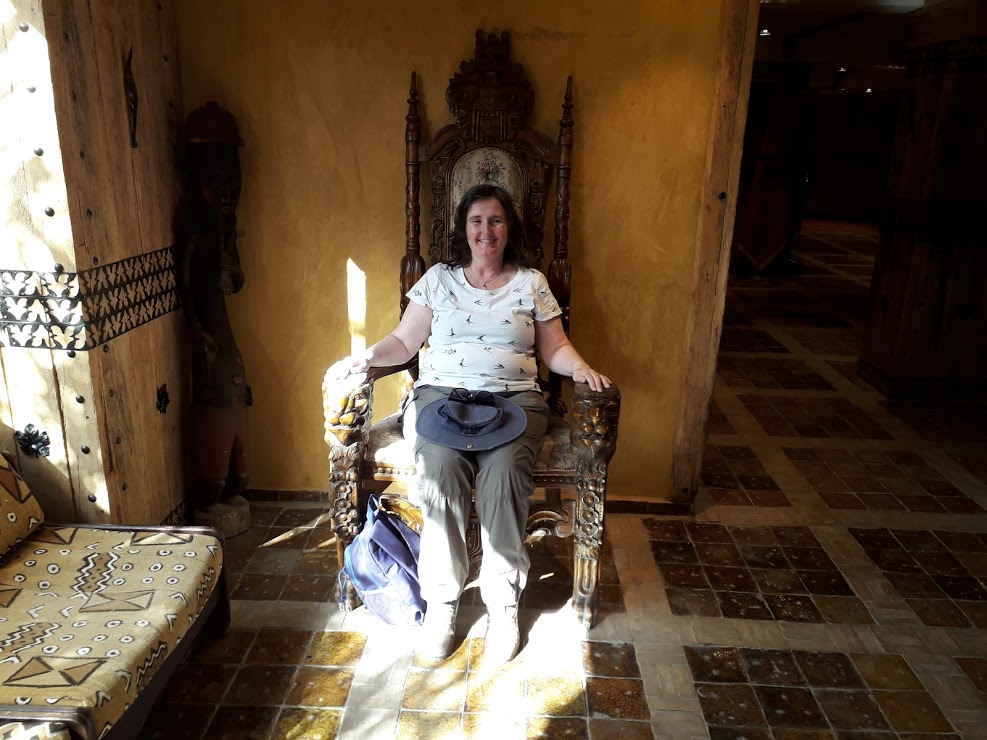
On arriving at this hotel, you are greeted at the door by three men banging drums and three girls singing. Inside the hotel the sink is made of copper — which is great to a point but it was corroding a bit by the plug hole which meant it leaked a bit when I used it.
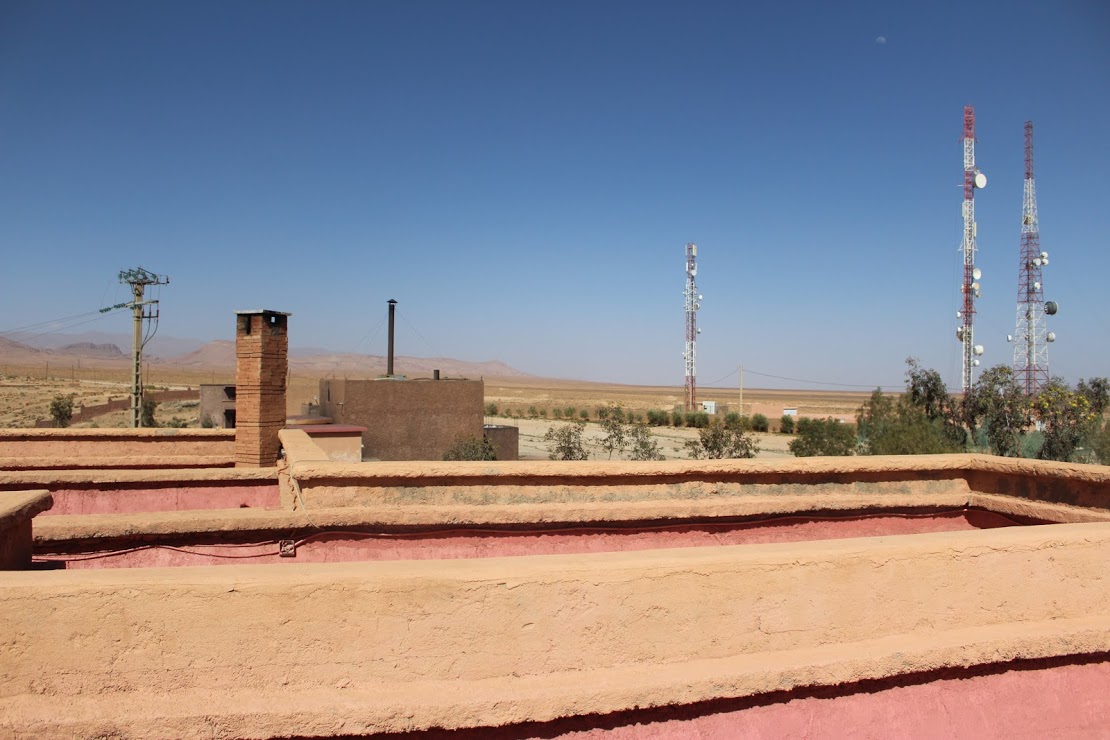
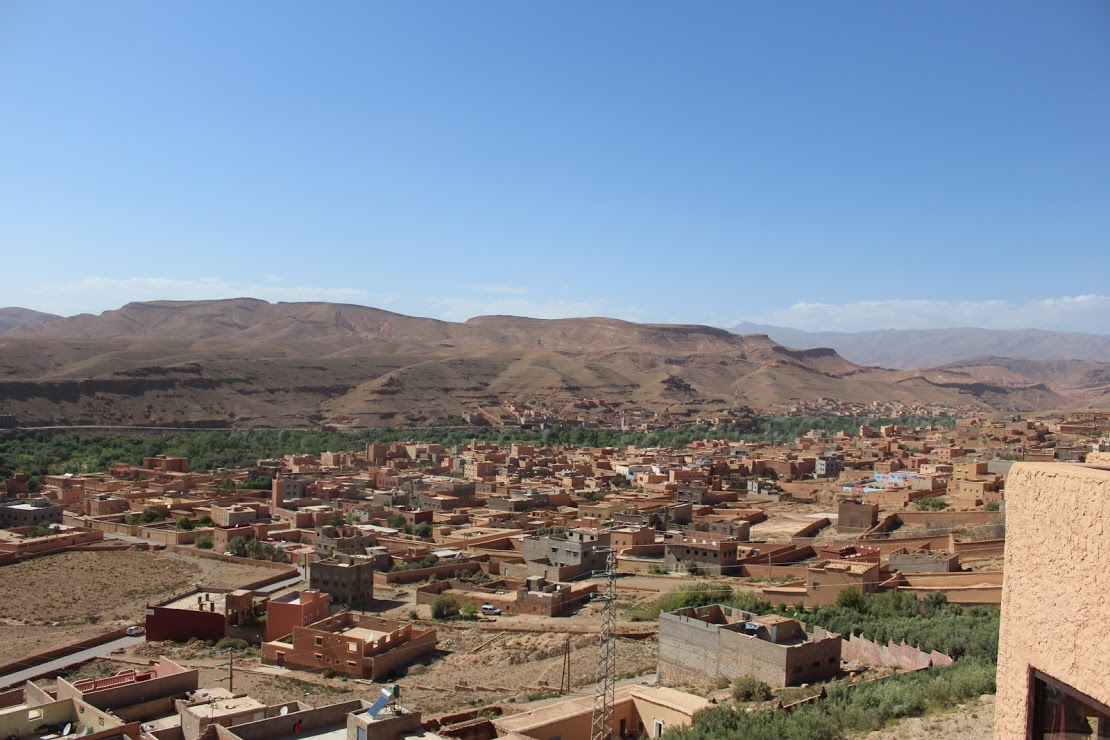
Two nights here allowed us to enjoy the facilities. The swimming pool felt quite cold but the outdoor jacuzzi was nice and warm. The views were amazing from the rooftop balcony. The hotel was obviously very popular as it was quite full when we were there — plenty of Spanish young people enjoying themselves.
Hotel Xaluca Tombuctou, Merzouga
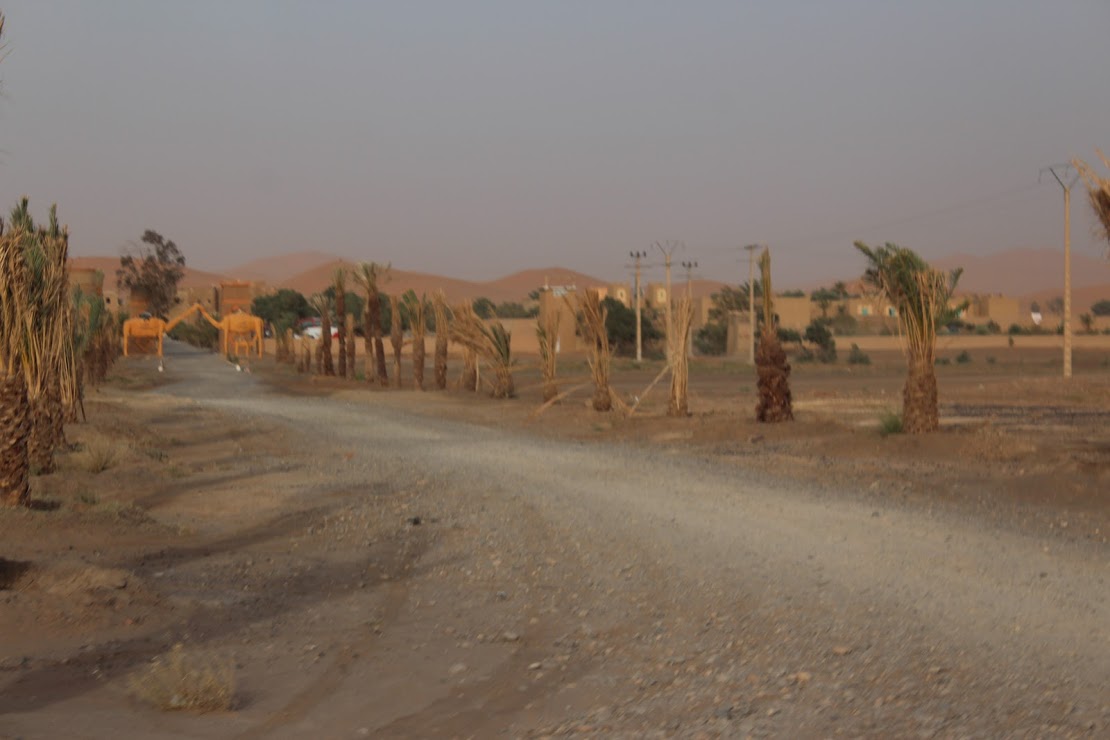
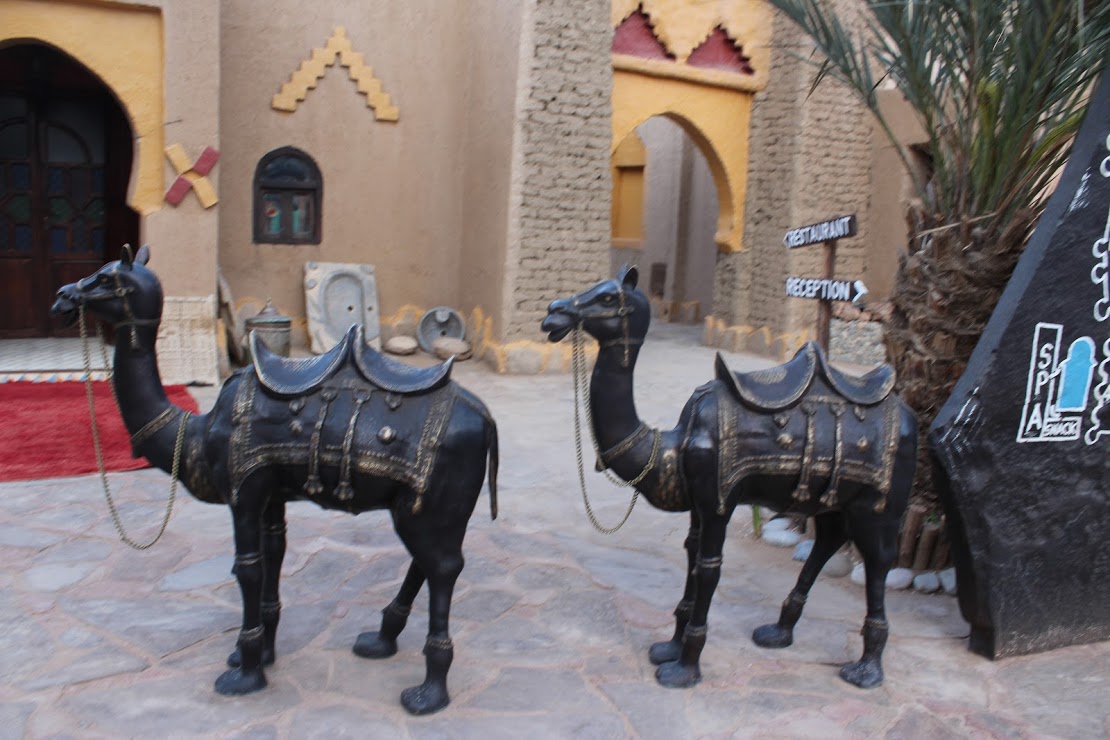
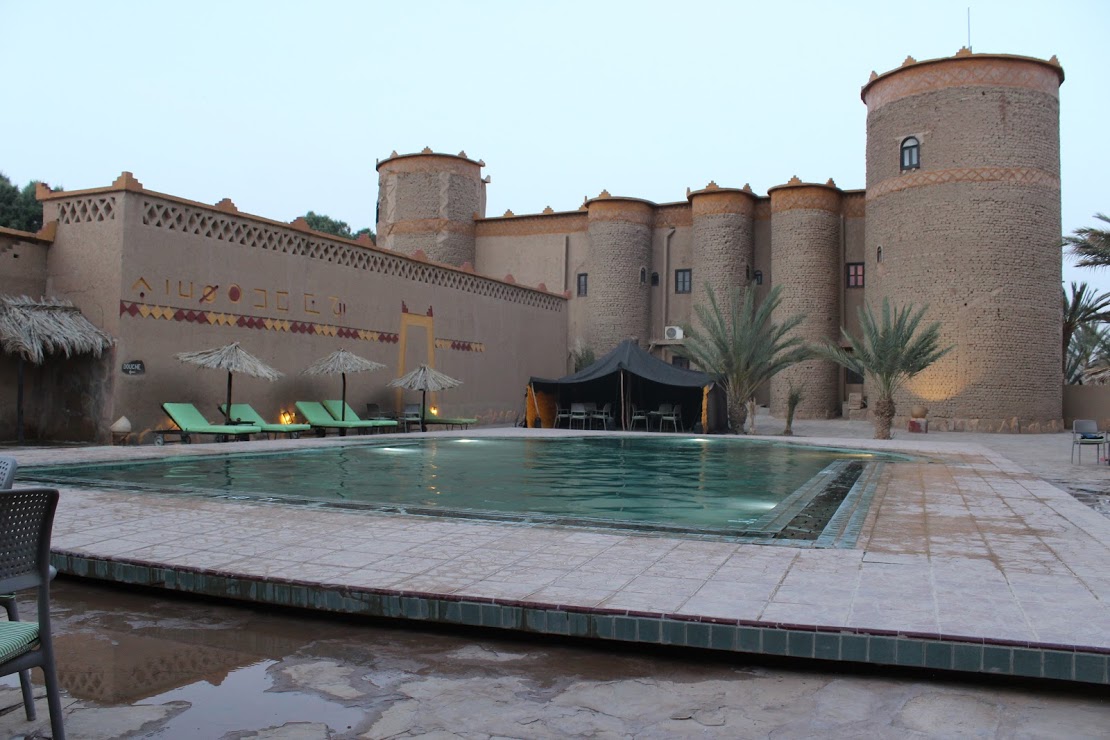
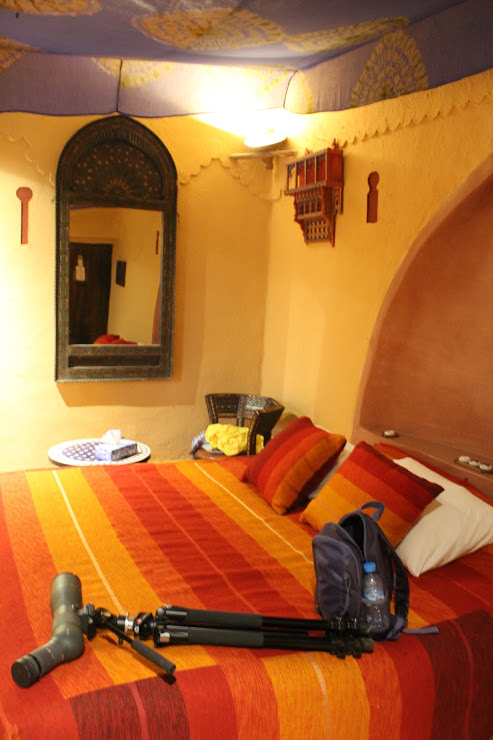
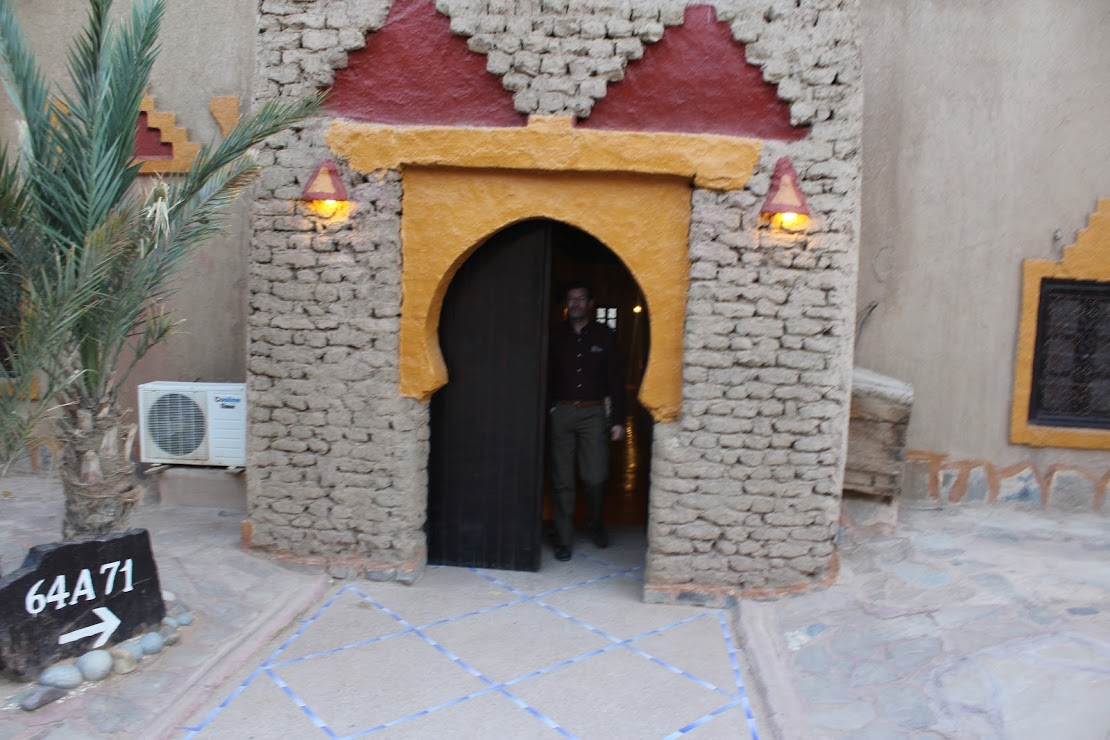
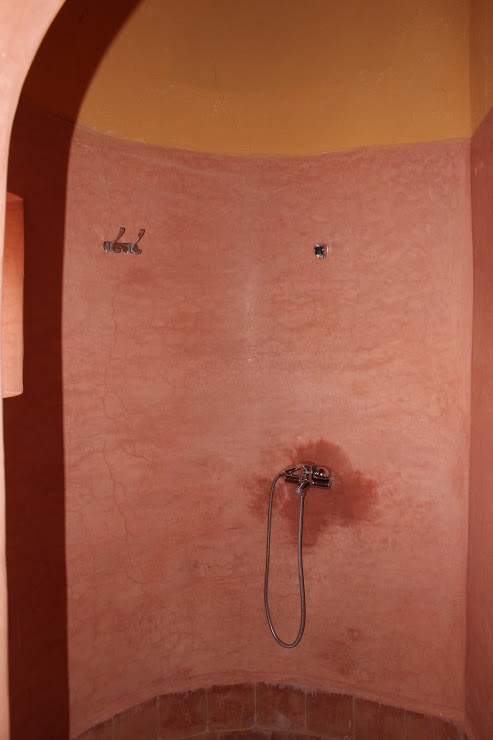
Two nights here and again we had time to enjoy the facilities. The hotel is situated right next to the dunes — the downside is you hear the quad bikes running until quite late at night. The pool was not as cold as the previous hotel and you needed to take your own towel with you.
Hotel Karam Palace, Ouarzazate
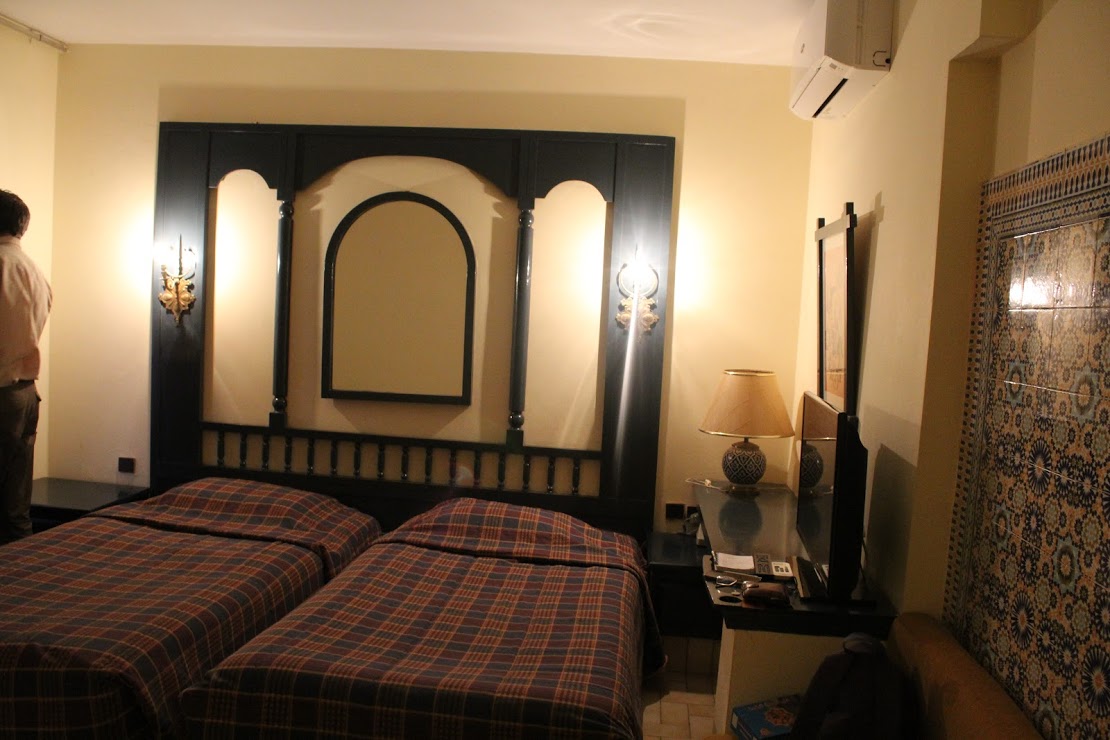
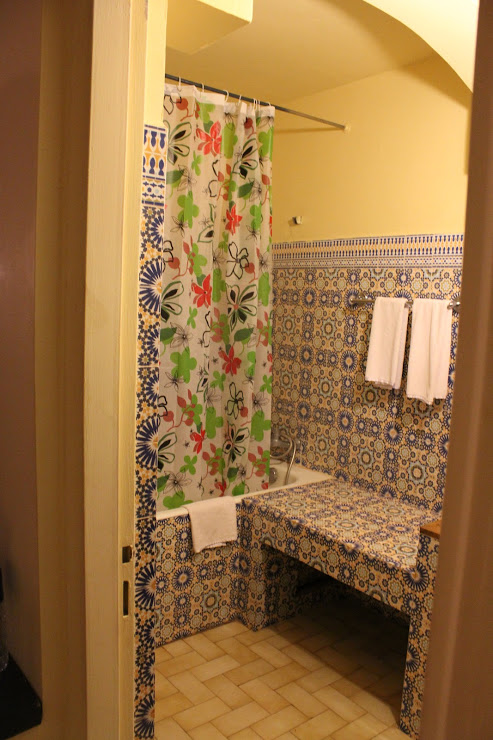
It looks very impressive as you arrive. The hotel is large and when we arrived obviously catering for many groups. There were areas of it that were shabby however, perhaps a sign of overworked staff. Our experience of both the bar and the restaurant would also support that hypothesis.
One of our party told of being bitten in the night by something, and bitten to the extent that it drew blood. There was blood on his pillow and neck.
Travel & Landscapes
Flying
We flew to Marrakesh airport starting off from Cardiff and changing at Amsterdam. Our first flight was KLM Cardiff to Amsterdam. Cardiff has a 10 minute waiting allowance for dropping off, however it was a quick and easy drop off. On the way back however, if you end up in the wrong lane you pay £1 to exit from the passenger pick up area.
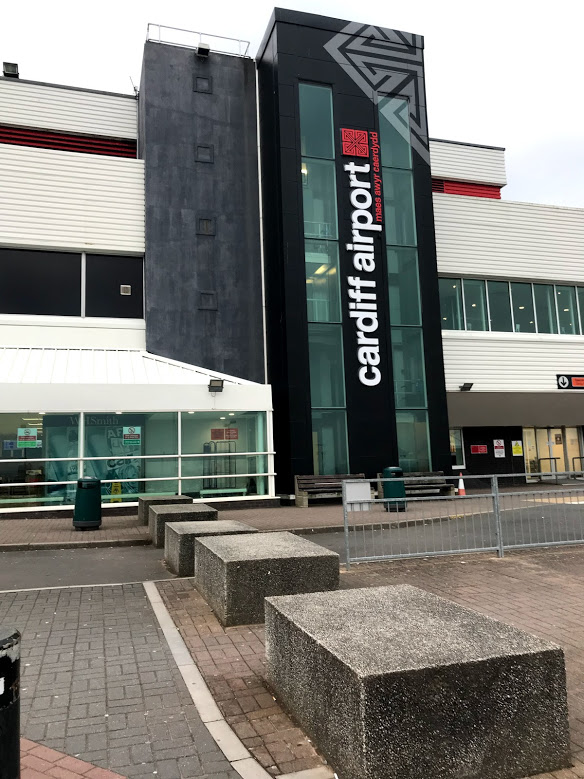
Cardiff is a quiet regional airport in comparison to the main London ones. There is not much to choose from in terms of getting something to eat, but we had a good fry up breakfast each.
Amsterdam airport however was as you would expect a major city airport to be. Busy! We were taken from the plane by bus to another part of the airport to be let in but we did not have to go through any other security. The way back however was different — see below! We noted the self-service transfer machines and were a little confused to start with if we needed to use them. However, we had been checked through all the way and so didn't need to use them. We did use them on the way back for printing out our boarding passes for the flight back to Cardiff.
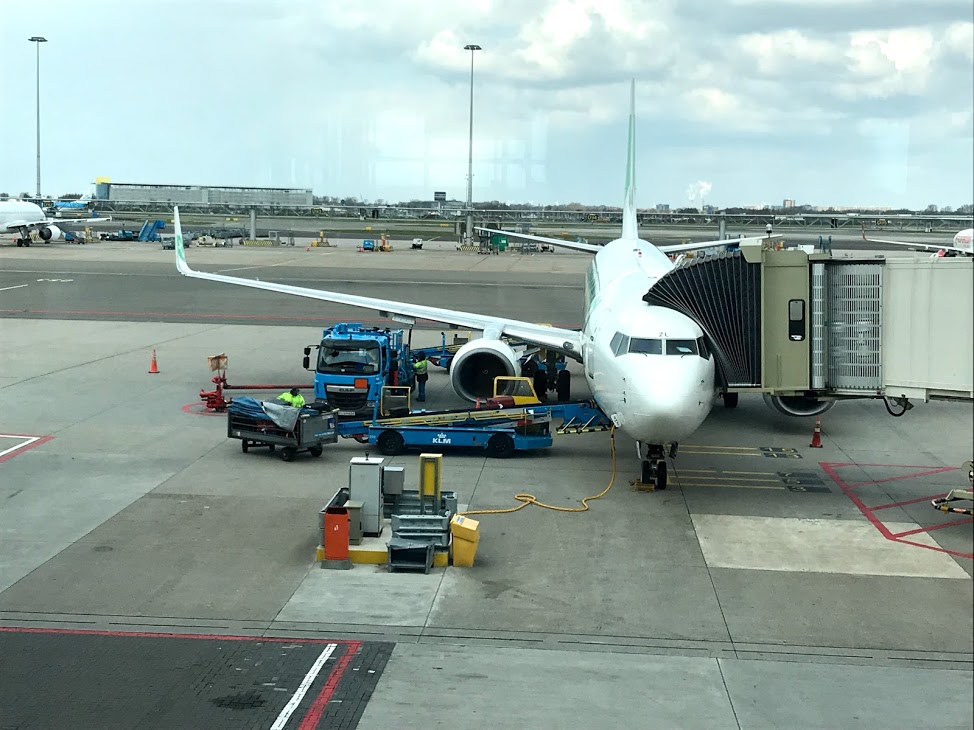
Once we arrived in Marrakesh airport however it took quite some time to get out. We took about an hour to get through the passport queue. The border guard asked us for our boarding passes. One of the party later related a story about how she had left hers on the airplane and was nearly not allowed in! Luckily we had been given the boarding card to fill out on the aircraft — so that piece of paper was complete.
In Morocco you have to get your currency on arrival. There were plenty of places to get money. Rob was given a pre-paid card and cash instead of all his cash in one go. Apparently it was a cheaper way of doing it, but I couldn't see that myself. Rob later managed to find some information about how the card is not entirely the best method as many places will not accept it and generally you cannot get the last small amount of money off the card, so you lose out.
We were collected by a driver provided by Spainbirds. I noticed that he drove quite sedately. The hotel was about 15 minutes away from the airport. Marrakesh airport is not a huge long way out of town like some other places.
Flying back from Marrakesh we had to put our bags through scanners immediately at the front doors. From there on to bag drop was ok. We noticed we had to complete another boarding/leaving card — same card, different purpose. Then another security screening to which you get to passport control. Here they scan and stamp your passport with a leaving stamp, which is then checked a bit further down the corridor. Once you've done that you're through.
On arriving at Amsterdam we only had 1 hr and 20 mins before our flight. On arriving from Marrakesh, we were disembarked via an airbridge, but were channeled down some stairs, onto the tarmac and onto a bus. I couldn't quite work it out to start with, but when we were delivered to an arrivals point whereby the transfers had to go through another batch of security, I realised that coming from outside the EU meant additional screening!
We used the self-service desks to print out the boarding passes, but it did not allocate a seat for us. I was quite worried that my ticket said "standby" on it! We checked with the desk, who said we would get a boarding pass at the gate. Hearing announcements for a Bradford flight where they asked for somebody to volunteer not to get on because of overbooking only served to raise my anxiety. Thankfully we were given boarding passes at the gate, with seats but the issue was we were not sat together.
Travel to Ouarzazate
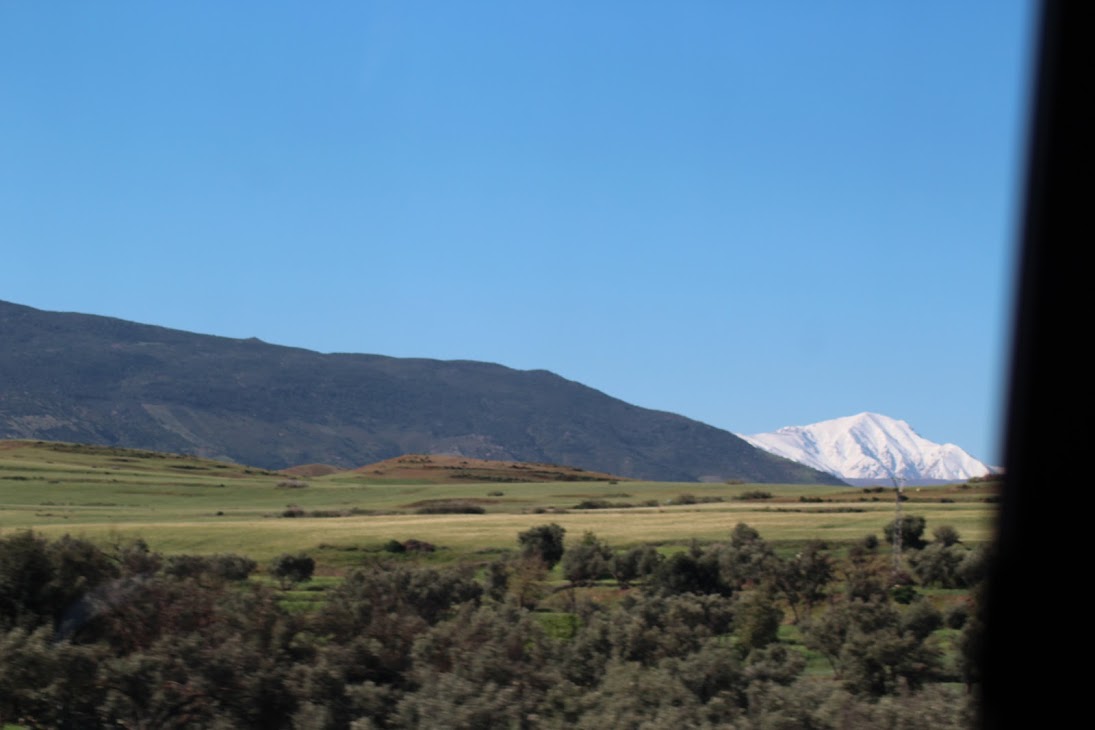
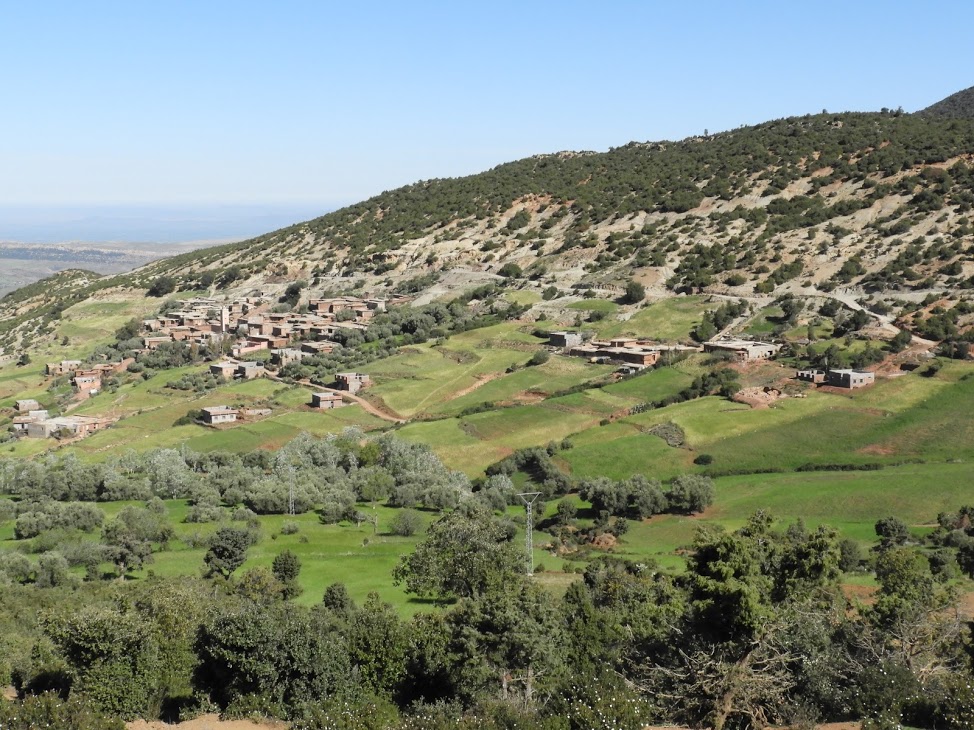
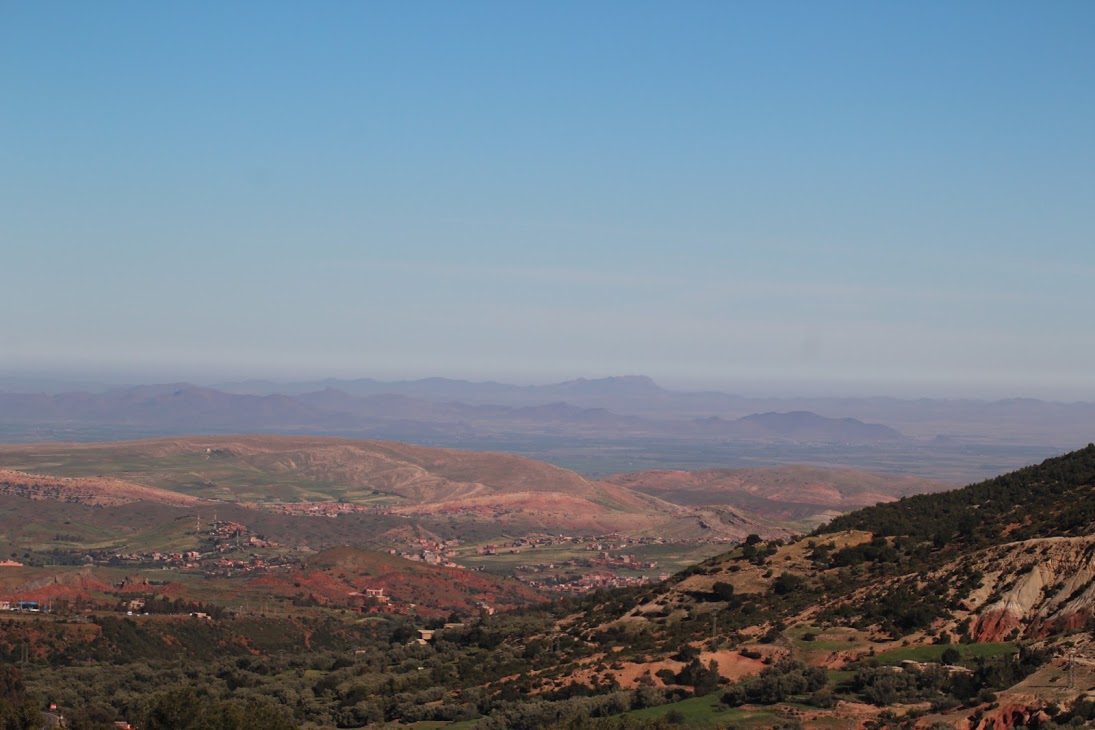
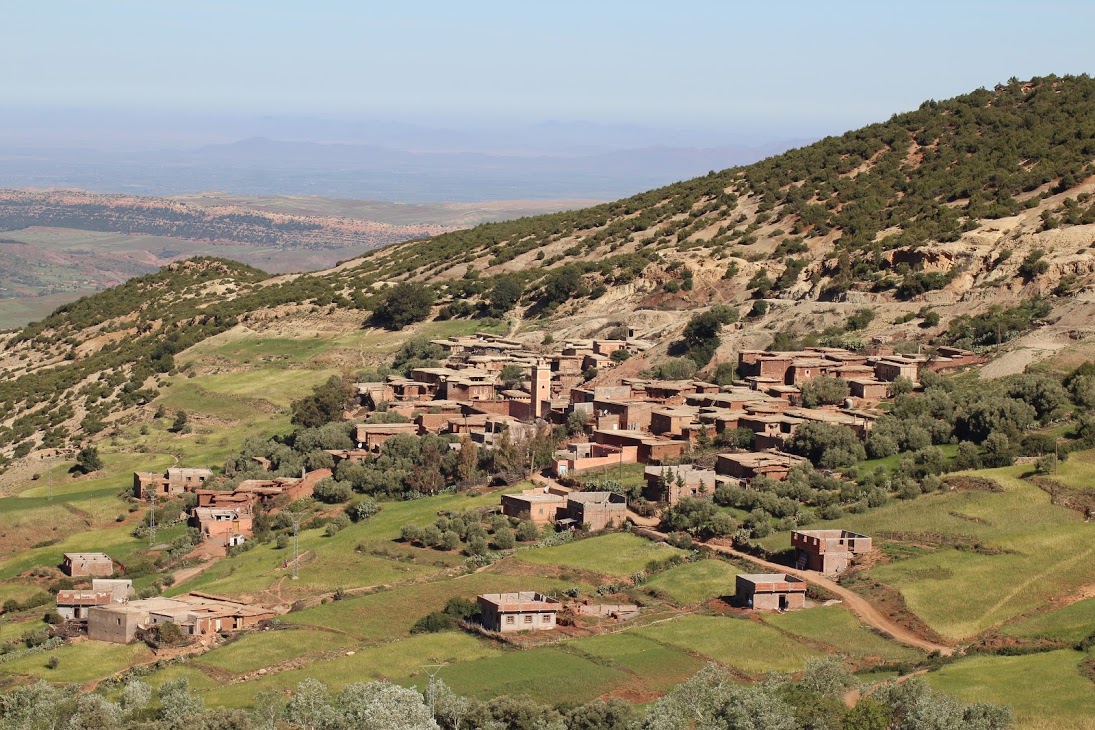
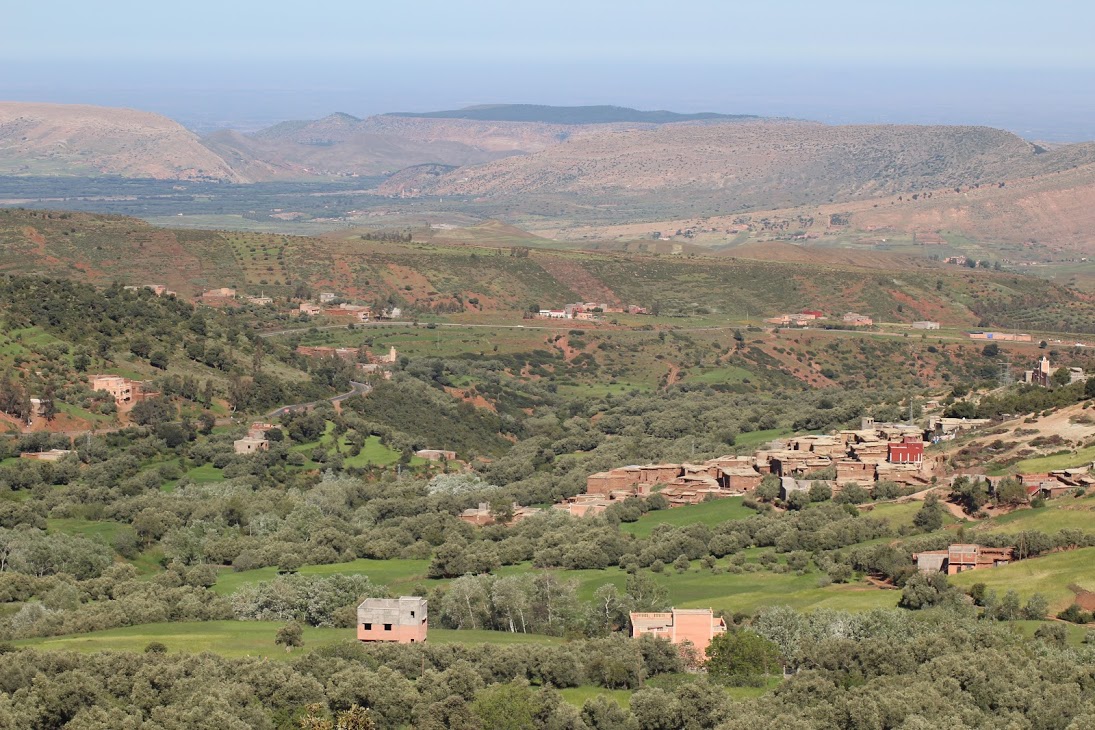
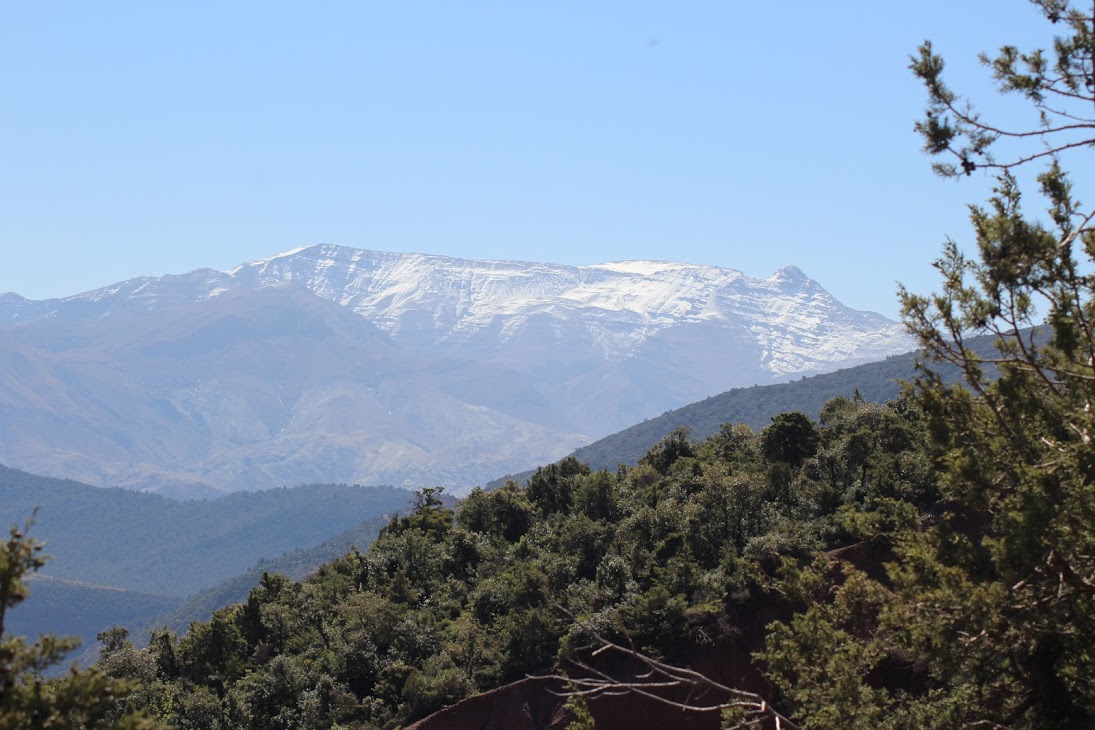
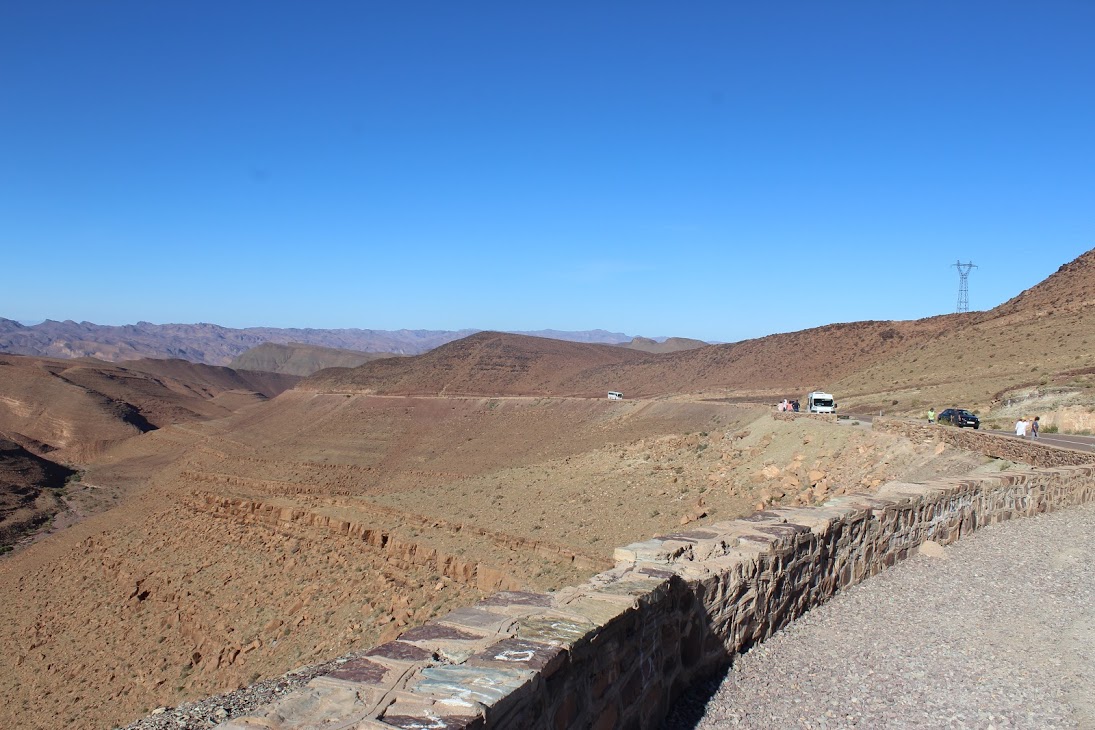
Our first full day involved a long journey over the Atlas mountains to Ouarzazate. We traveled over the Tizi-n-Tichka pass. Glad I didn't know beforehand that it is listed on a site called "Dangerous roads"!
The place we stopped at for lunch was next to an Argan oil cooperative. There were a number of ladies sat in a row showing you how they process the argan oil. A painstakingly laborious process in their case. Inside you could be parted from quite a lot of your money for a small bottle of the stuff.
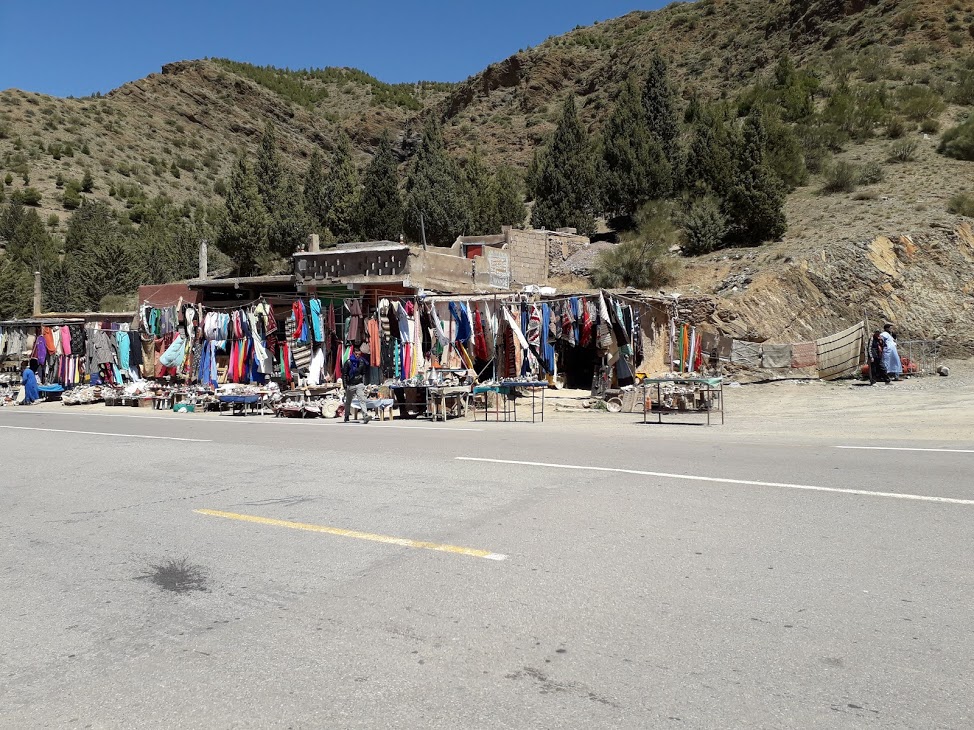
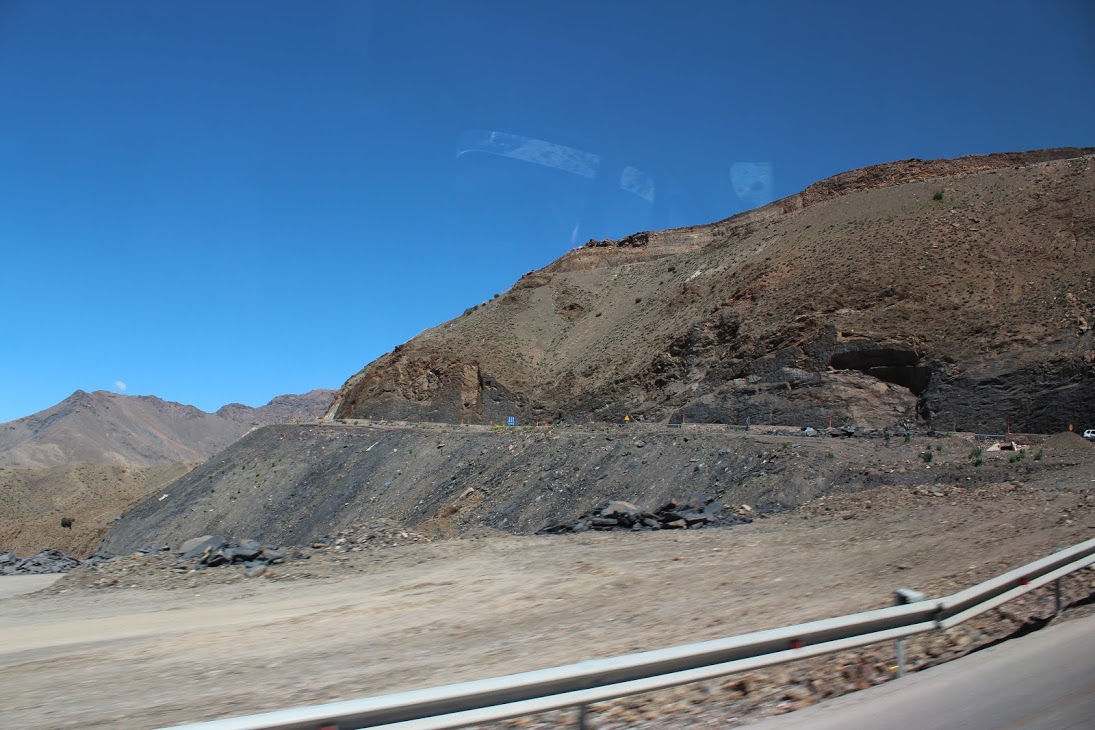
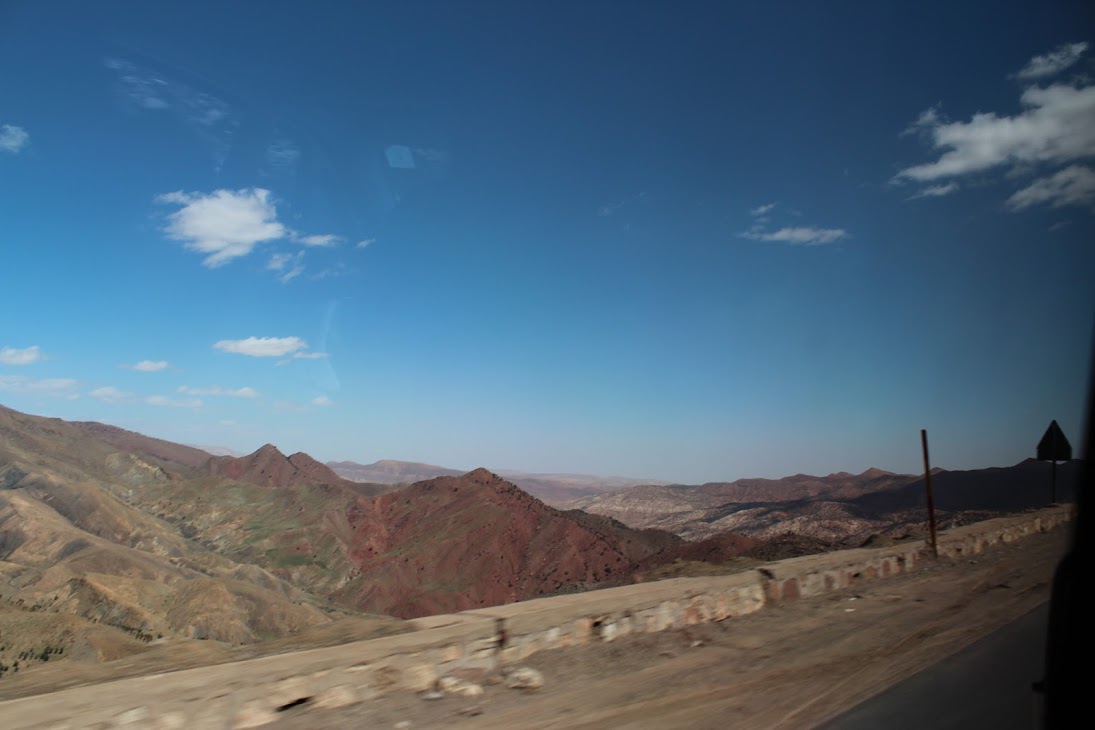
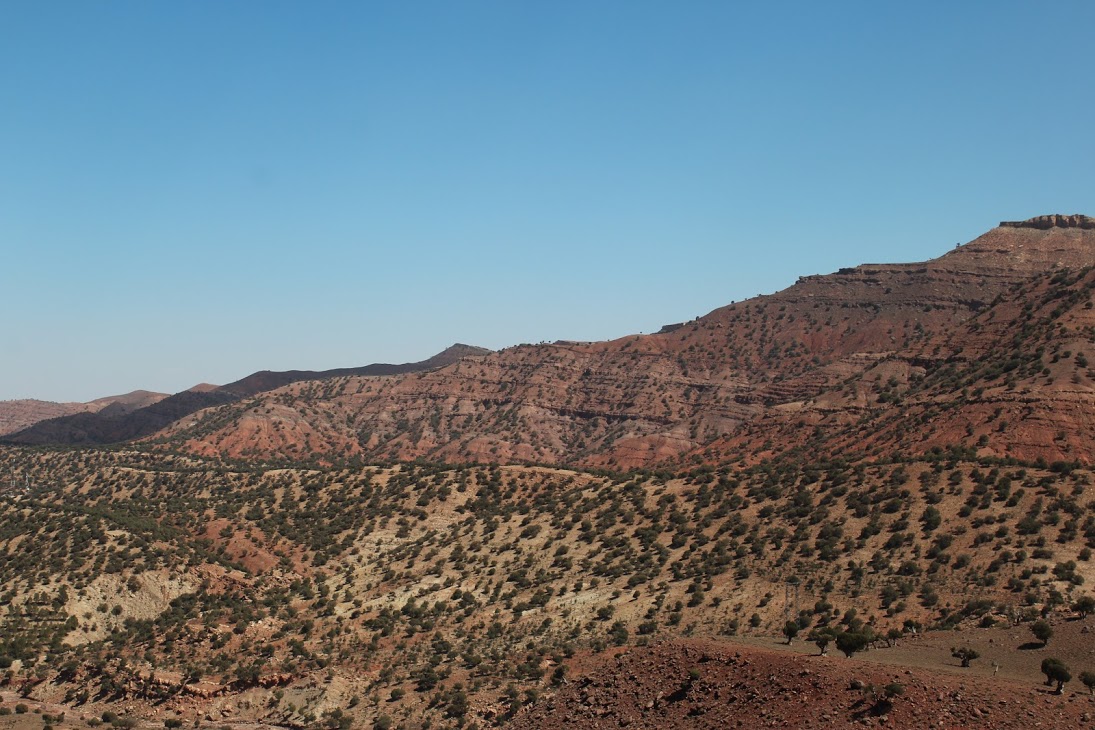
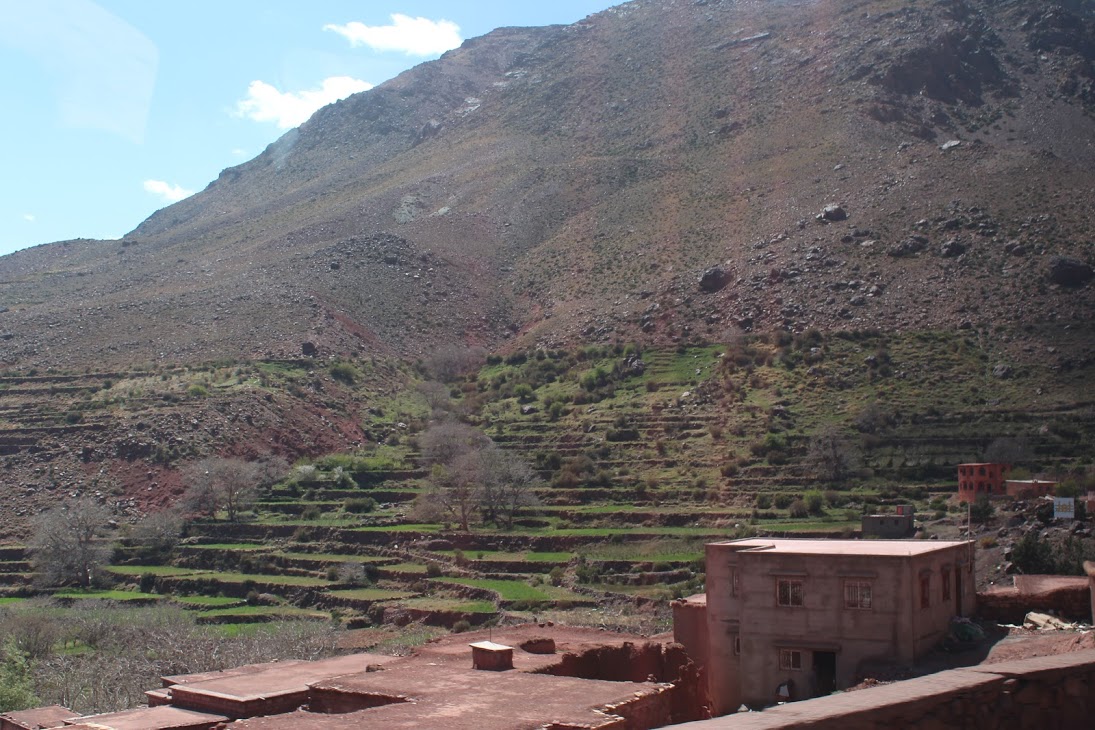
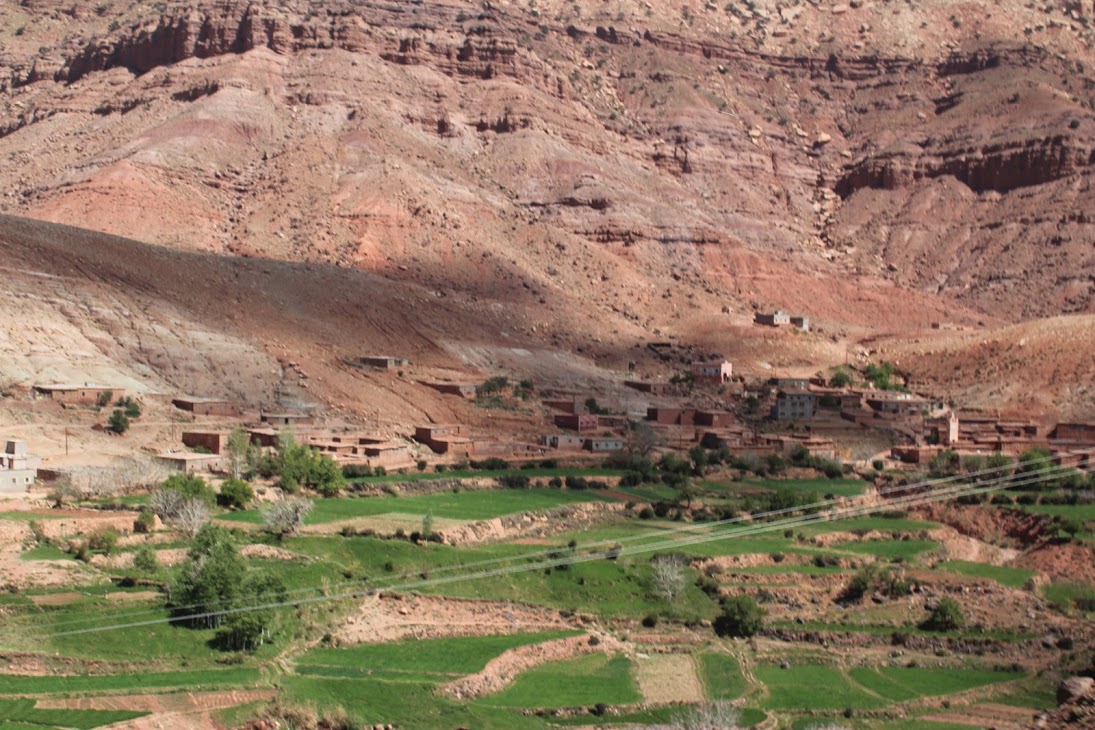
Having stopped for our first lunch stop, we continued travelling down the other side of the Atlas mountains. The landscapes changed getting more and more barren as we went on.
Along the pass we encountered a lot of road building — I mean a LOT. They appeared to be doing the whole length of the road in one go, without shutting it. It was concerning what they were doing with the spoil from the roadworks. I saw in a number of places they were just tipping it down the side of the valley. This meant it would go into the river and spoil the water flow.
Not looking after the water supply did seem to be a bit of a recurring theme. We had been warned not to drink the water, to only drink bottled water and to avoid salads that might have been washed in tap water. Seeing them tip things down the mountain, and to also go for a walk where an open sewer appeared to run into a reservoir bought it home how lucky we are in the UK.
Solar Power
As we travelled to Ouarzazate I caught sight of a gleam in the distance. This is a solar power tower and is also called "Noor Power Station" — you can read more about it on Wikipedia.
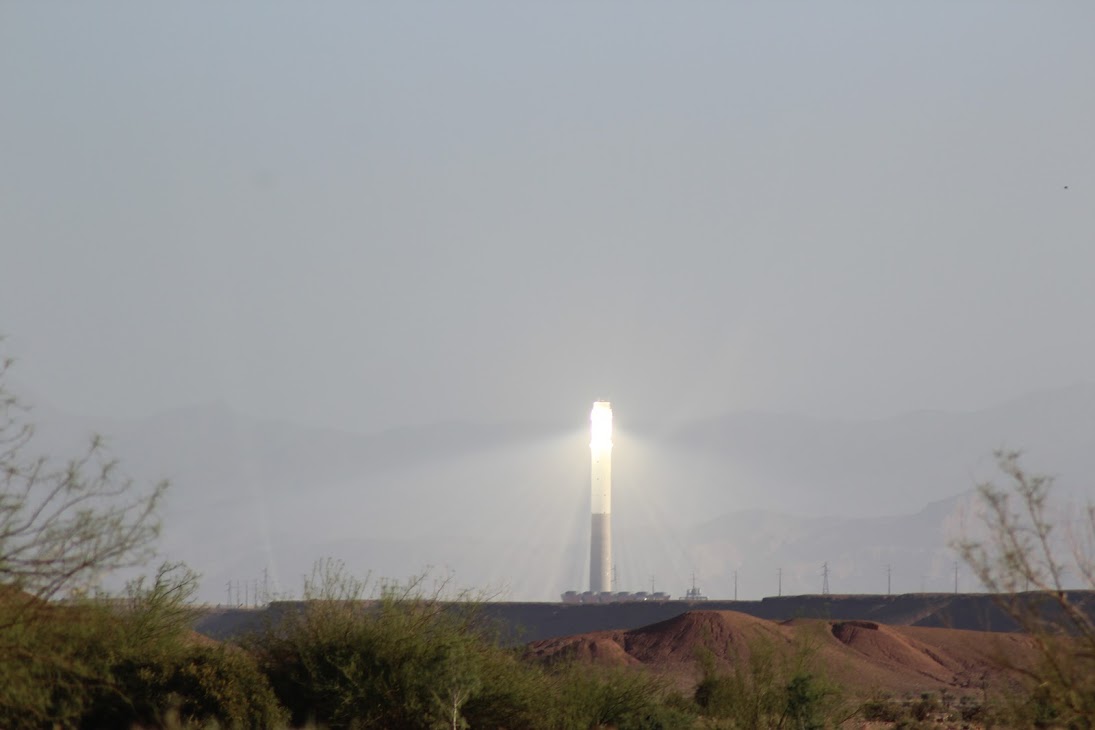
I had read about these towers before but not been near one. There is not much call for them in the UK! The idea is that half a million mirrors focus on the tower and the heat from the sun helps produce electricity.
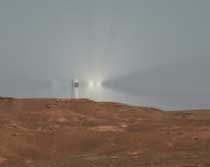
I thought it interesting the following day when I caught sight of it that they had focused the mirrors to one side. I wondered if it was done like that for maintenance purposes, but one suggestion was that they were producing too much electricity and it could not be stored.
Boumalne
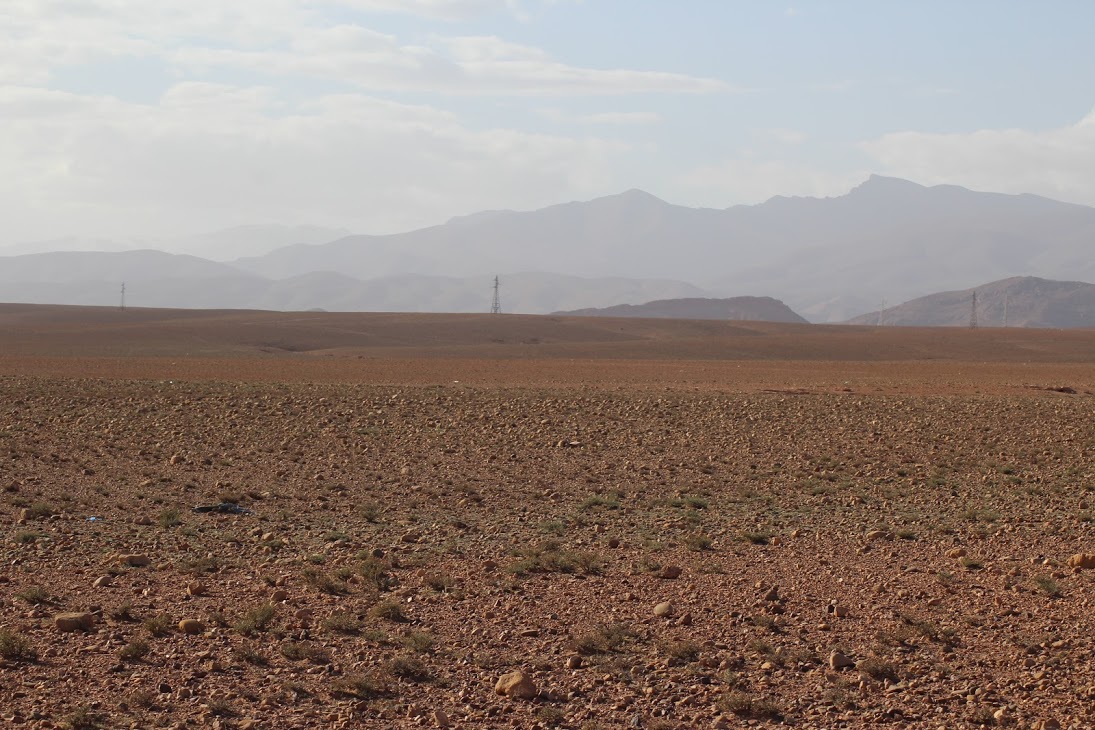
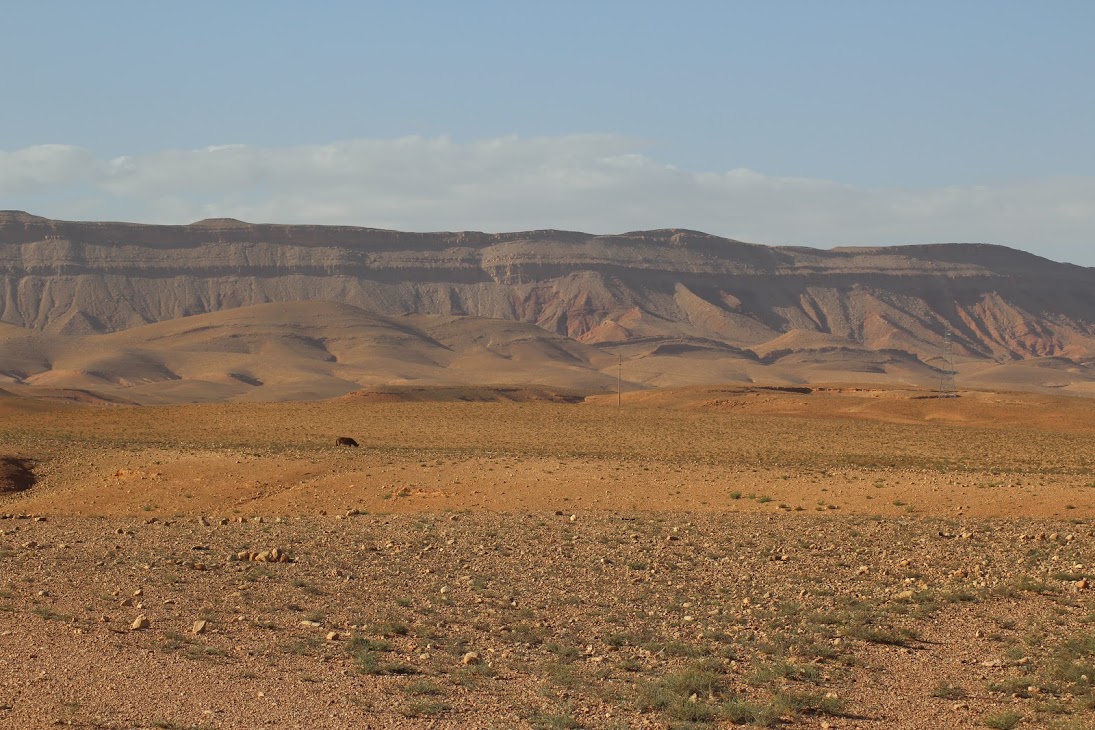
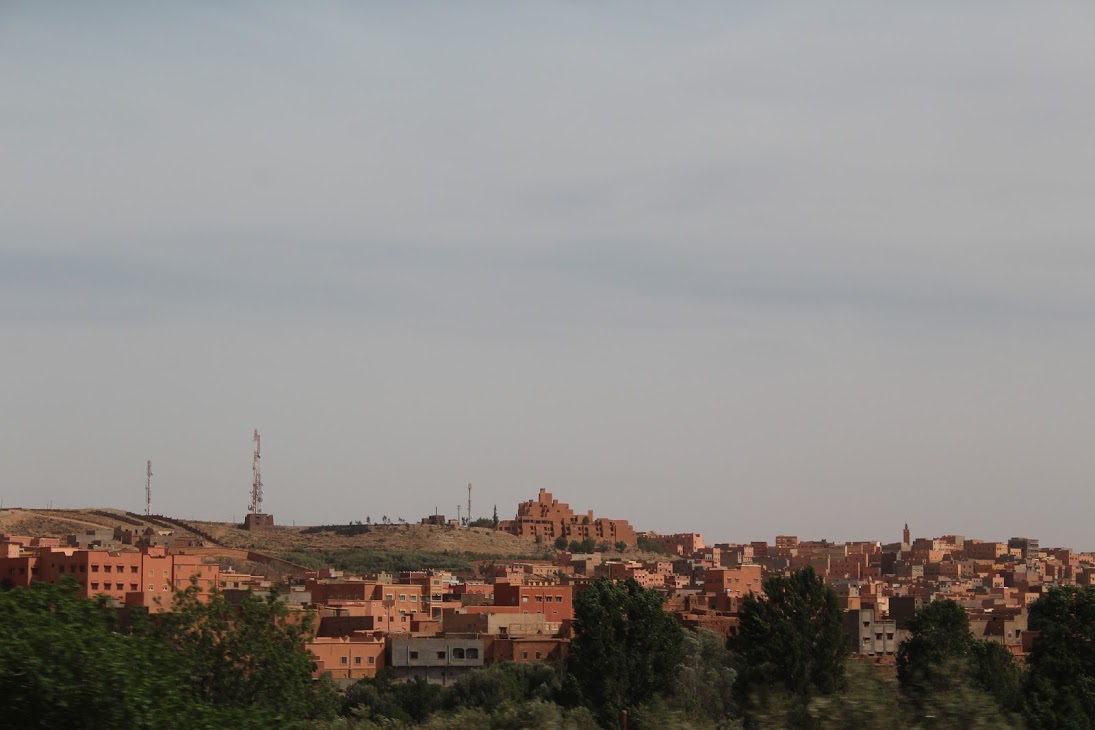
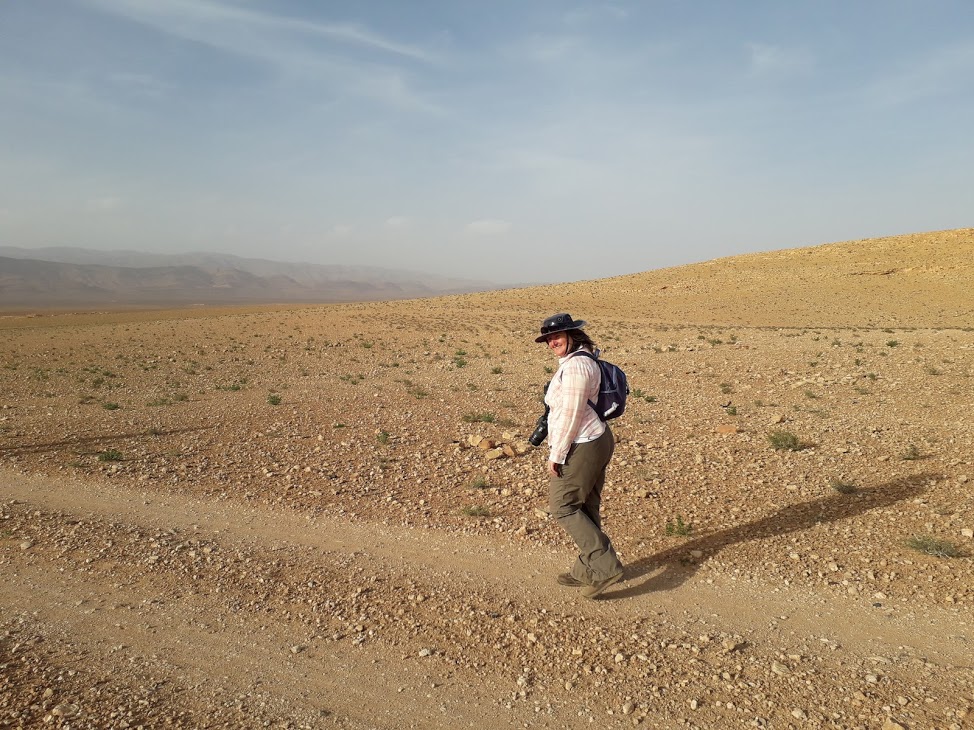
Our second stop for the holiday was in a town called Boumalne. The Lonely Planet website does not say much about the town and indeed we didn't get to see it. However, we did travel up through the nearby Dades Gorge which was pretty amazing.
The Gorges
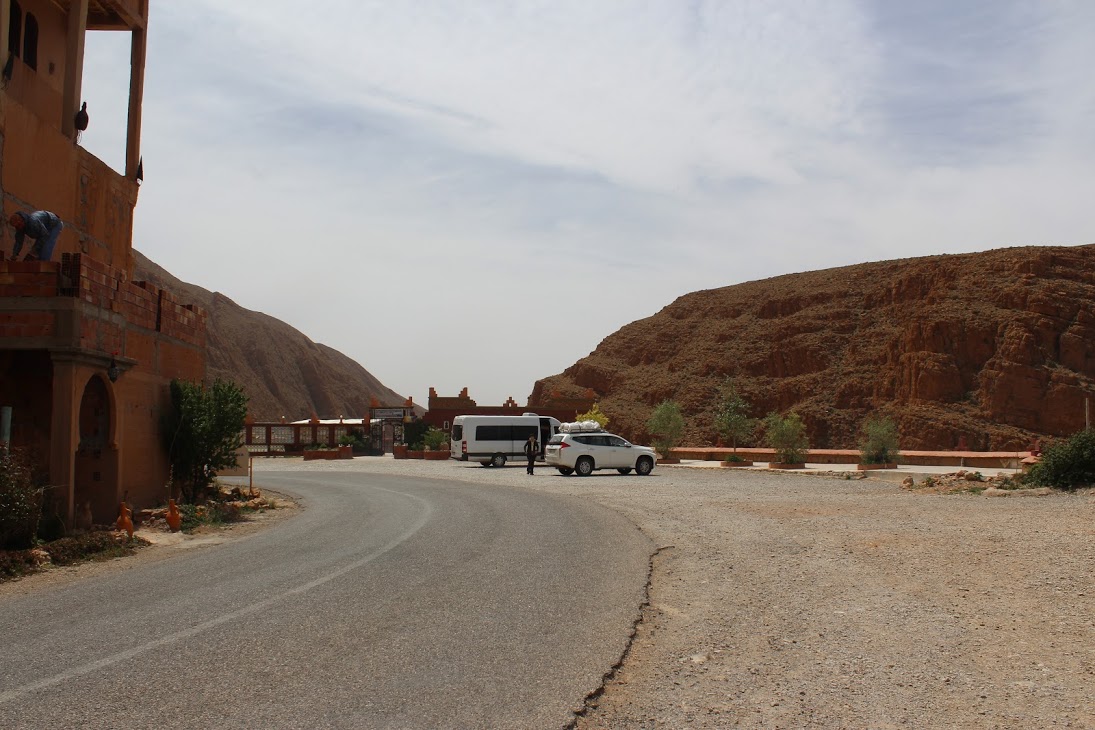
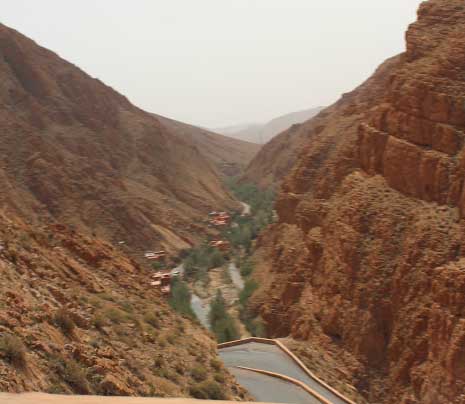
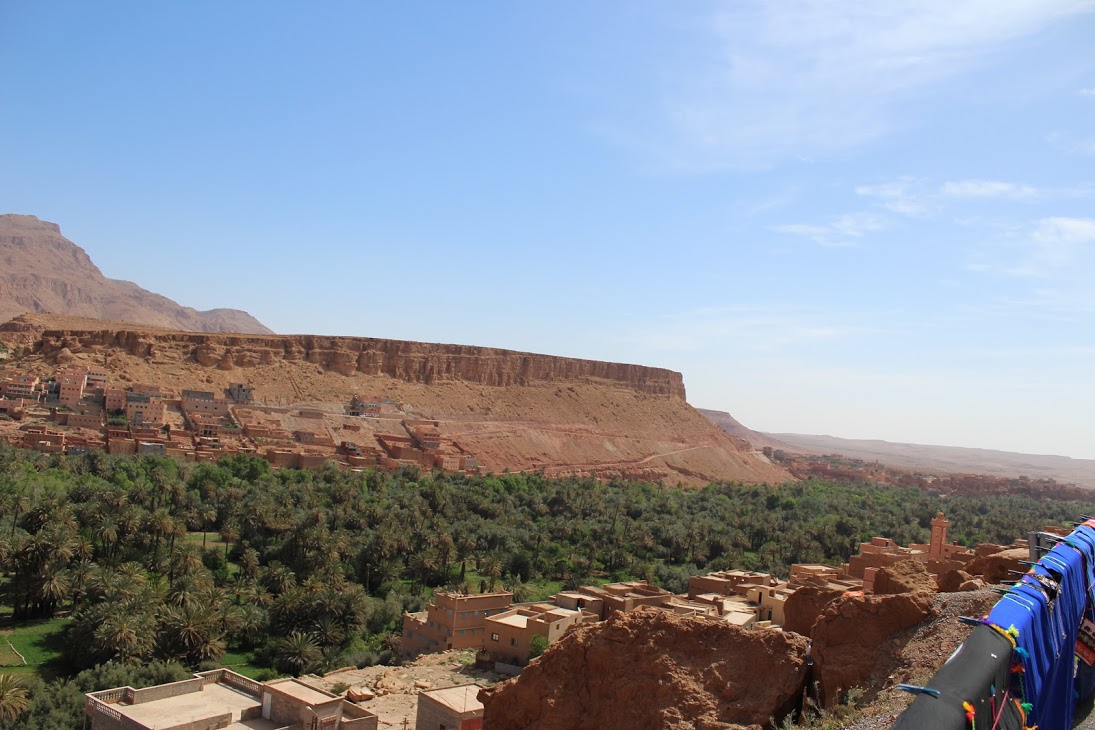
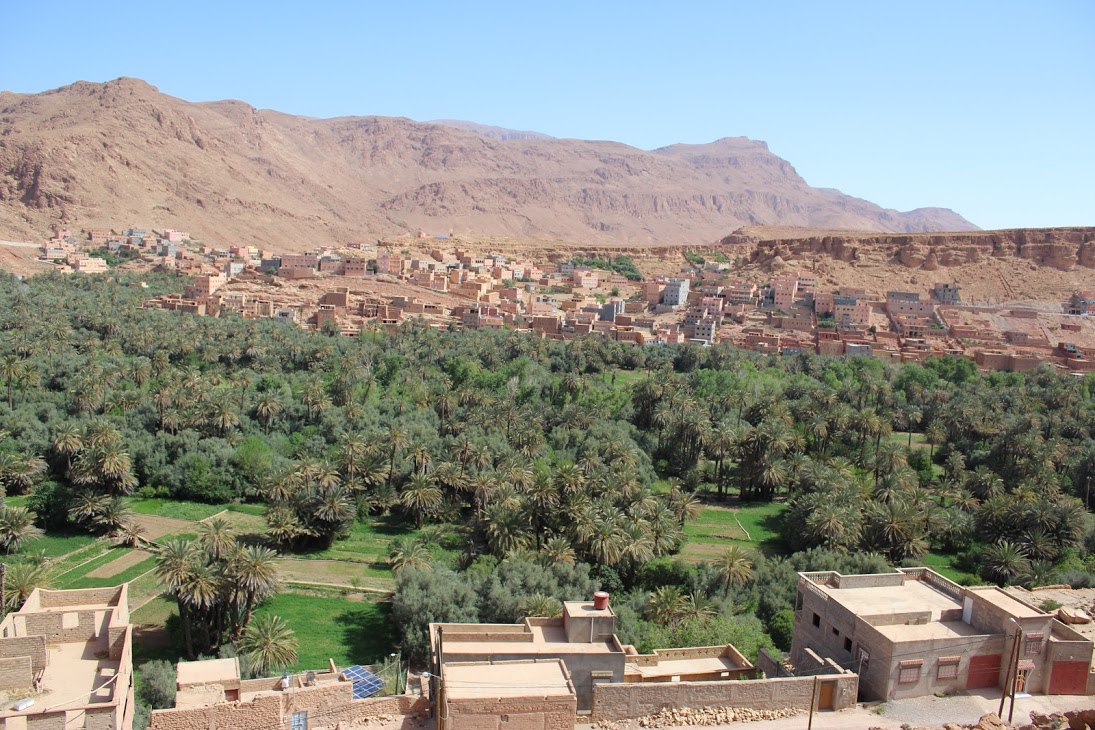
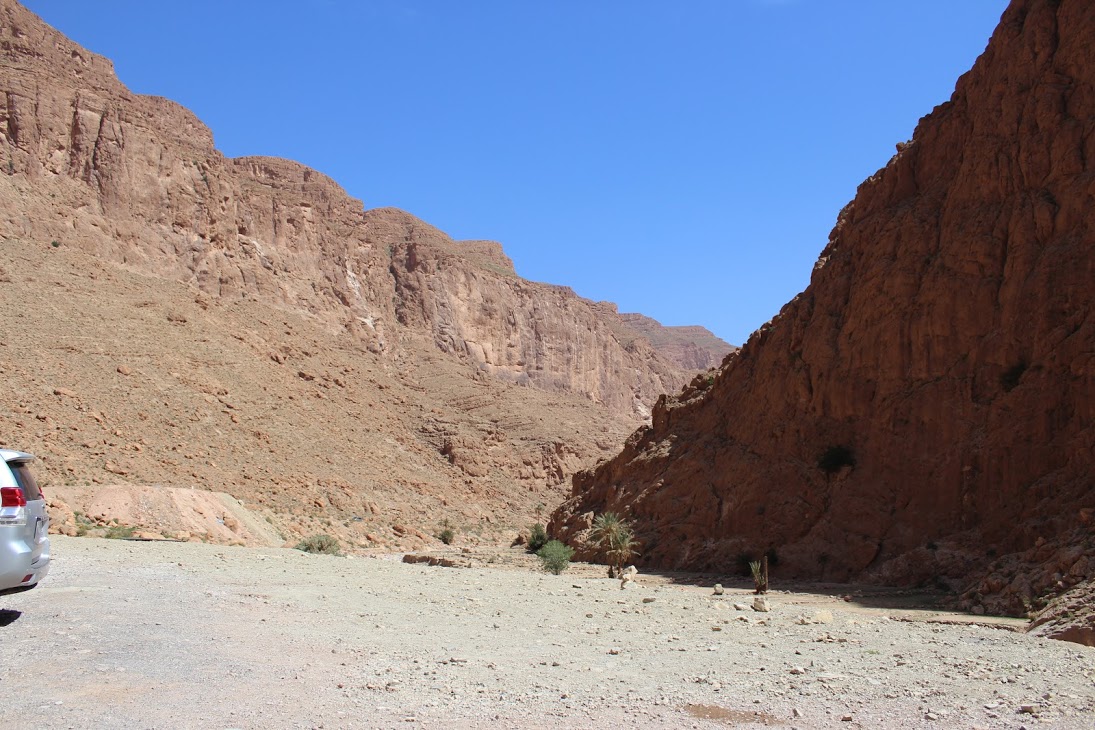
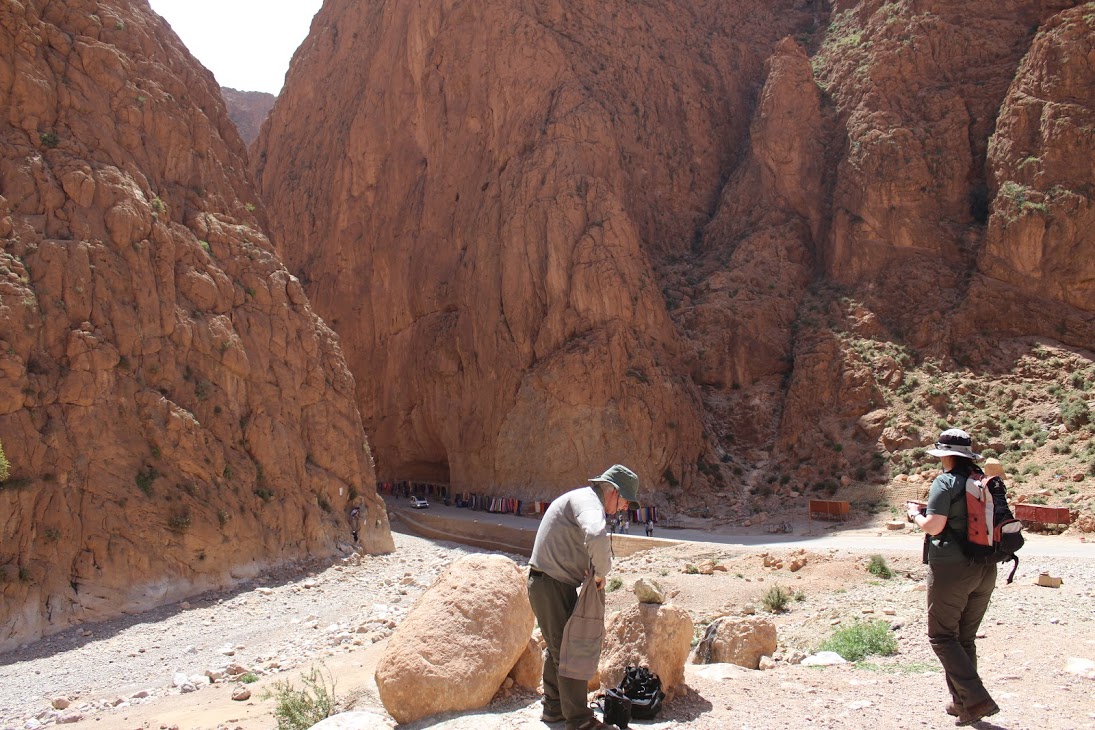
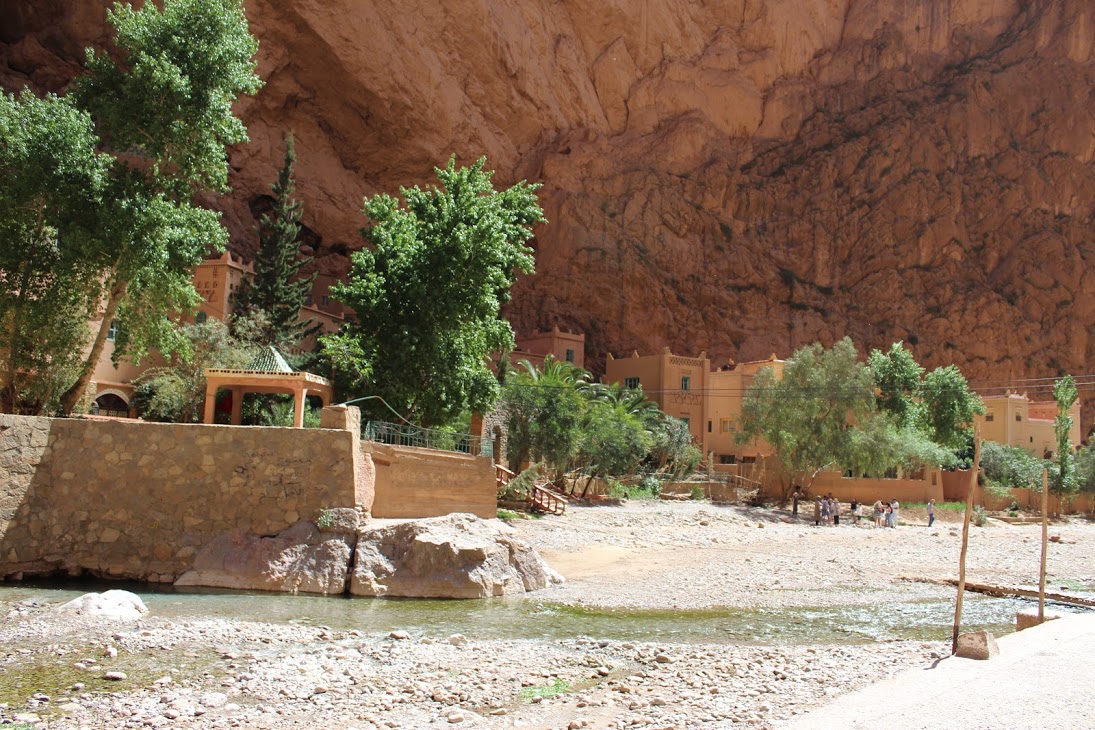
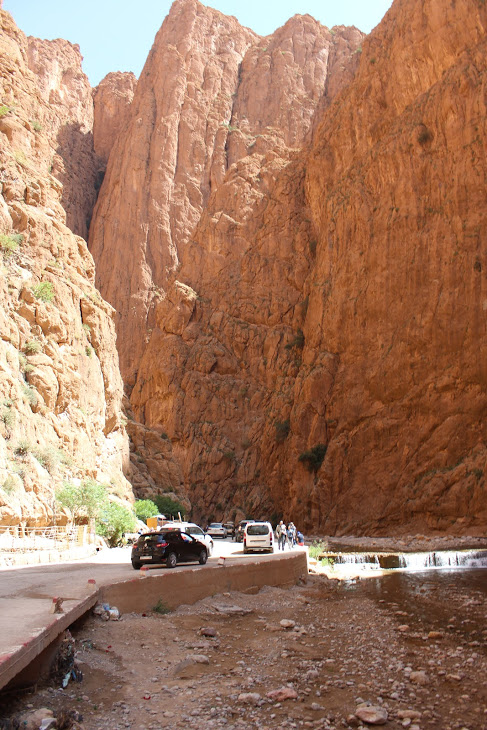
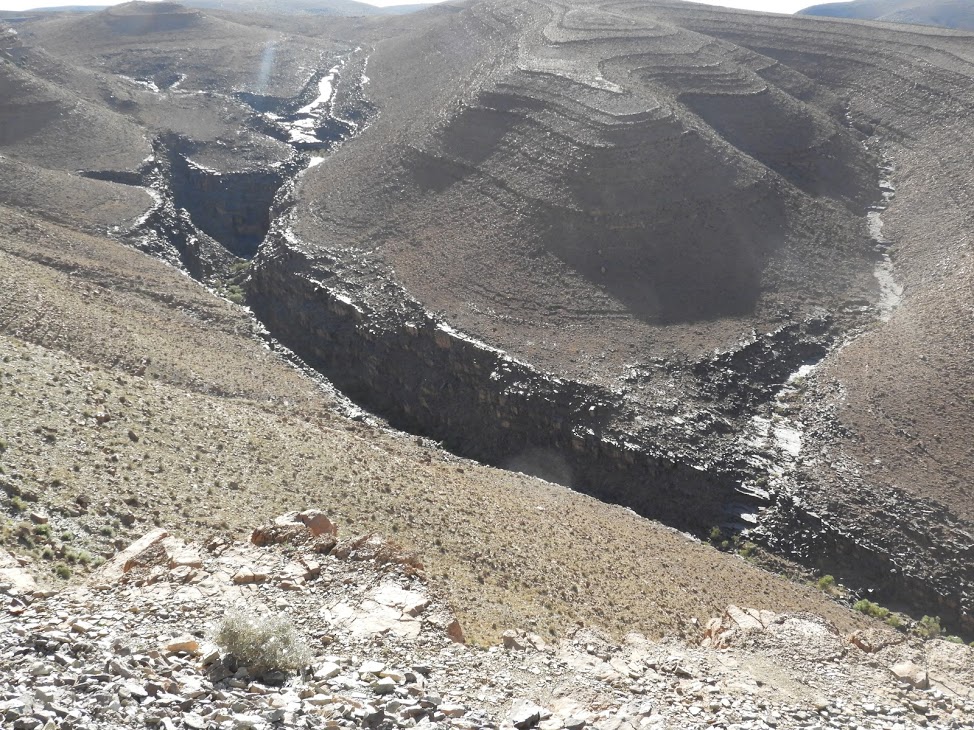
During the holiday we got to see a number of amazing gorges. Our first one was the Dades Gorge. We travelled out of Boumalne along the twisting roads where our first stop was what was locally referred to as the Monkey Fingers.
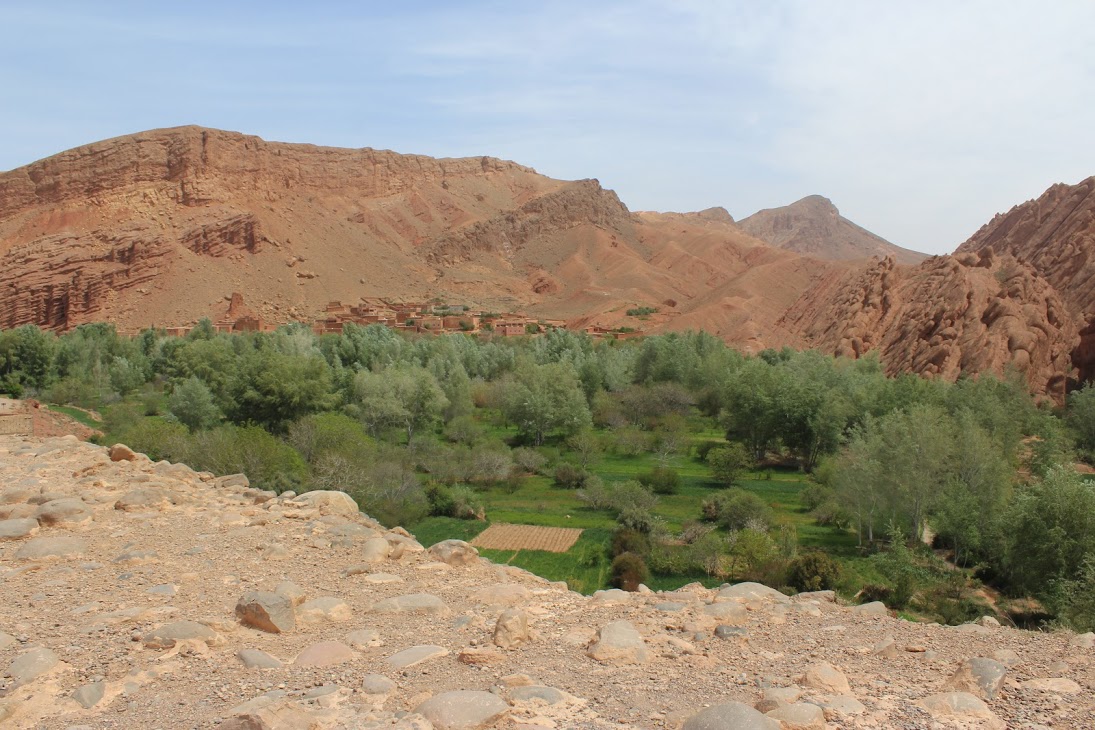
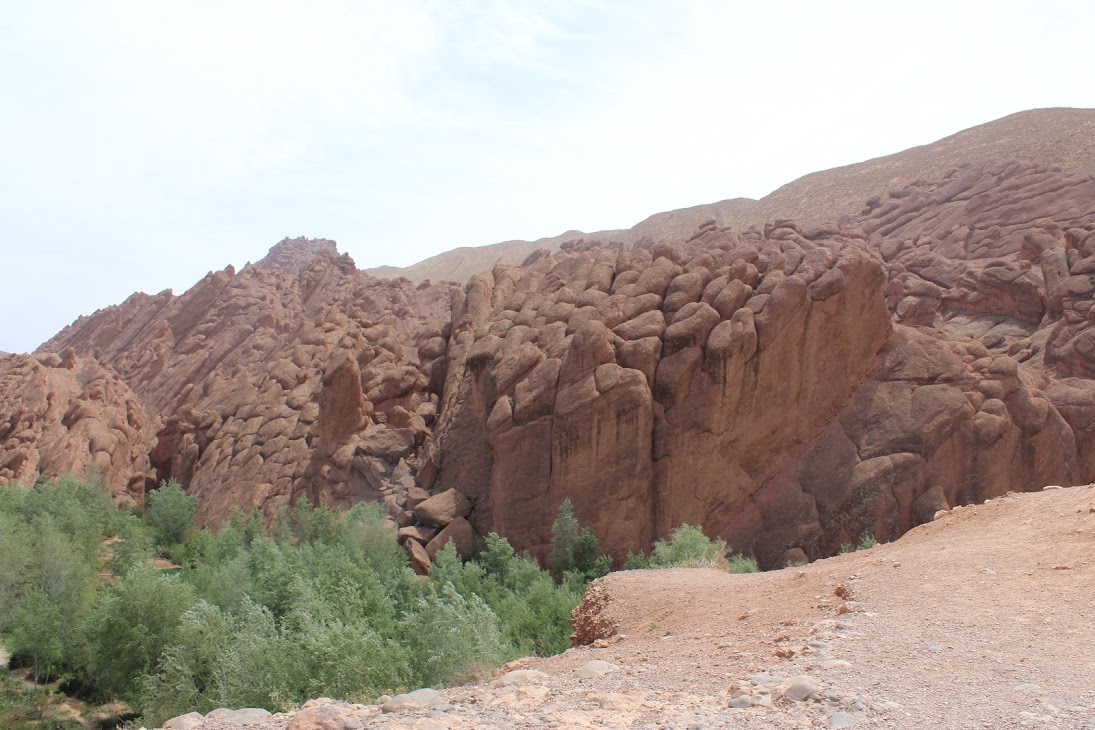
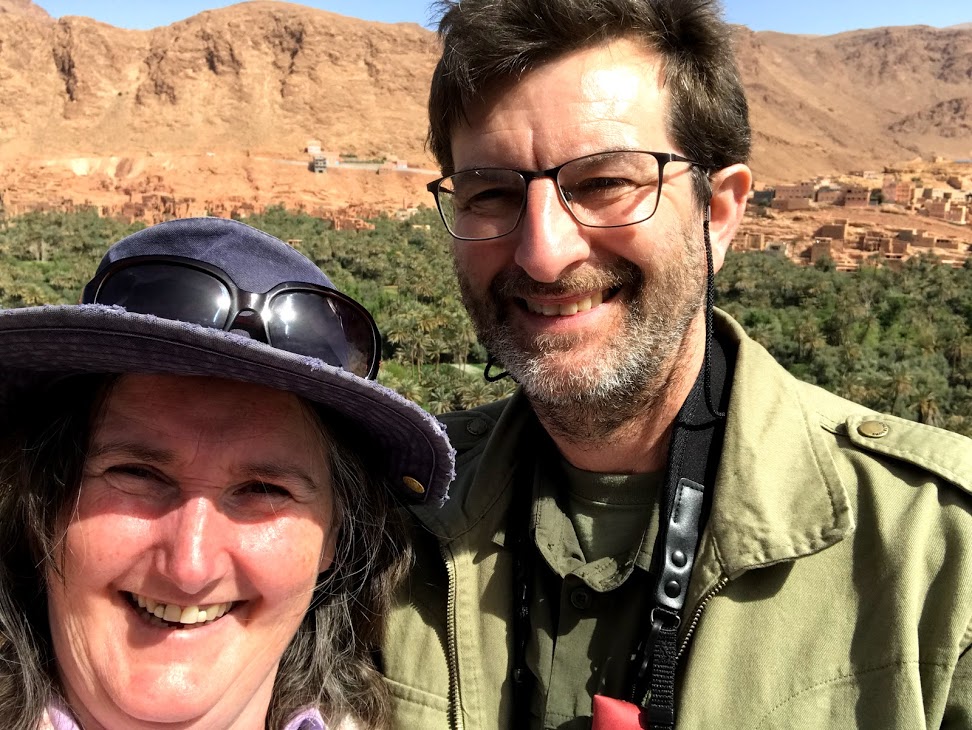
On from the Monkey fingers, we travelled to the top of the Dades Gorge. The following day on leaving Boumalne we stopped at the Todra Gorge. We were dropped off at the top and walked down through the Gorge to meet the bus at the bottom. There were many stalls and people trying to sell you things — as well as beggars.
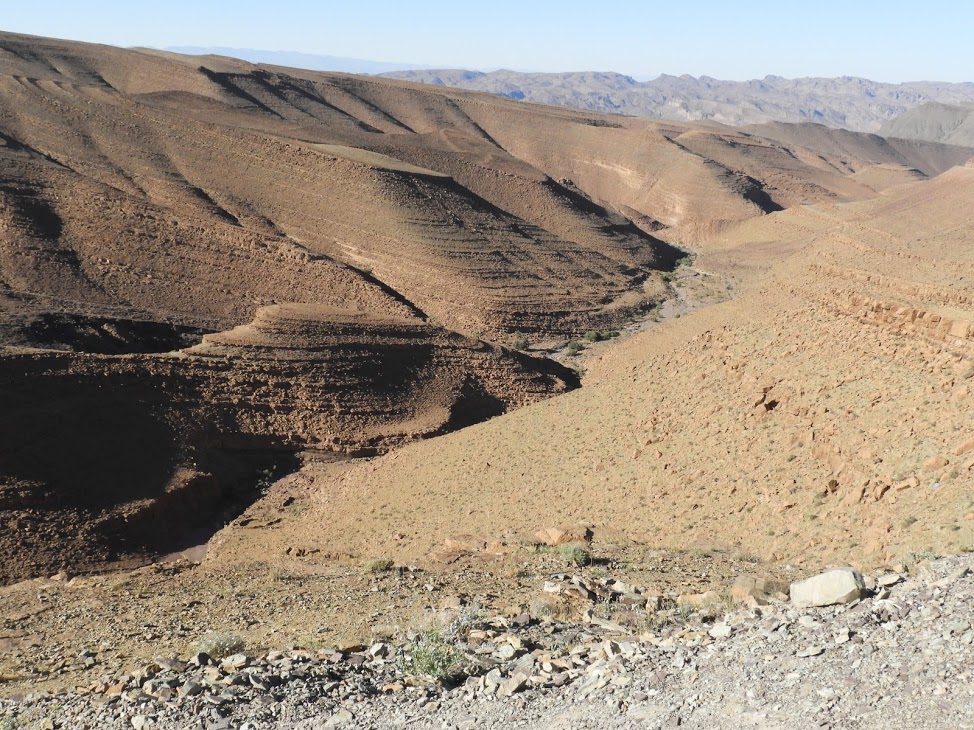
On our return from the desert area of Merzouga we stopped to admire the final gorge. Barren as anything, and I didn't record where it was.
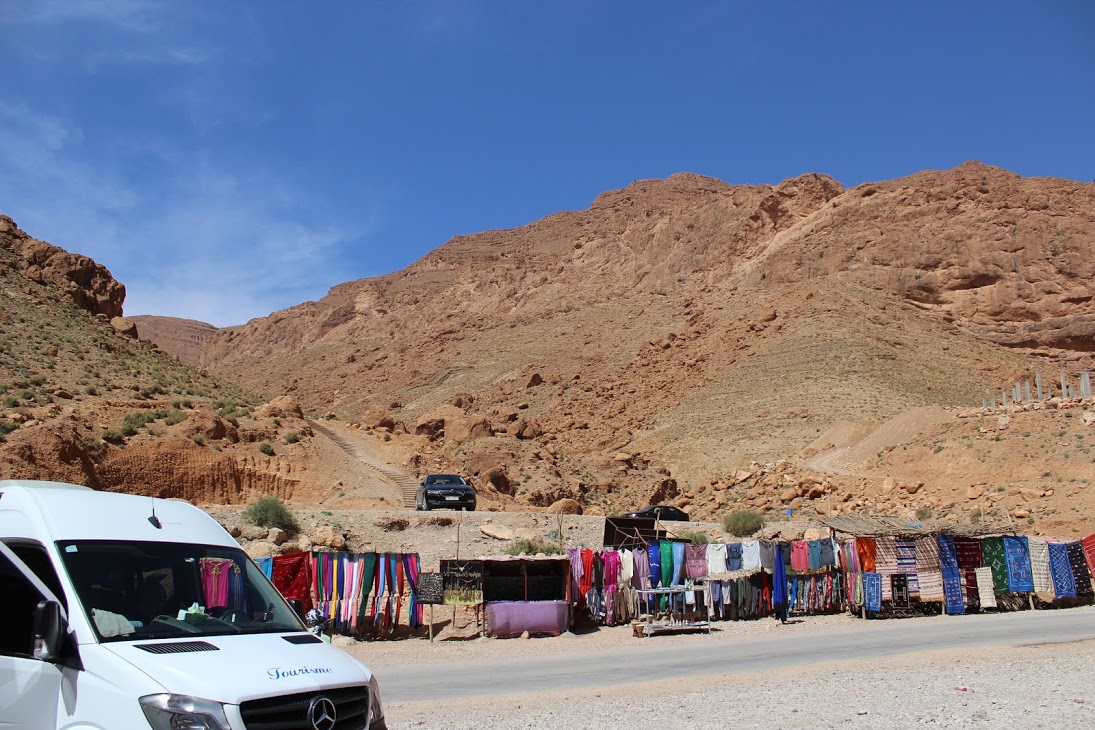
The Desert
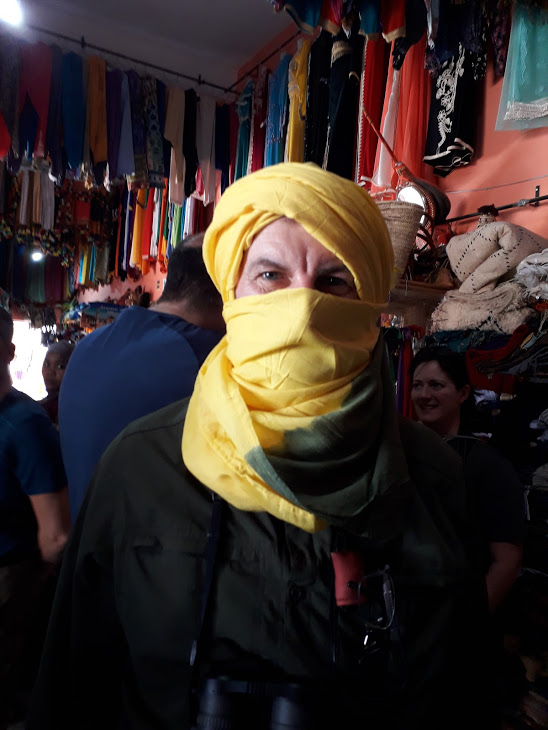
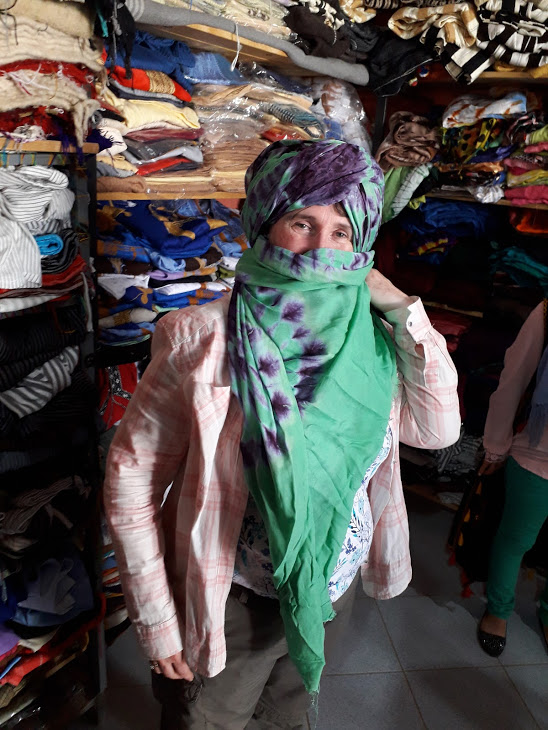
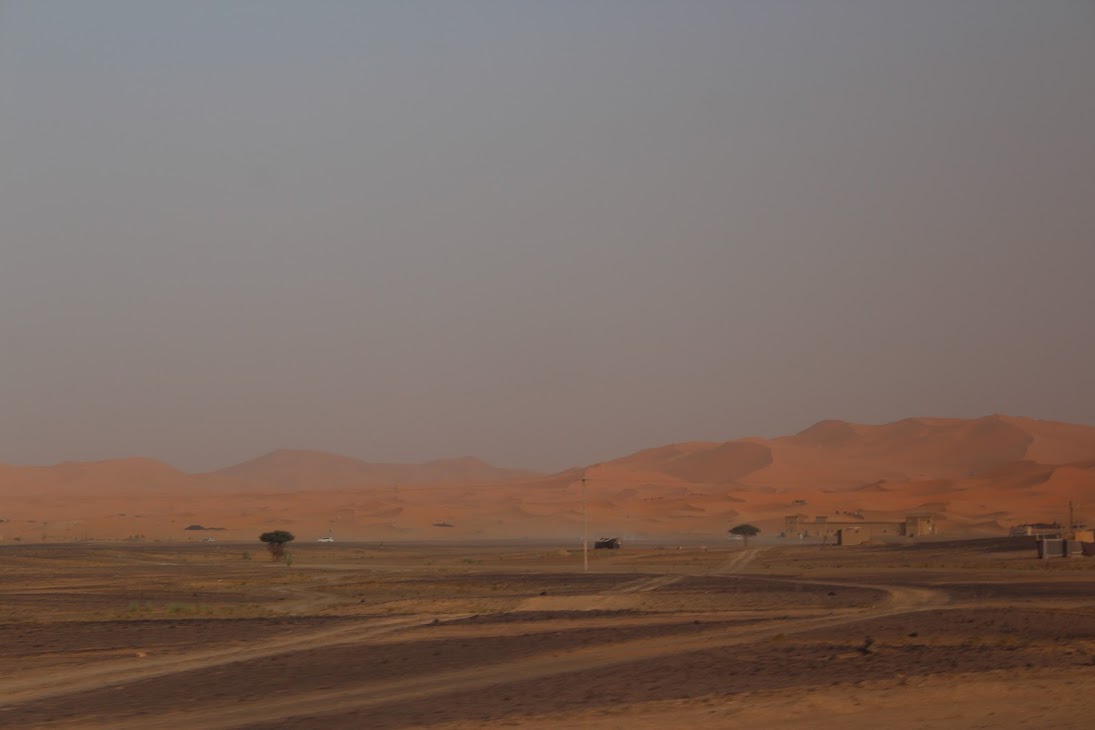
The furthest point we travelled to across Morocco was Merzouga in the Sahara desert. We were advised that as weather forecast was to be very windy for the next few days we should wear scarves to protect our faces from the wind. We stopped at a scarf shop on the way and even though I had bought a couple of scarves, we had to support the local economy!
I watched the lady do Rob's scarf and did manage to repeat the endeavour the following day when we travelled through the desert on the Jeeps.
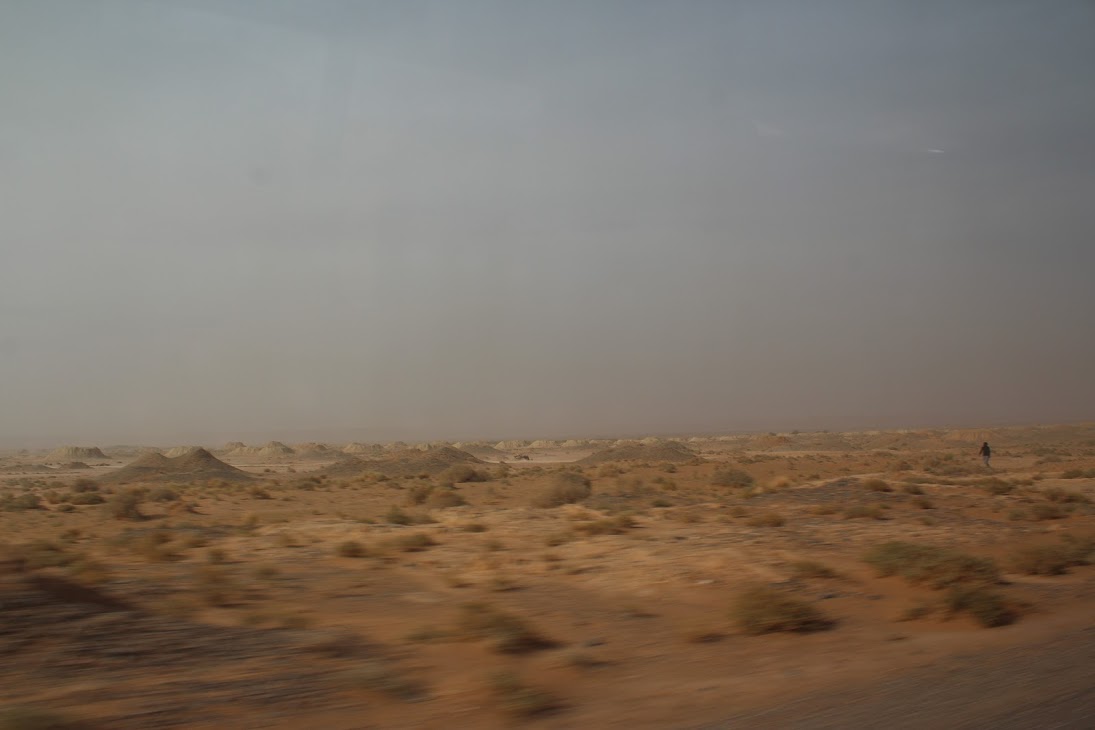
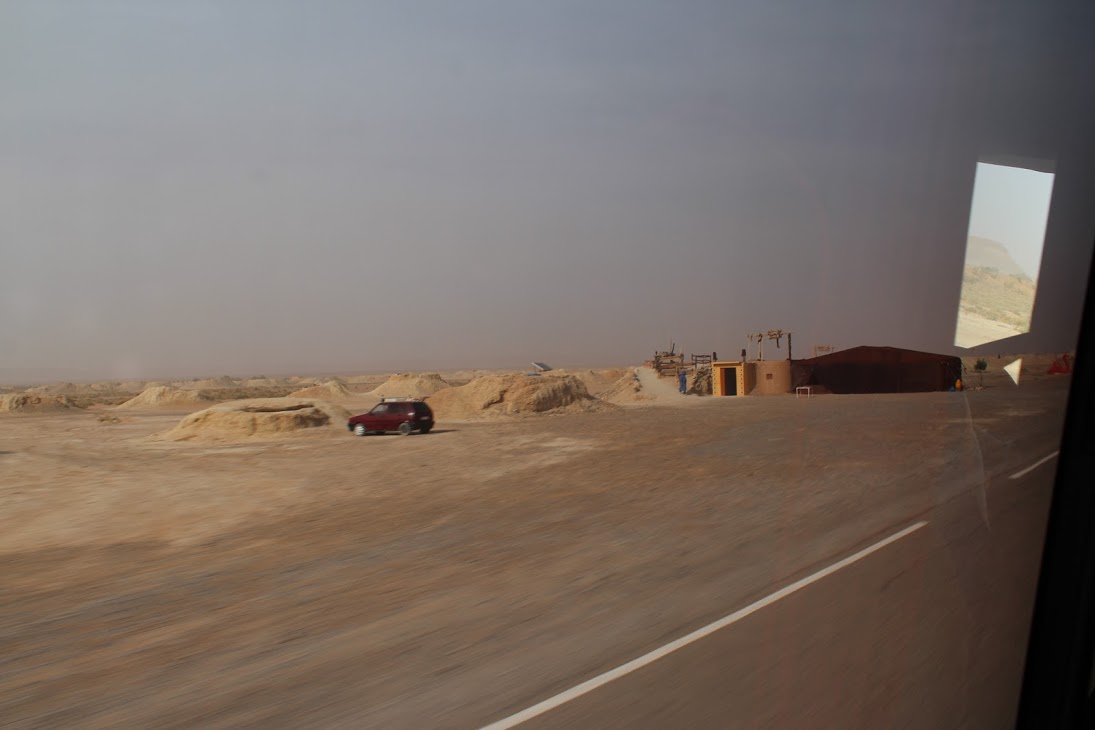
As we travelled along there were signs of the water canals. The mounds are earth works around the ventilation shafts. You can read more here at Thomas Stanley's personal website or read an academic paper on them here.
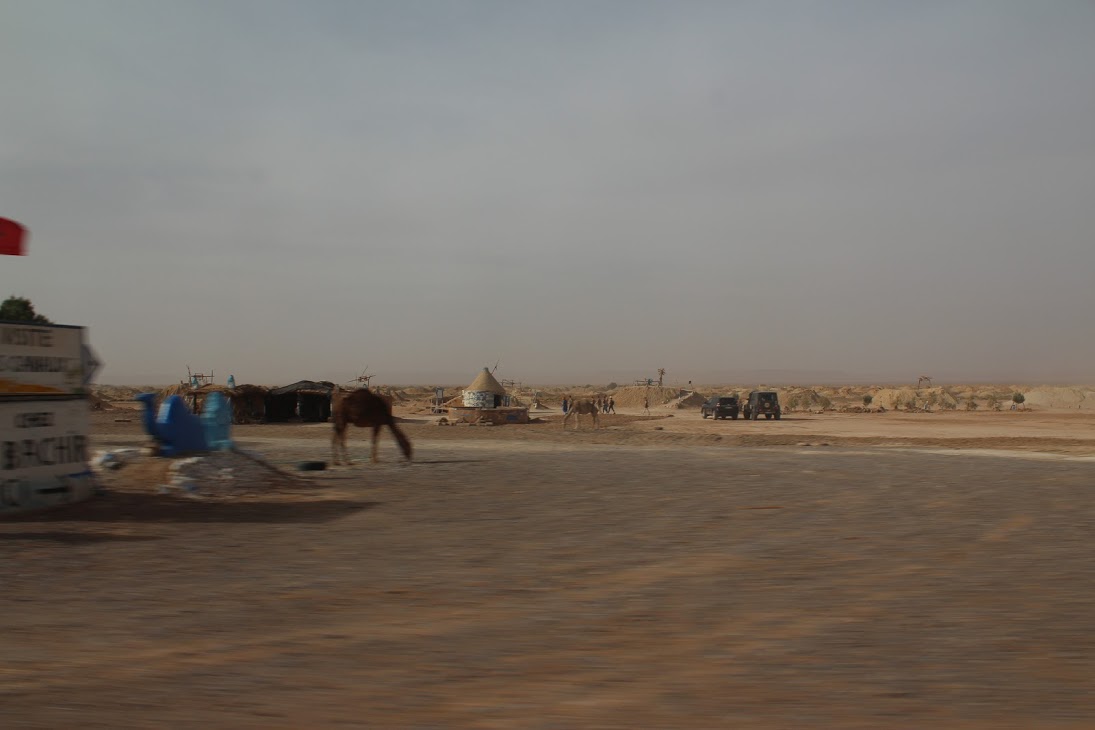
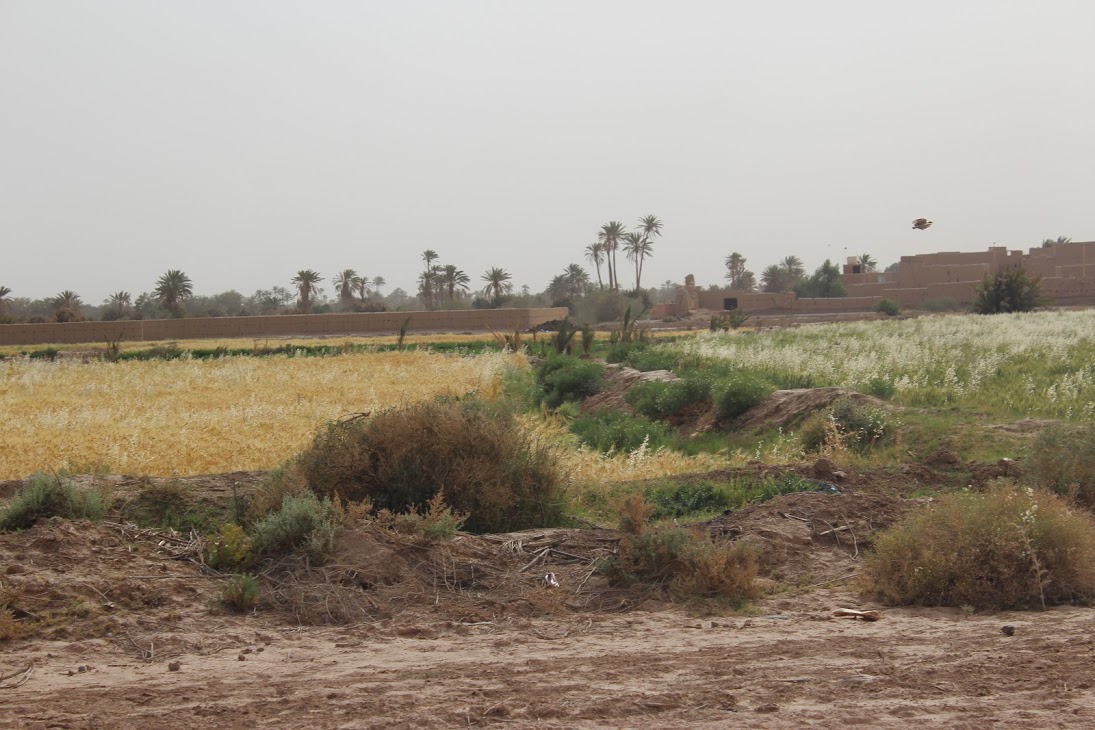
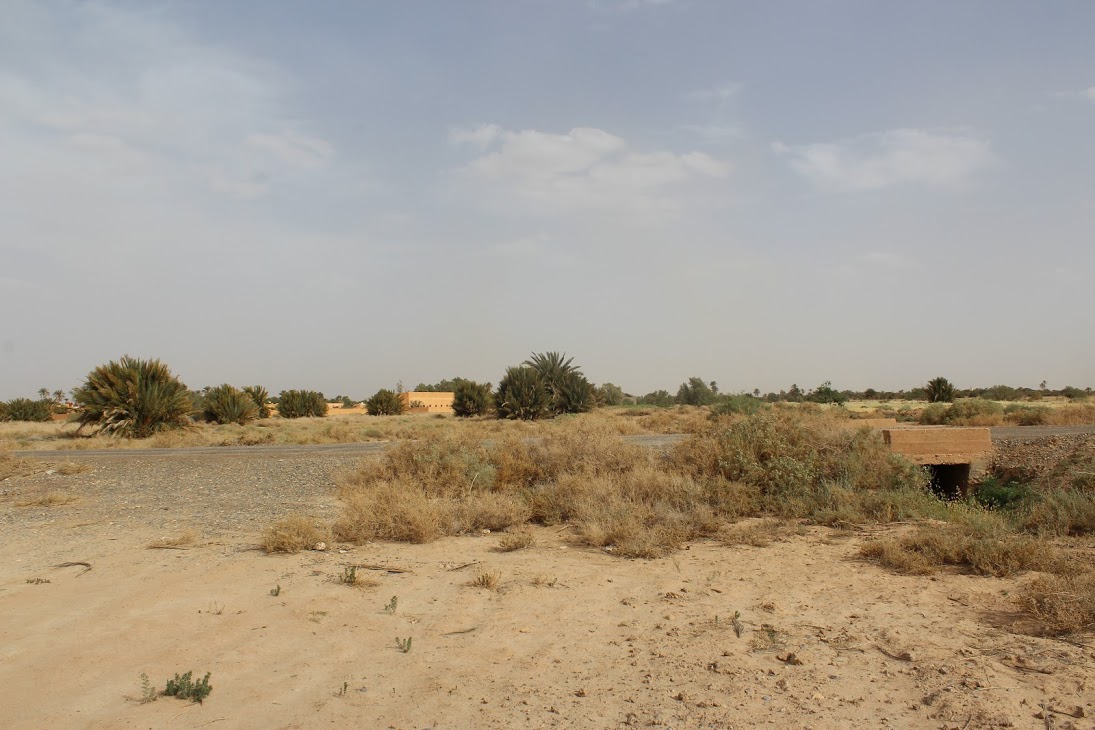
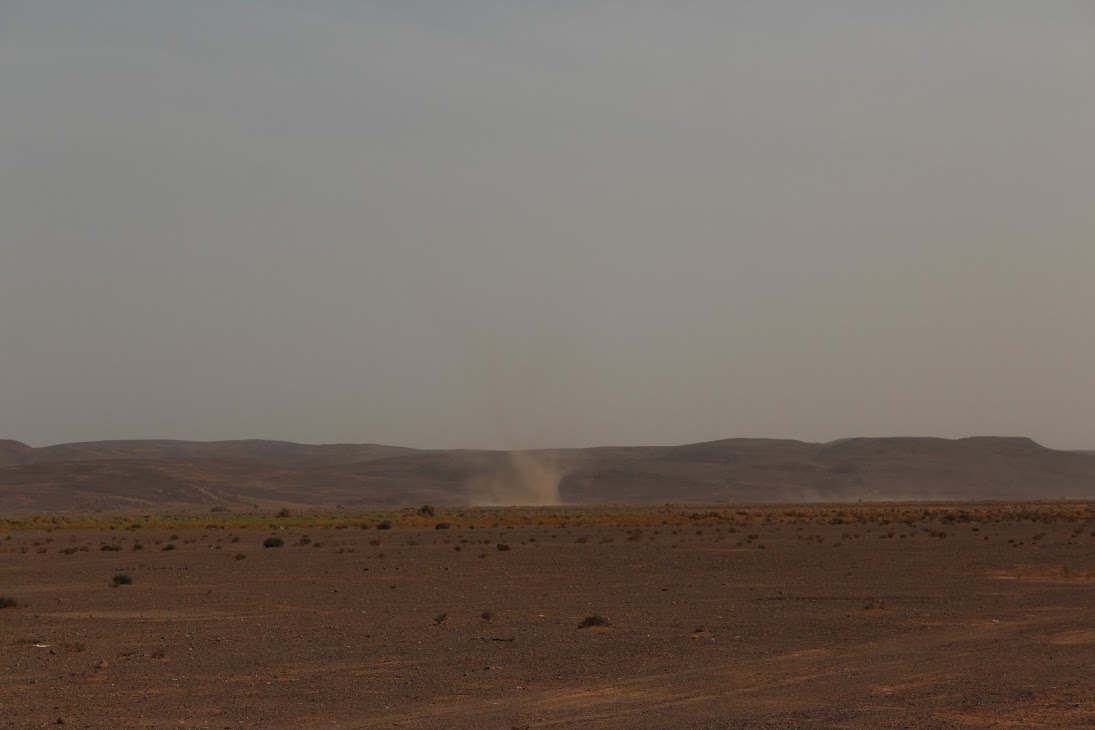
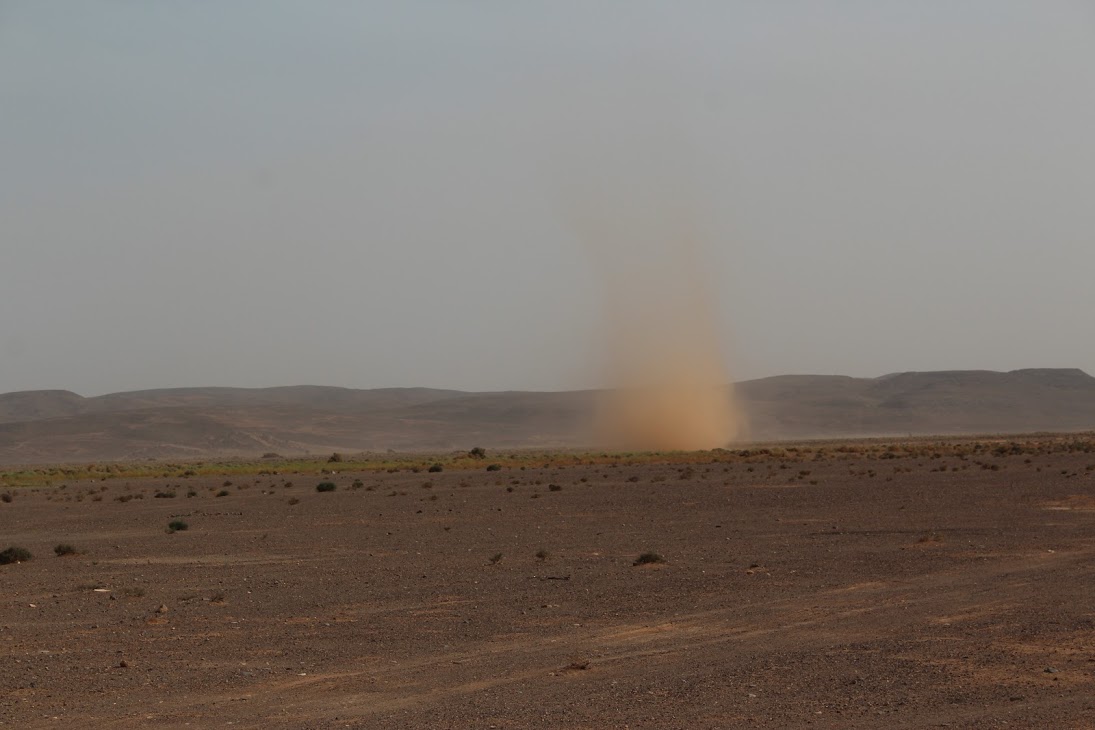
One of the picture sections below shows one stop we made where you could see "dust-devils" forming in the distance. At one point one appeared to be heading for us. I had taken refuge from the heat at this time in the bus, but there were others in our party outside. Luckily the dust-devil sped past at a distance on the right. We were also treated to a visit from a local!
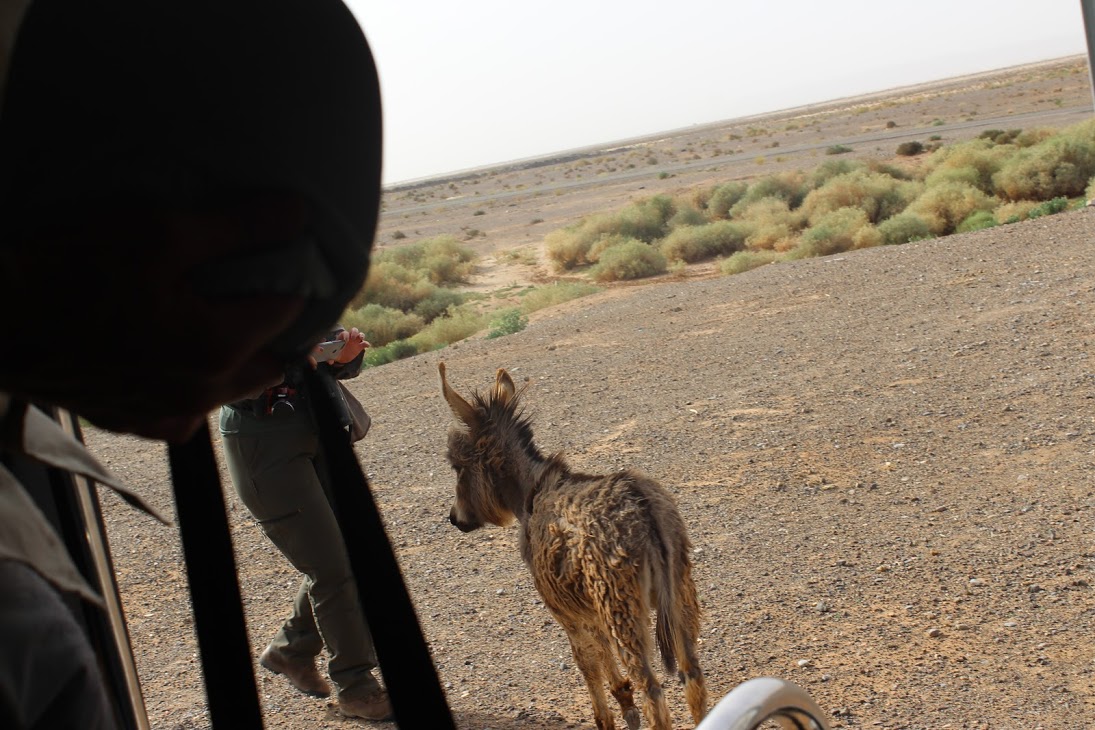
Our Desert Trip
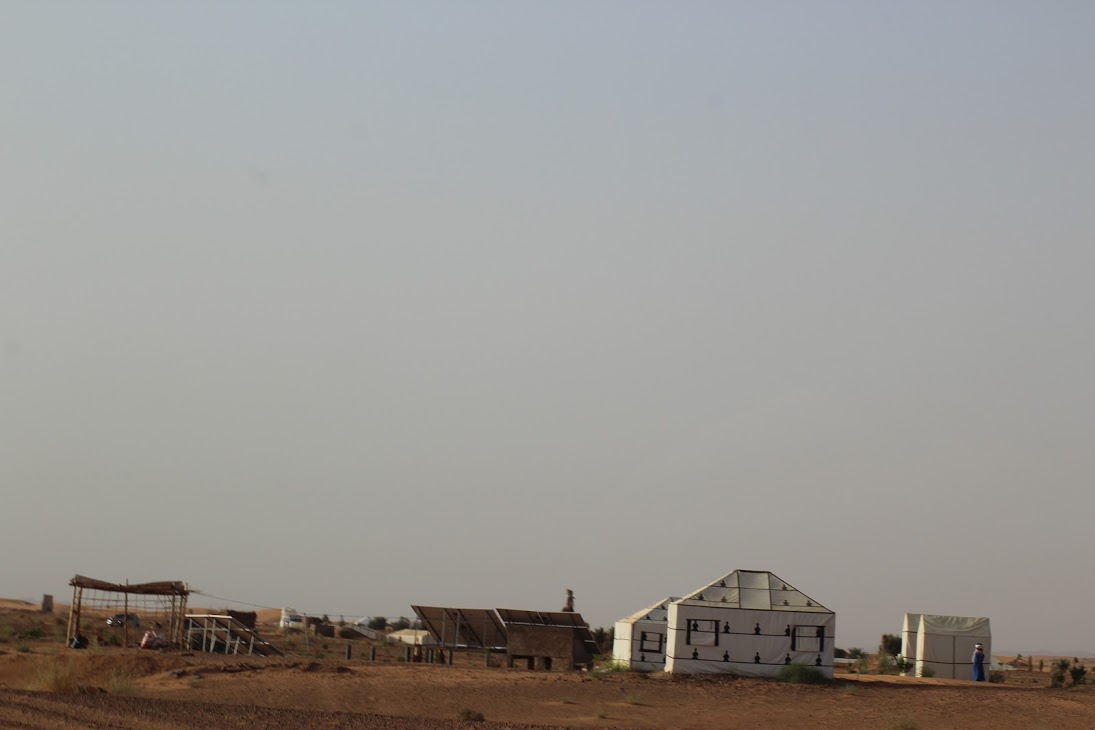
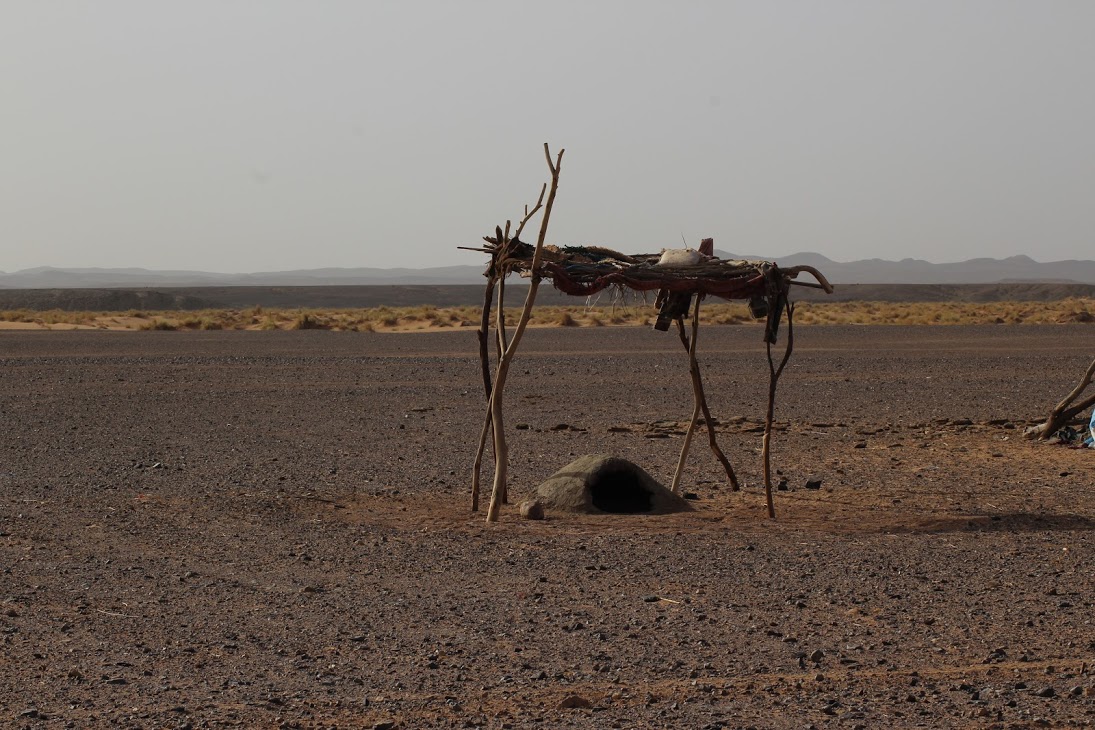
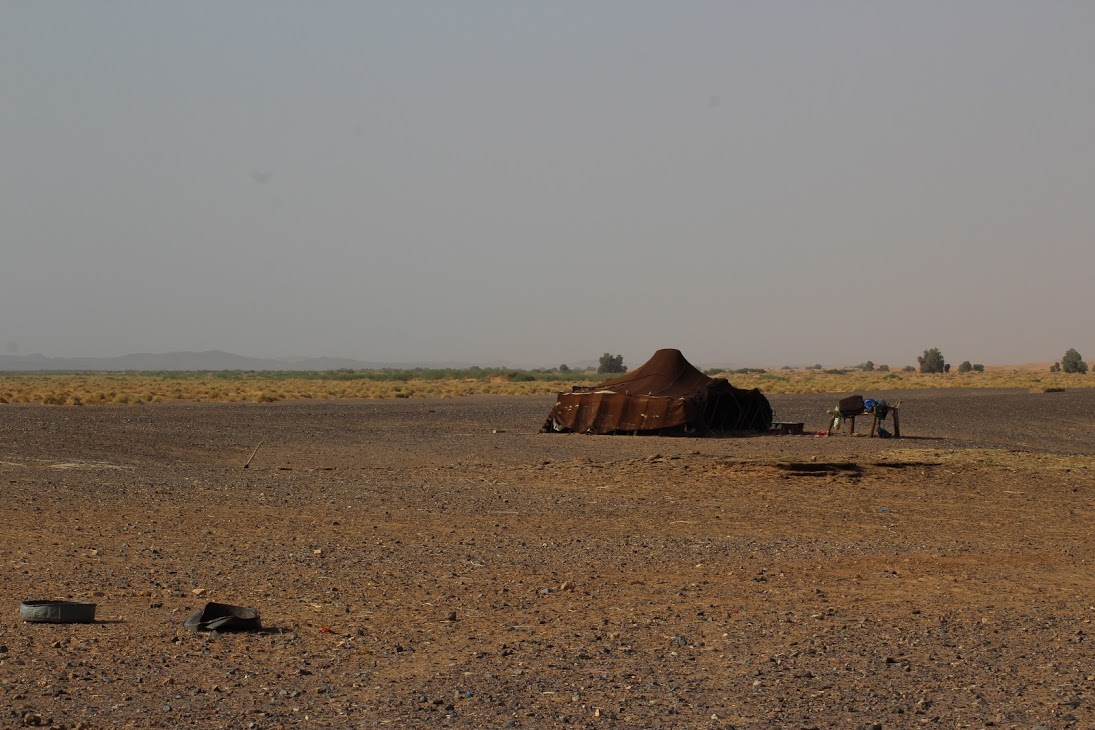
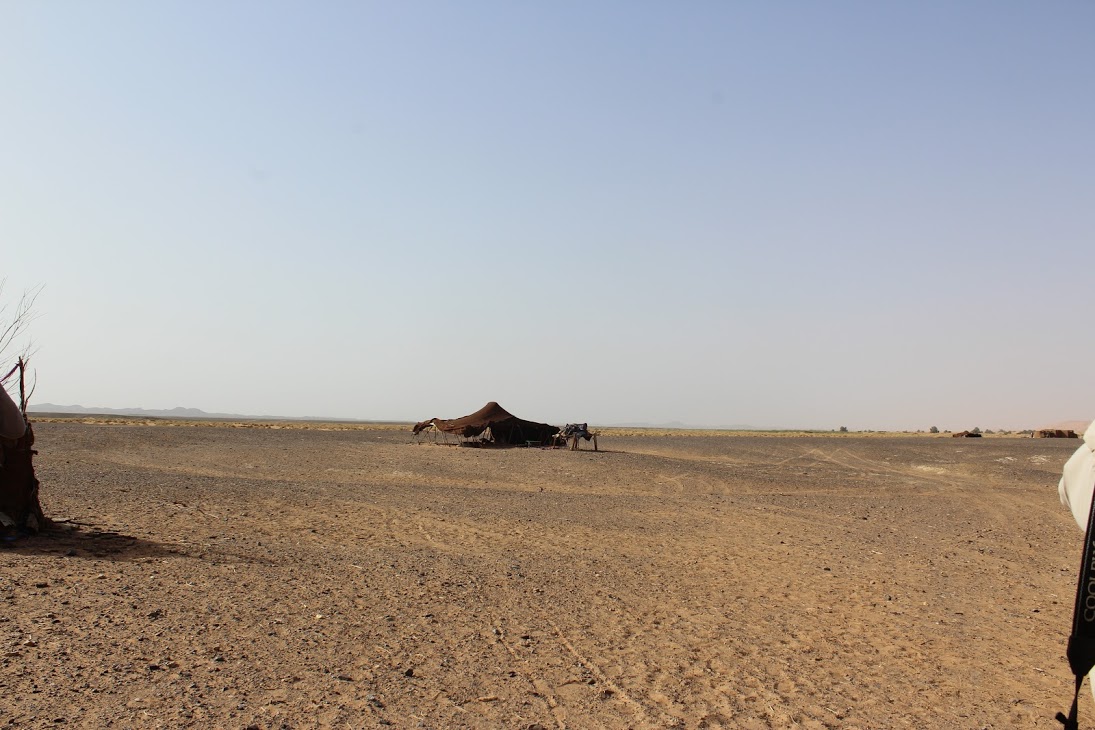
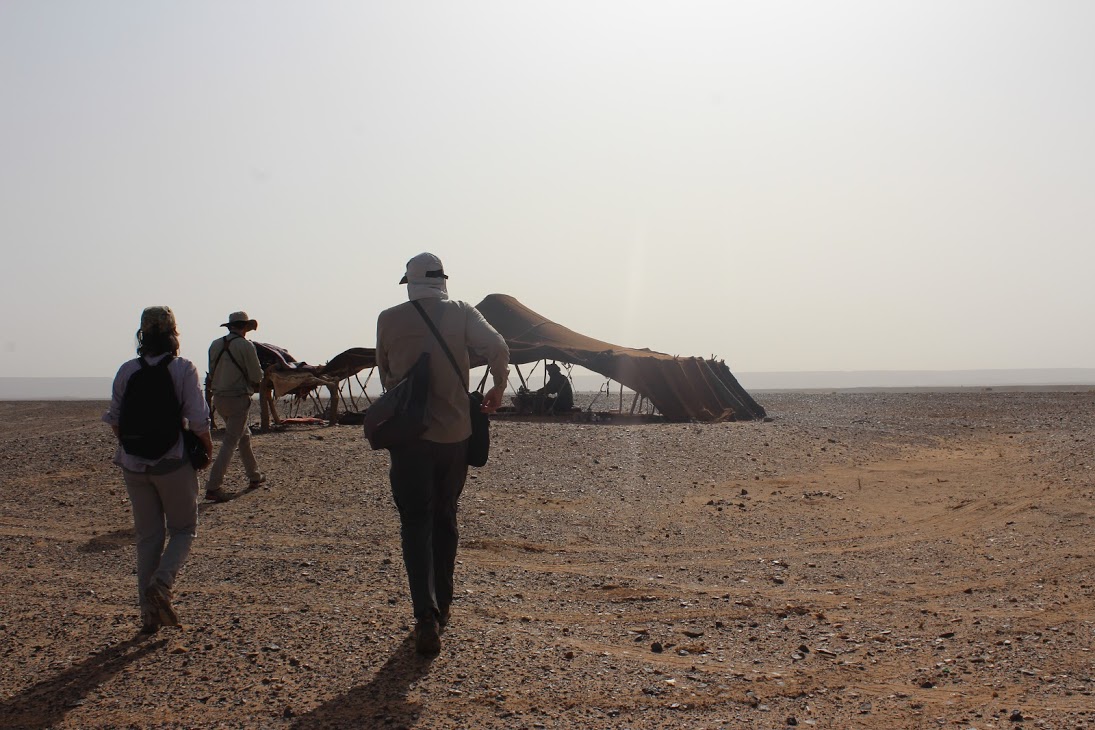
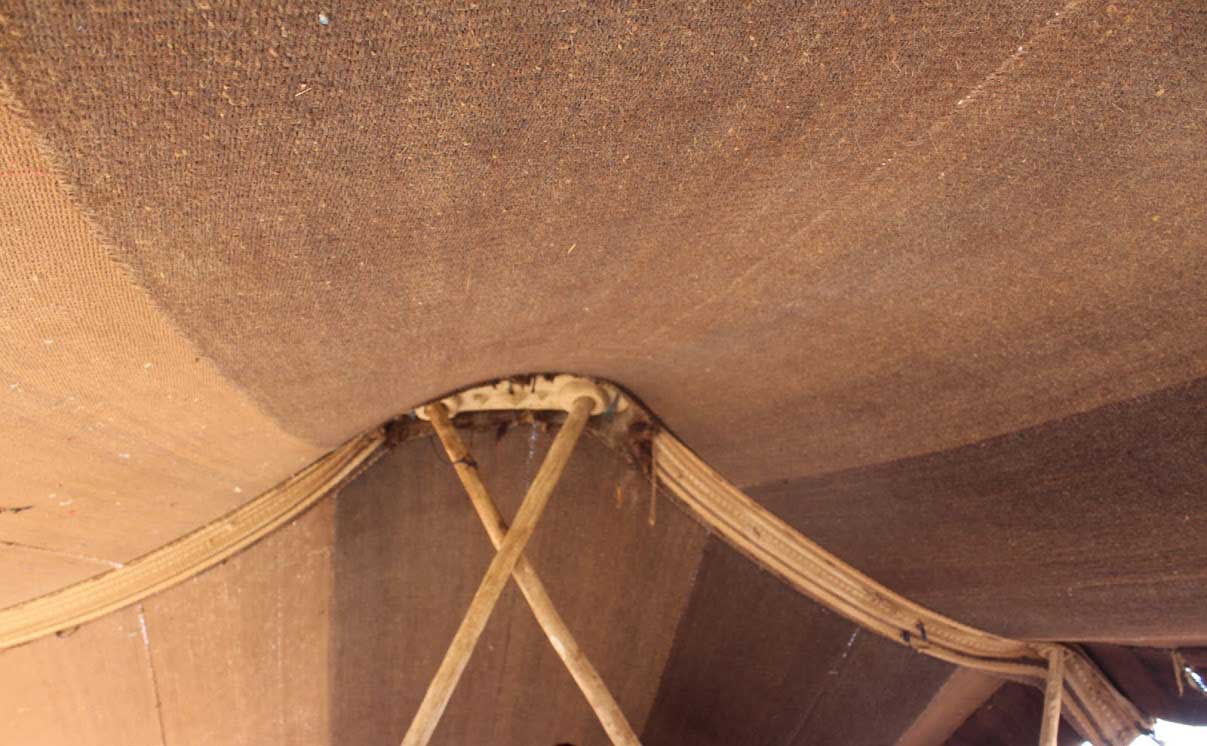
Our day out in the desert meant we transferred from the safe hands of our bus driver for the week into the hands of a tour company that provided 4x4 trips around the Erg Chebbi dunes. The ride was erm… interesting.
During our trip I saw what was advertised as Bedouin tents to sleep in the desert. We also were taken to a Bedouin village where we were treated to mint tea and peanuts. What surprised me the most (and I don't know why I should have been surprised) was that underneath the tent it was quite cool.
The whole area is criss-crossed by roads with 4x4 vehicles flying past at great speeds. One place we stopped was incredibly busy — busier than my village at home.
To the Kasbah!
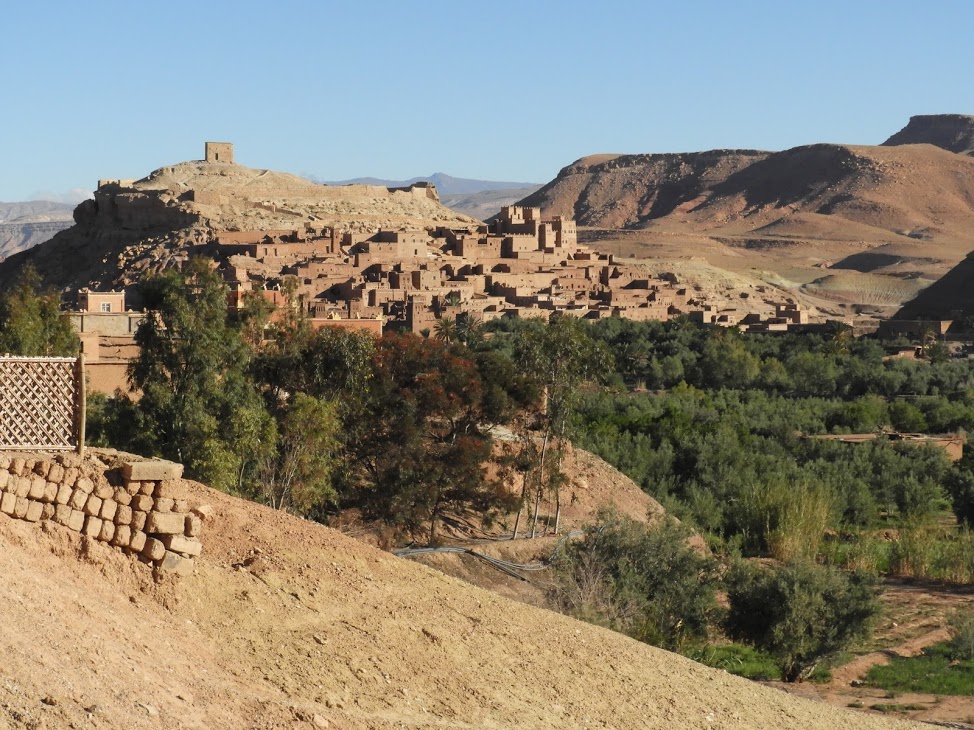
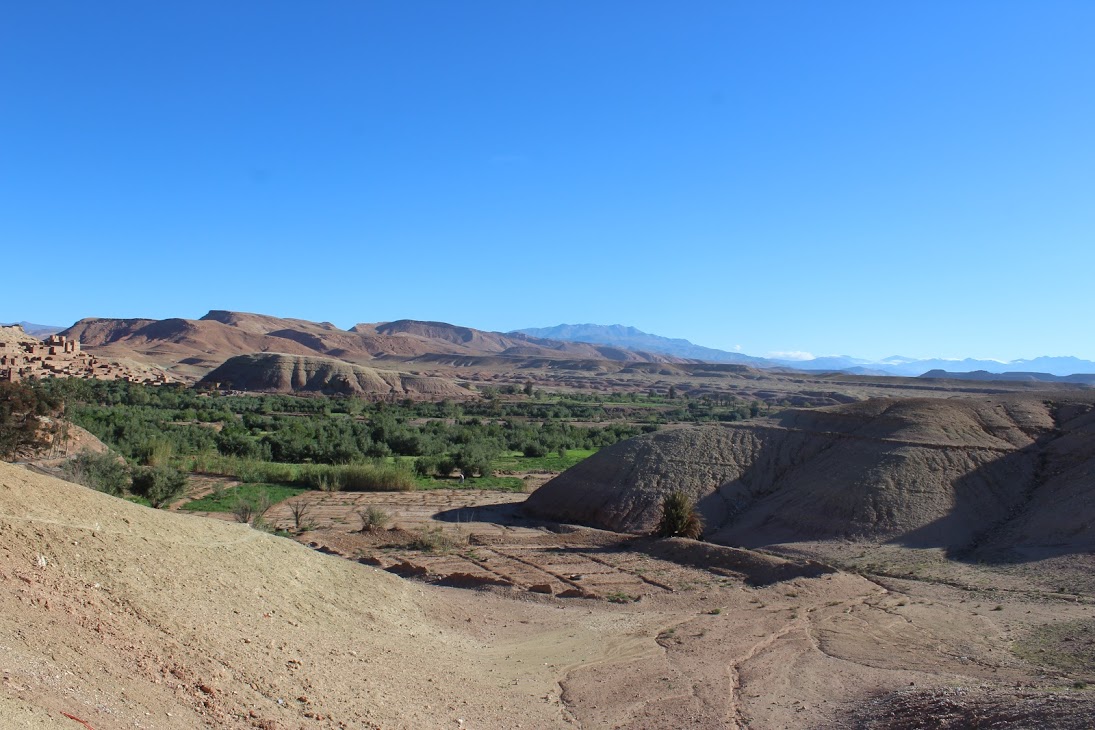
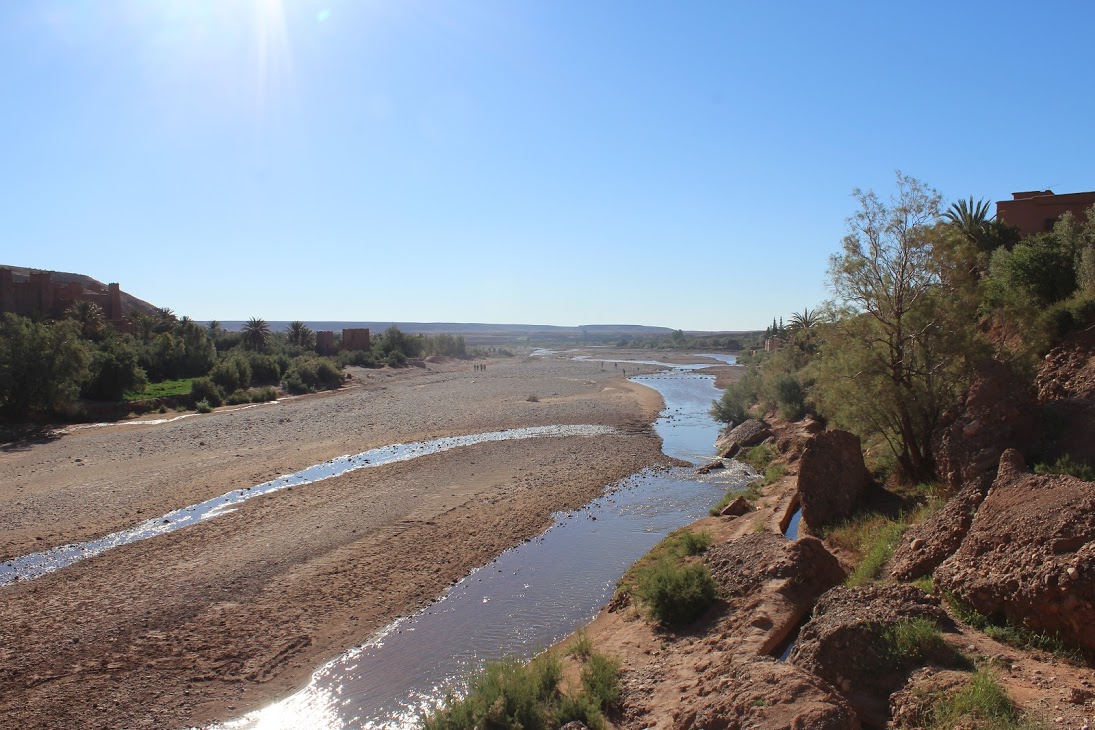
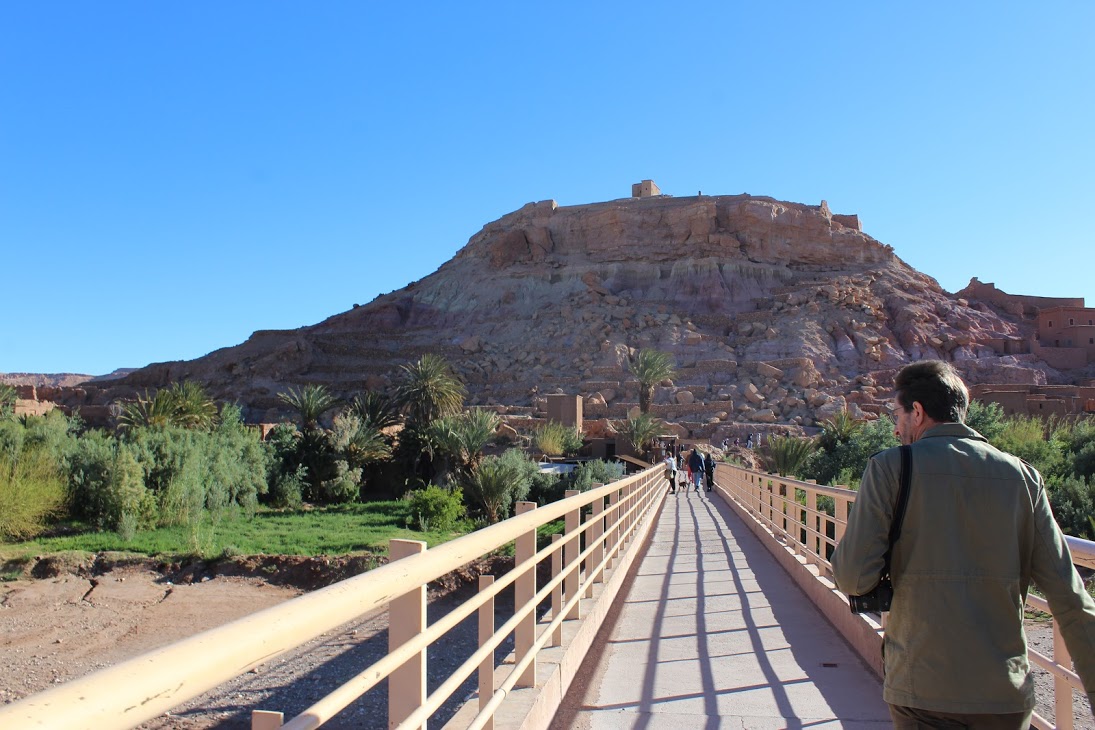
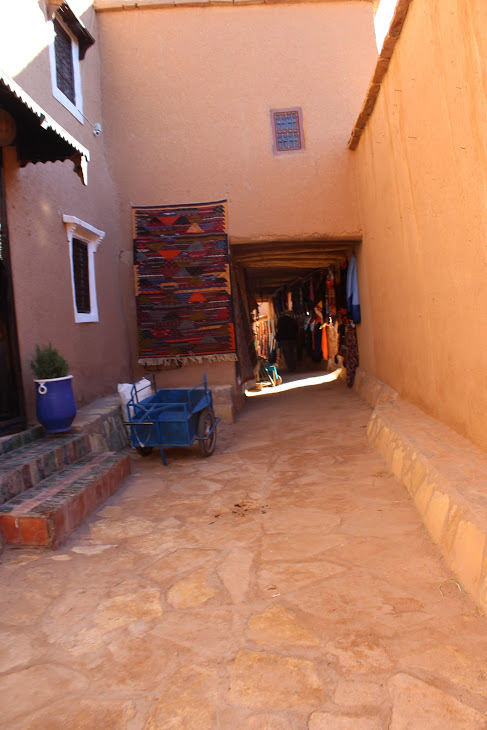
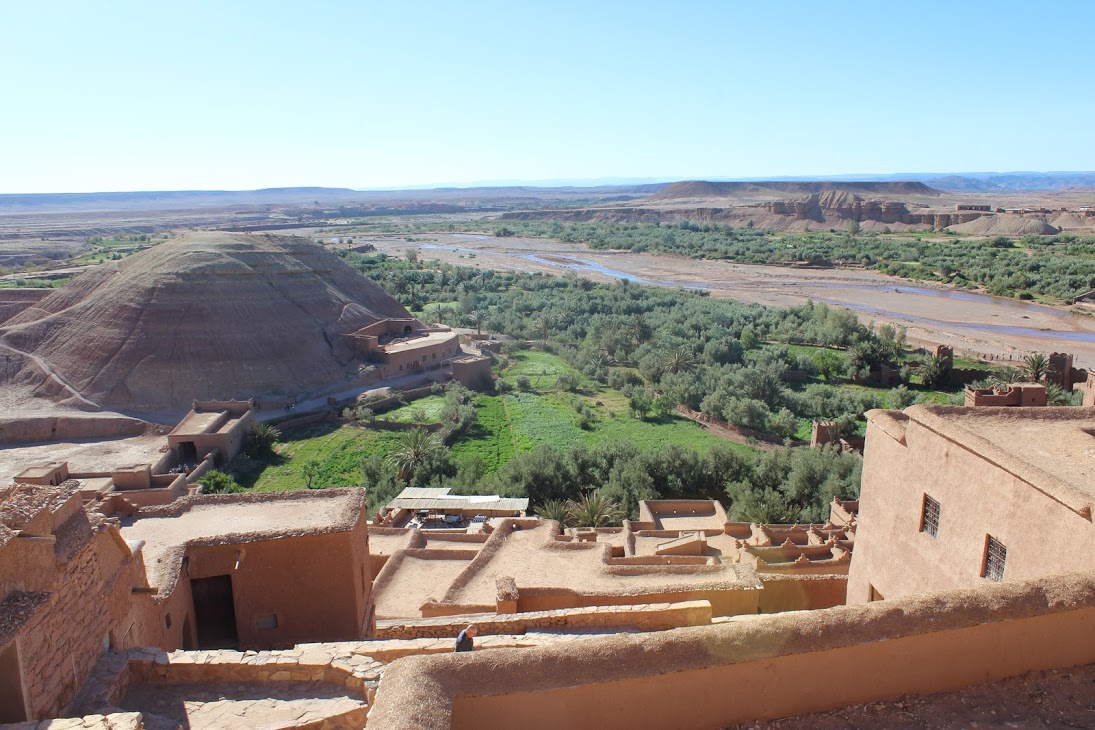
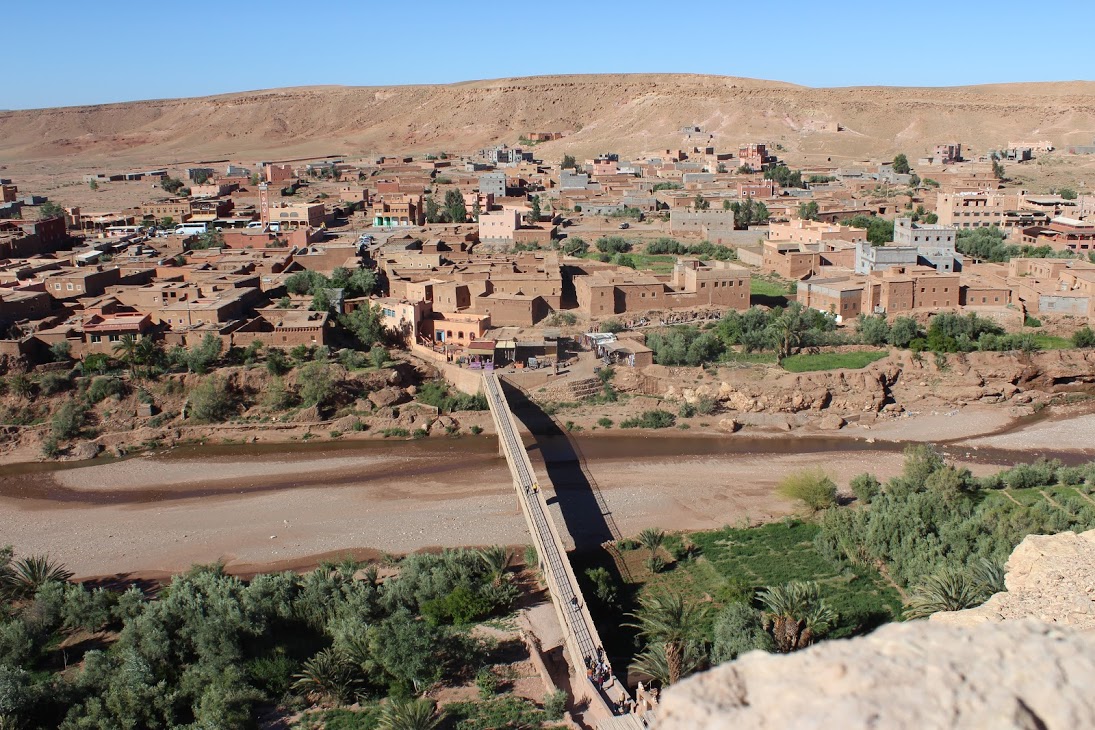
We paid a visit to a very famous Kasbah. The Ksar of Ait-Ben-Haddou is a UNESCO world heritage site. It has also been used as a film location for a number of films, none of which I have watched!
We walked up around the outside and onto the top rather than climbing up all the stairs. It was very popular and I saw one tourist group lose their drone as it crashed down through the flat roofs smashing up bits of itself as it went down.
A Ski Resort!
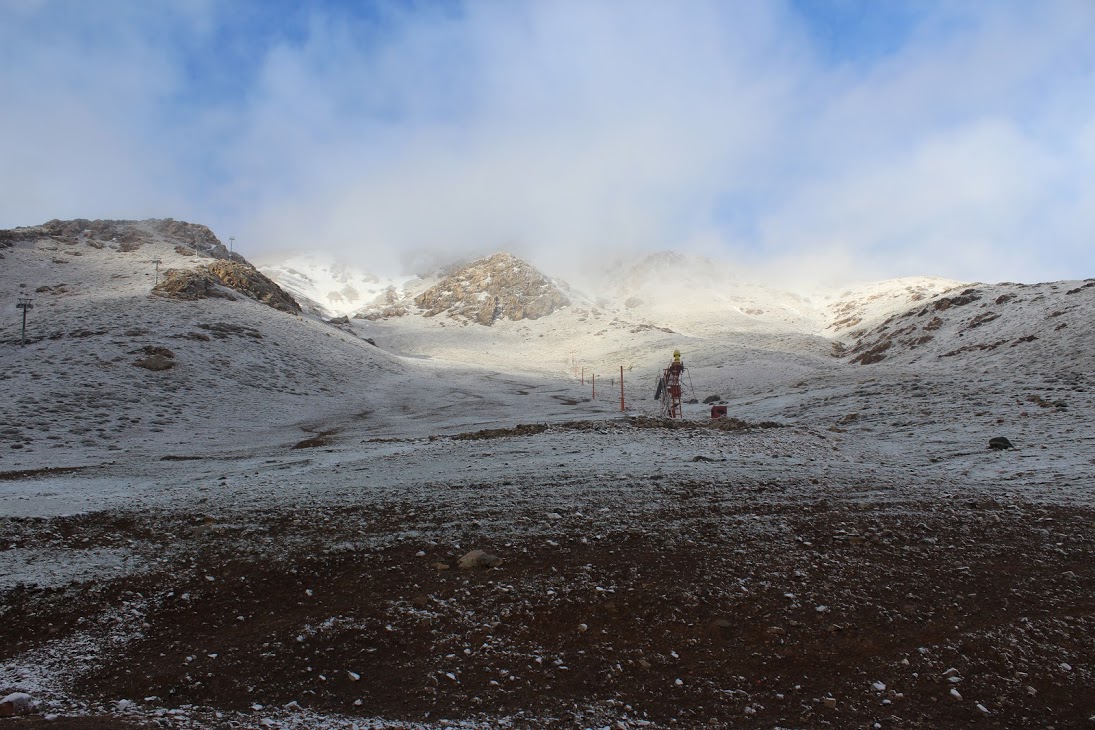
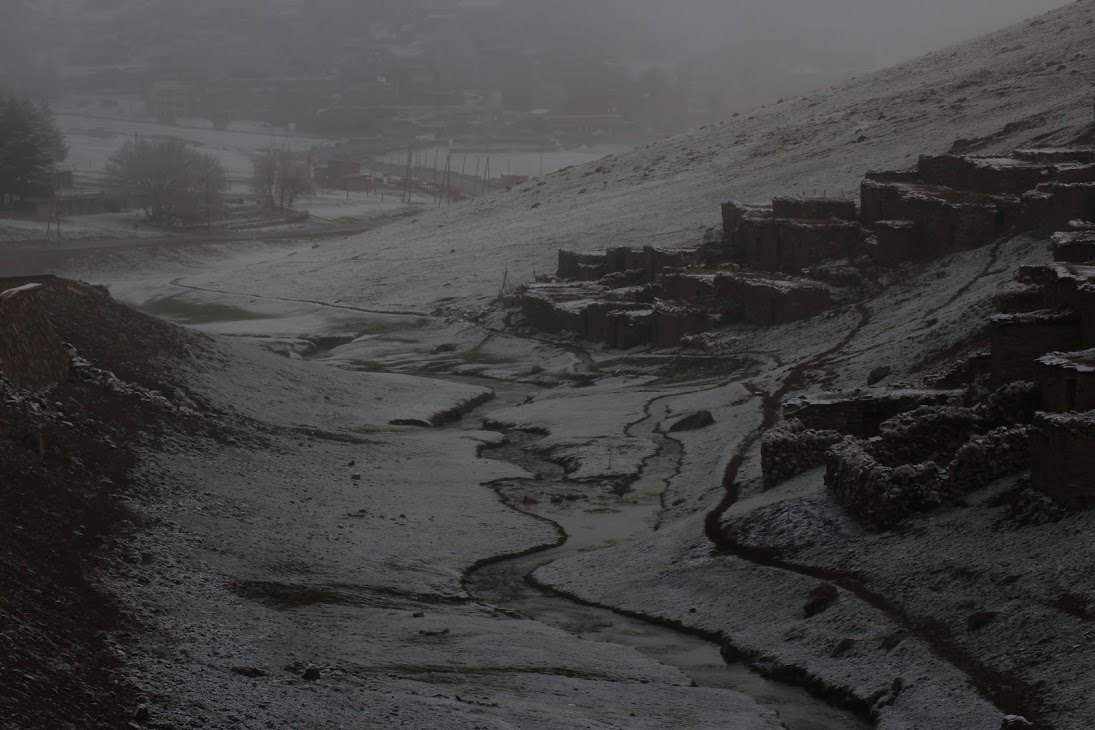
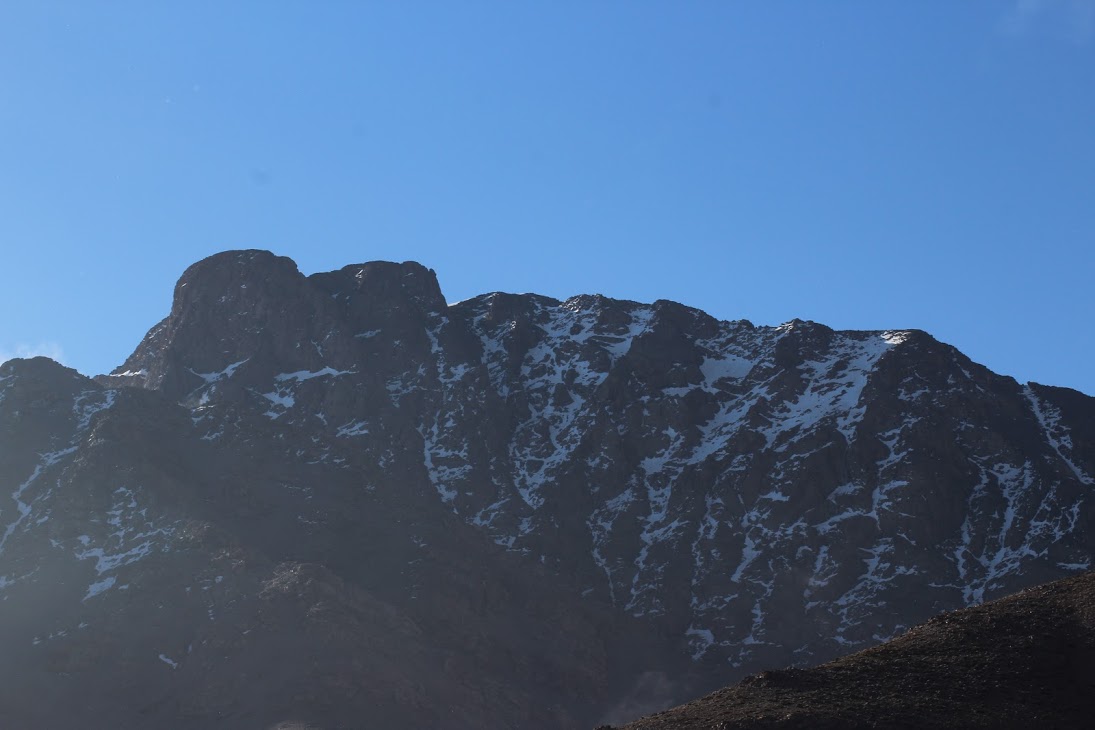
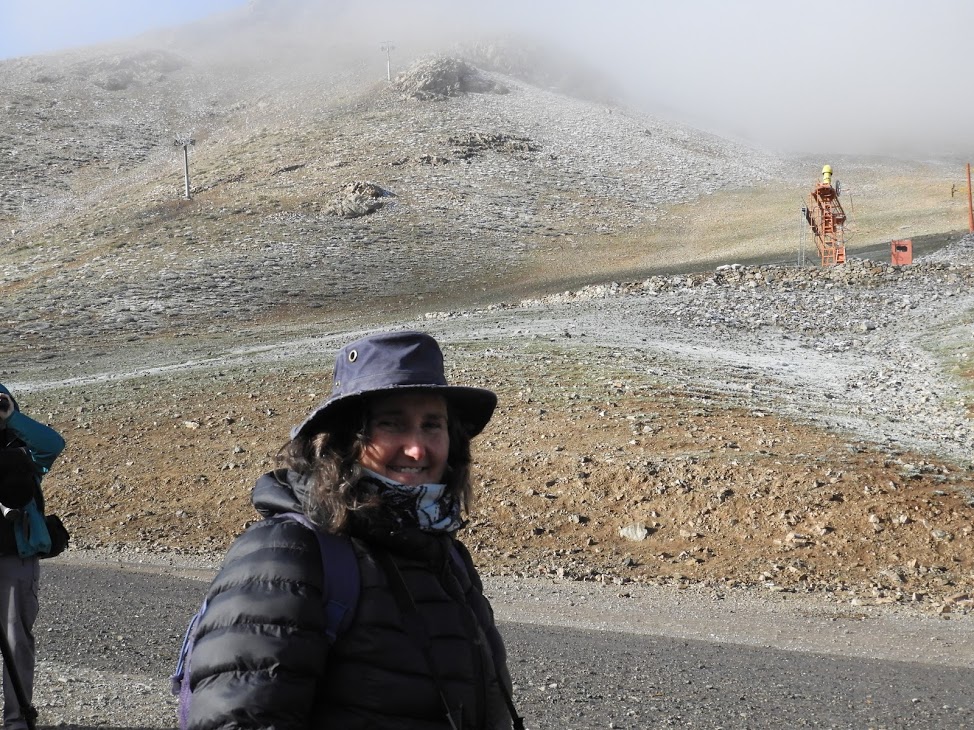
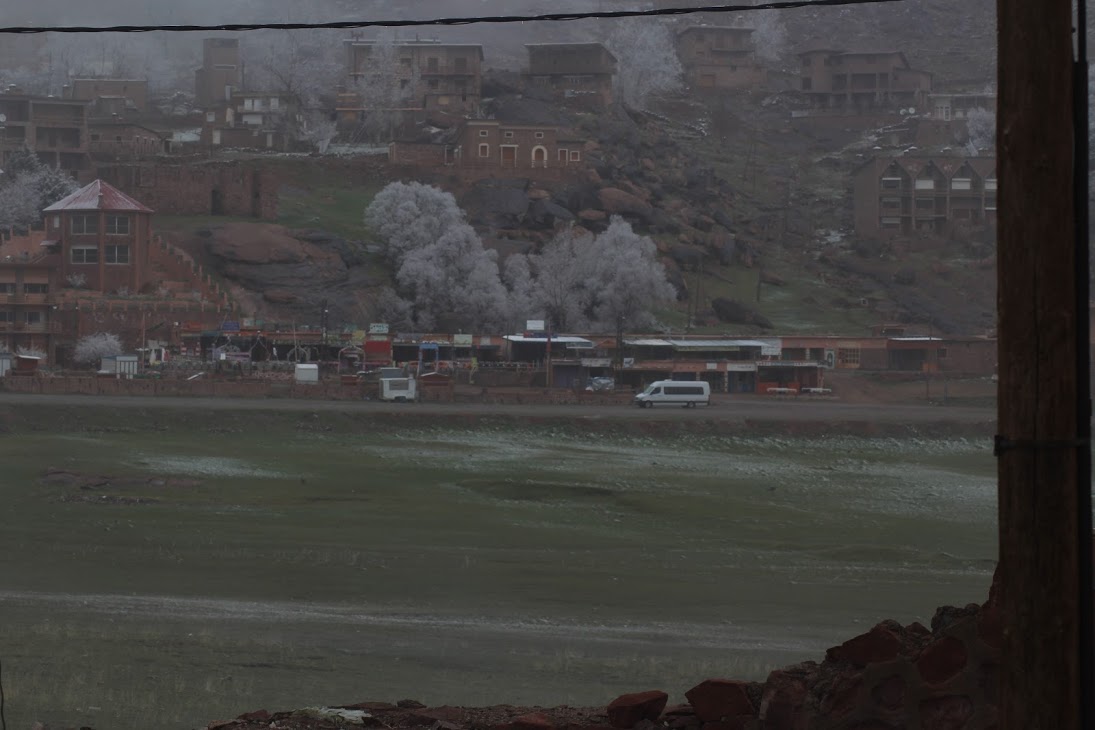
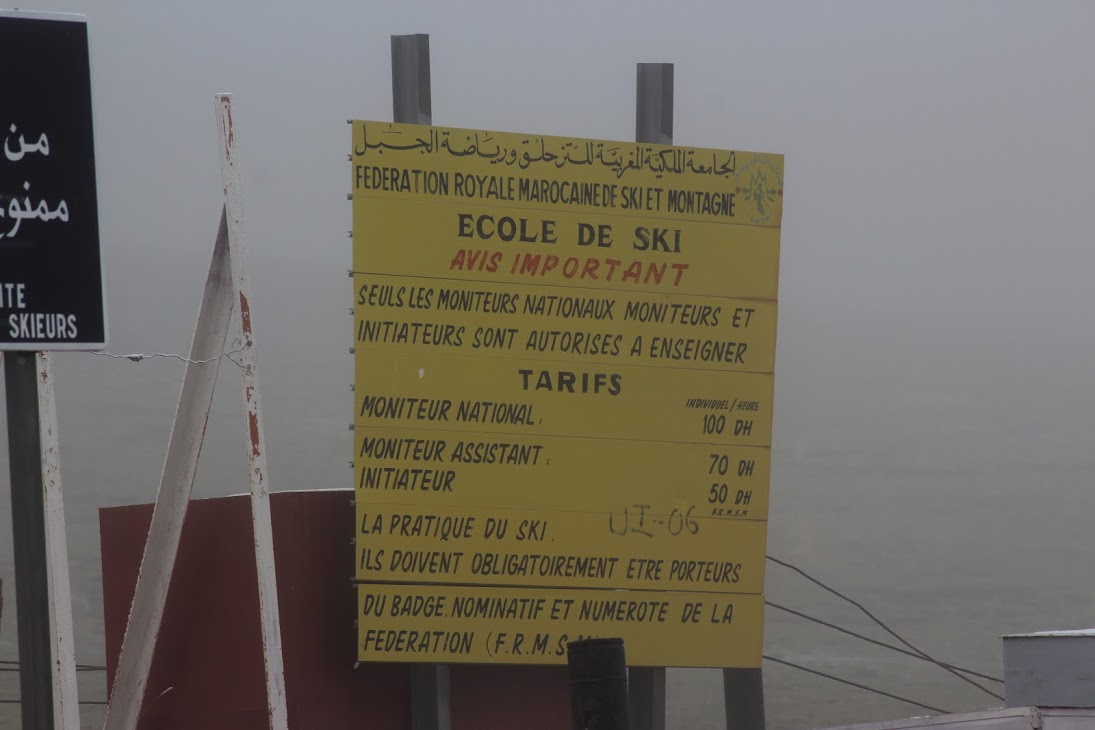
One of our last trips was up to Oukaimeden, a mountain village 2,650m up in the Atlas mountains. As a Ski resort there are not that many reviews online.
Getting up to the resort made me feel slightly travel sick. The roads were quite winding. We frequented the Hotel JuJu which was lovely and warm inside. It was quite cold outside! A little bit of snow but not enough for anybody to ski on.
Architecture
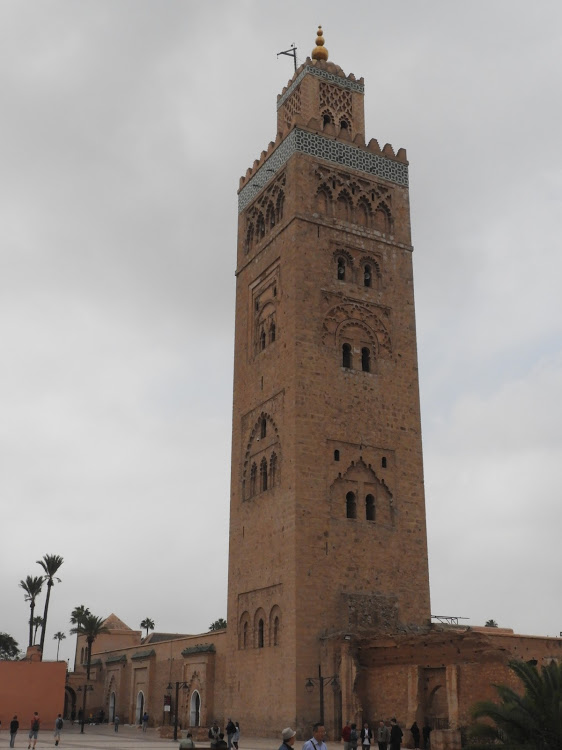
The dominant influence on the architecture we saw was Islamic. The tower shown here is one of the iconic images of Marrakech — the Koutoubia Mosque tower. You can read some more about the architecture of it and others here.
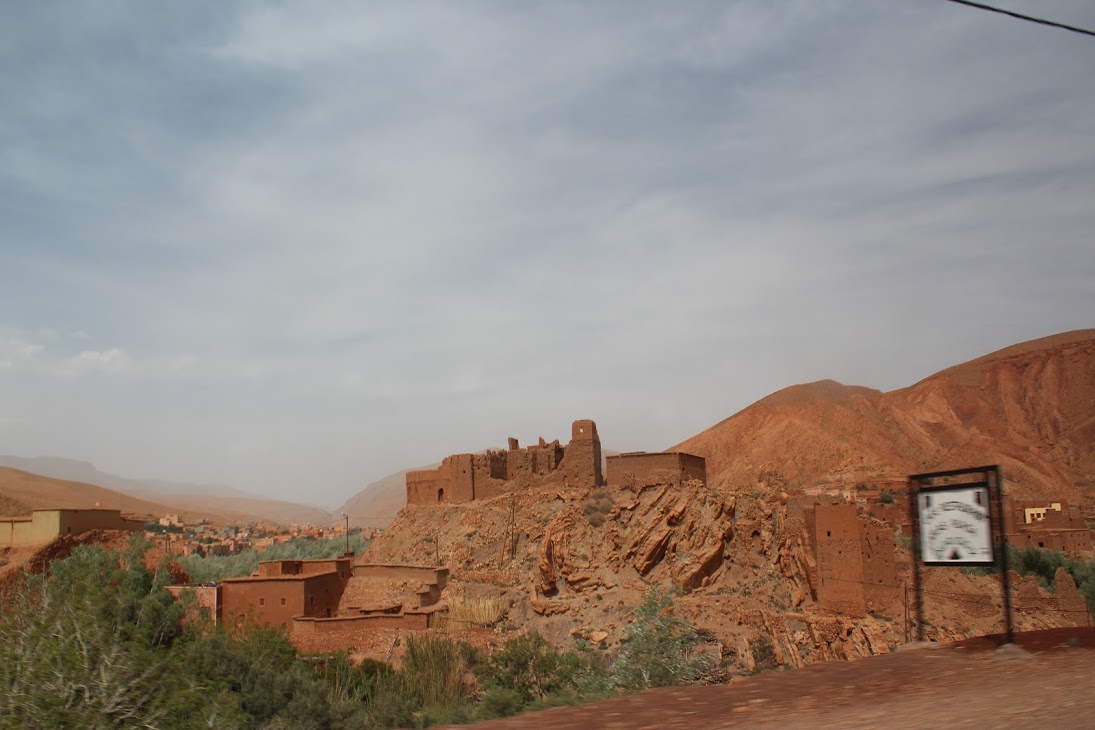
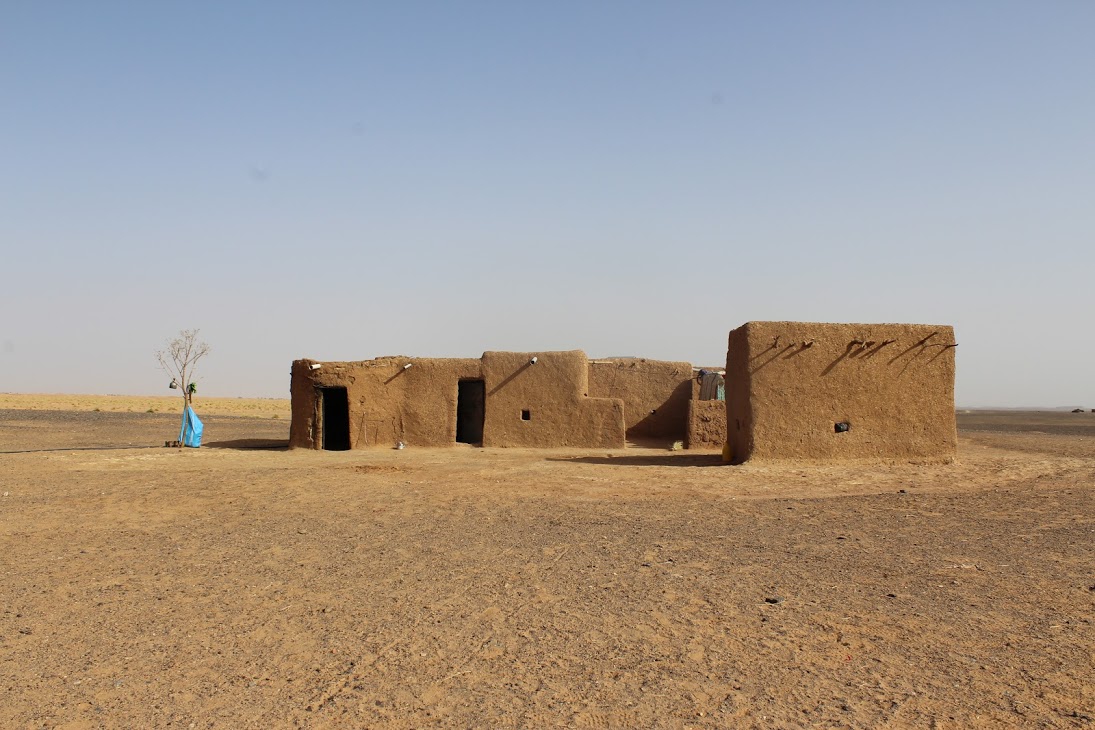
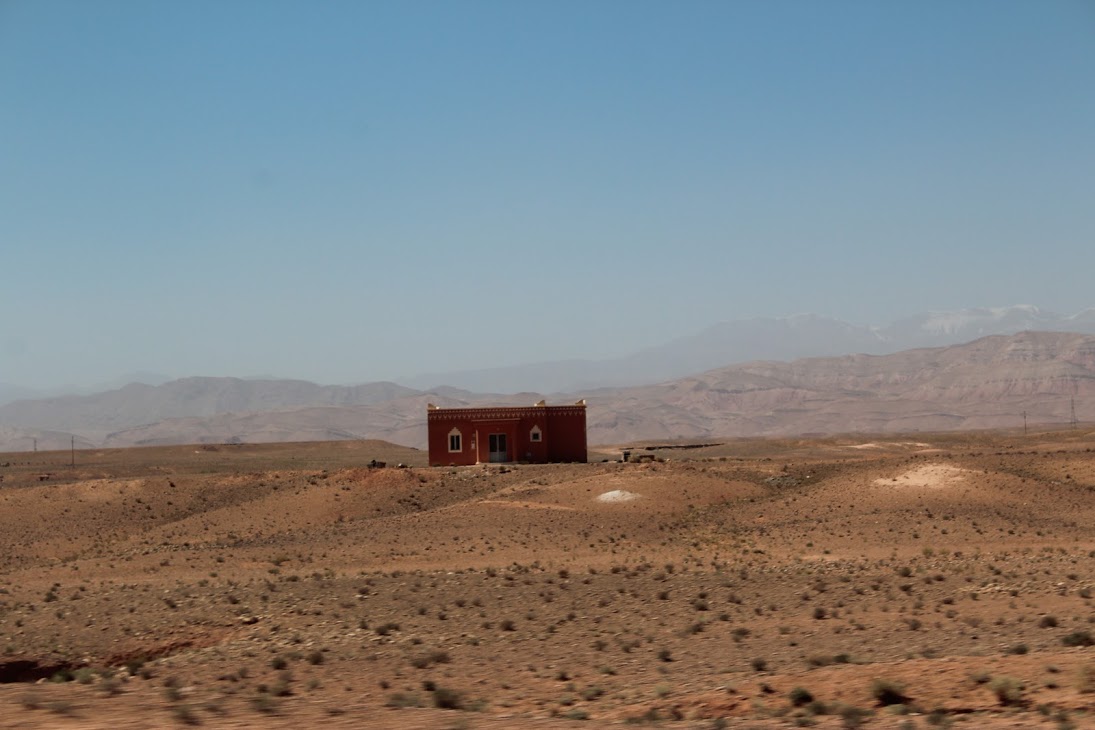
I noticed predominantly that the houses were made of a mud and brick construction, which apparently dates from 110 BCE. The image to the right was found in the desert near Merzouga and was where the Bedouin village was. These buildings are reminiscent of the cob buildings in my own village, but without the careful layering of paint that you need to have in a wet country like the UK! The building systems are referred to as Pisé and adobe.
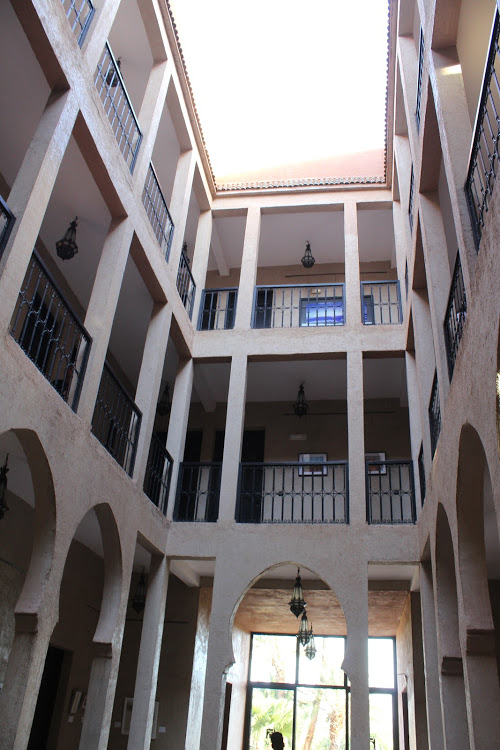
The term Riad is given to a house with a courtyard where all the rooms open into the courtyard. We saw this at the Dar Chamaa hotel. The picture to the right here is taken standing on the ground floor looking up. Commonly you will see the term Riad used for hotels now.
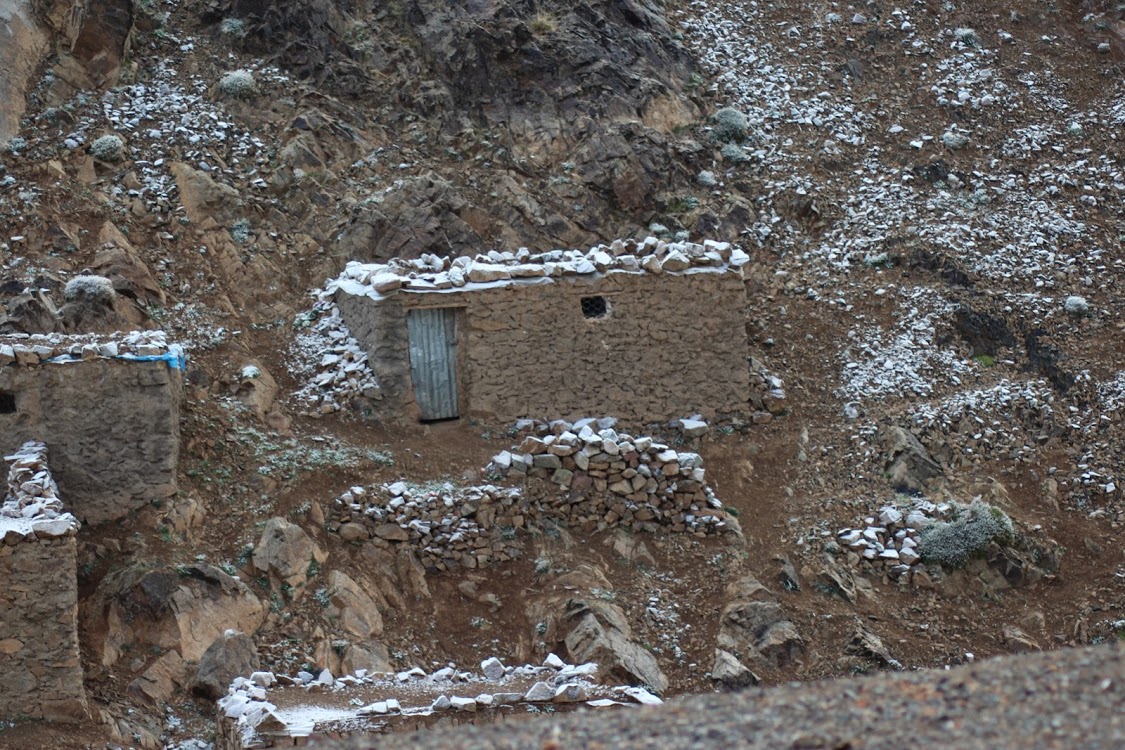
As we drove along I was intrigued that the majority of the houses were all the same colour. They were designed to blend in with the environment and hence are all a sandstone colour — the colour of the material they are created in. I noticed that schools were often multicoloured and stood out in the landscape. One exception — when we were in the mountains the brick construction blended in but was not sandstone and mud.
I noticed in Boumalne and in some other places there were large expanses of land laid out on the edges of the town as if in readiness for a housing estate. The street lights were in, the utilities appear to have been laid out, but no building plots starting. There appears to be a large investment in the infrastructure going on in Morocco, but it is not yet clear how this will start to effect the everyday person.
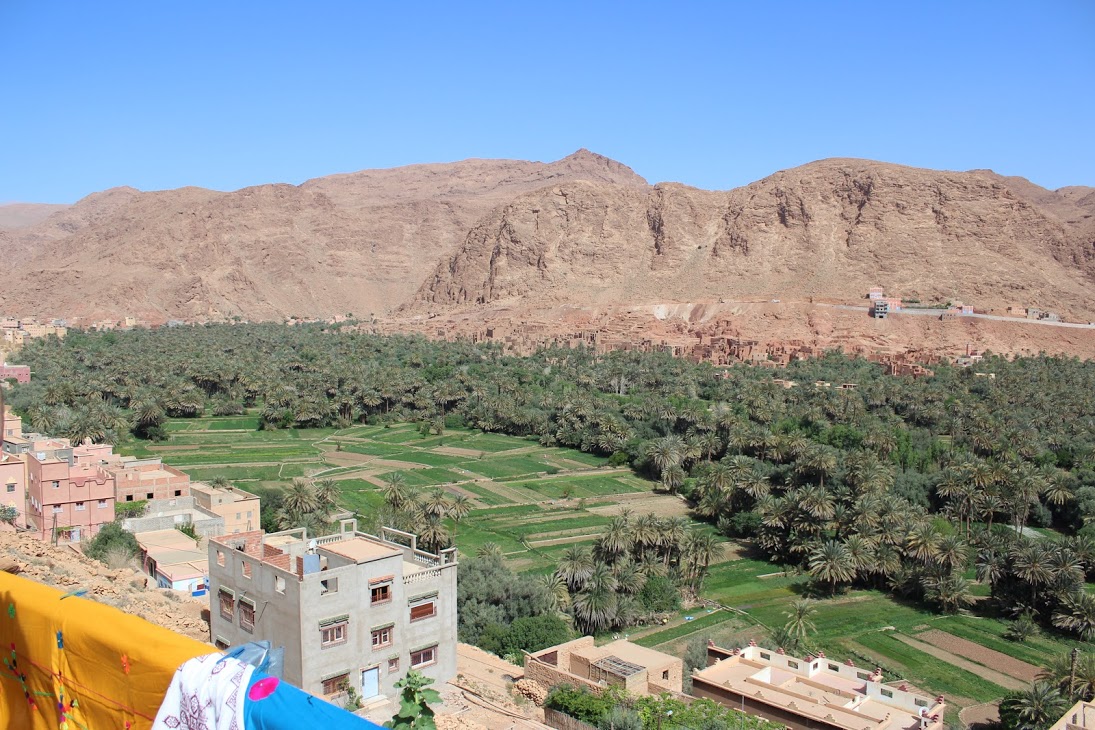
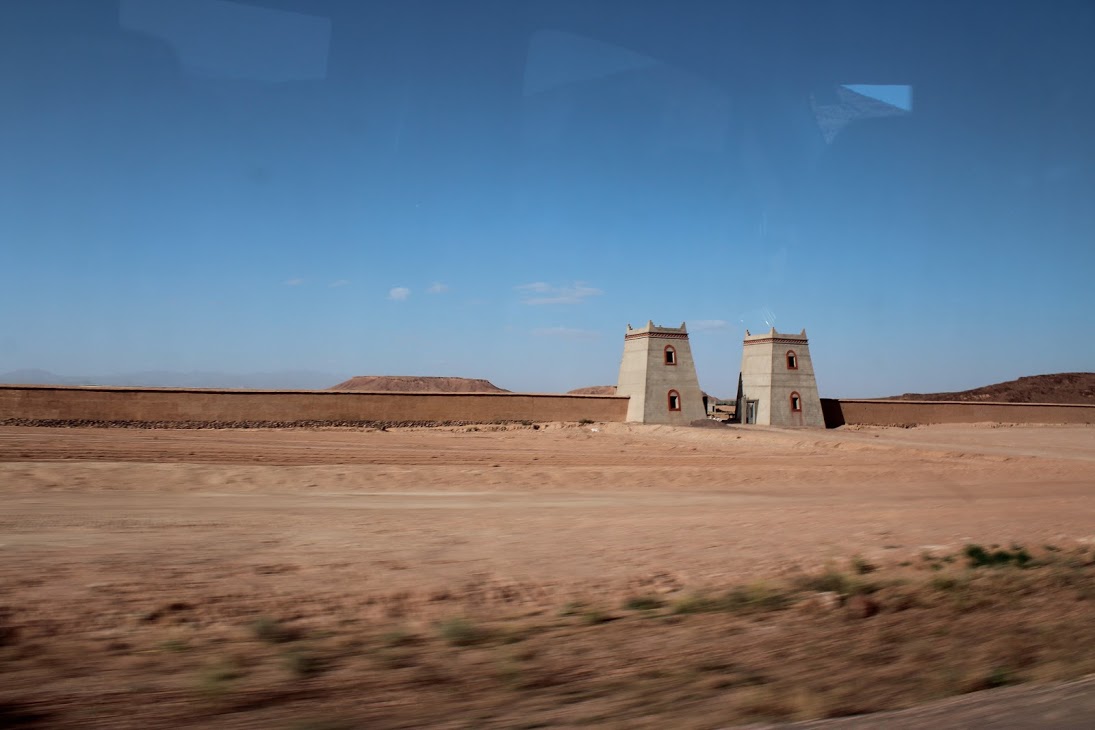
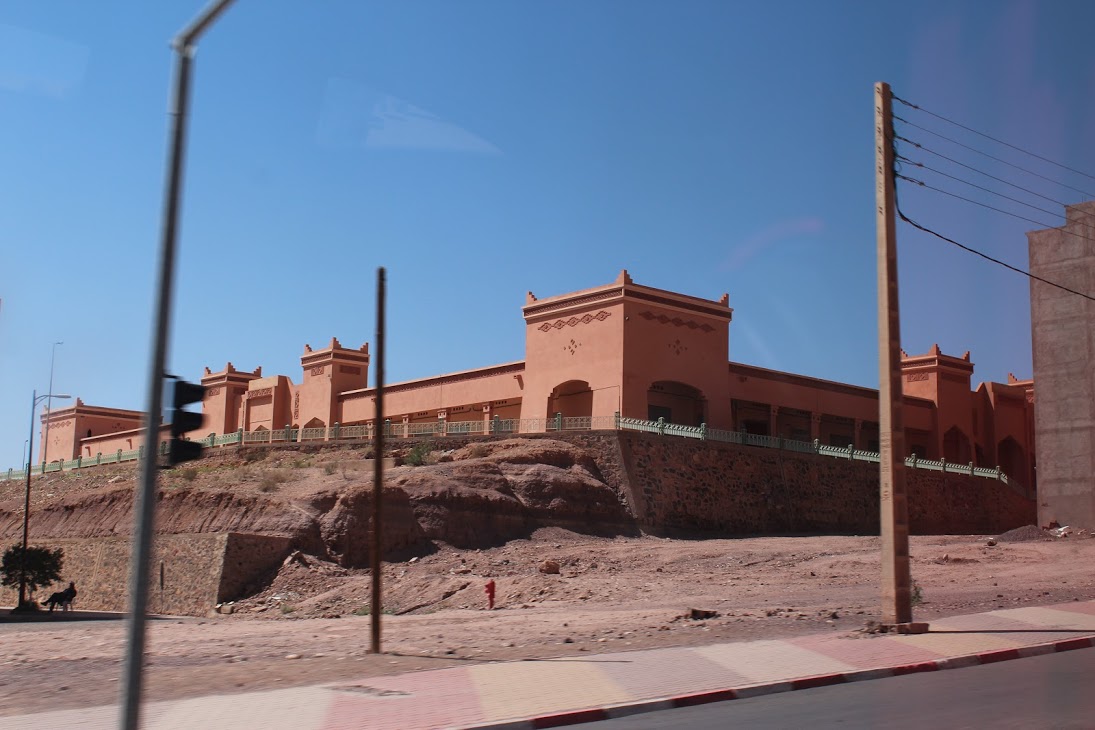
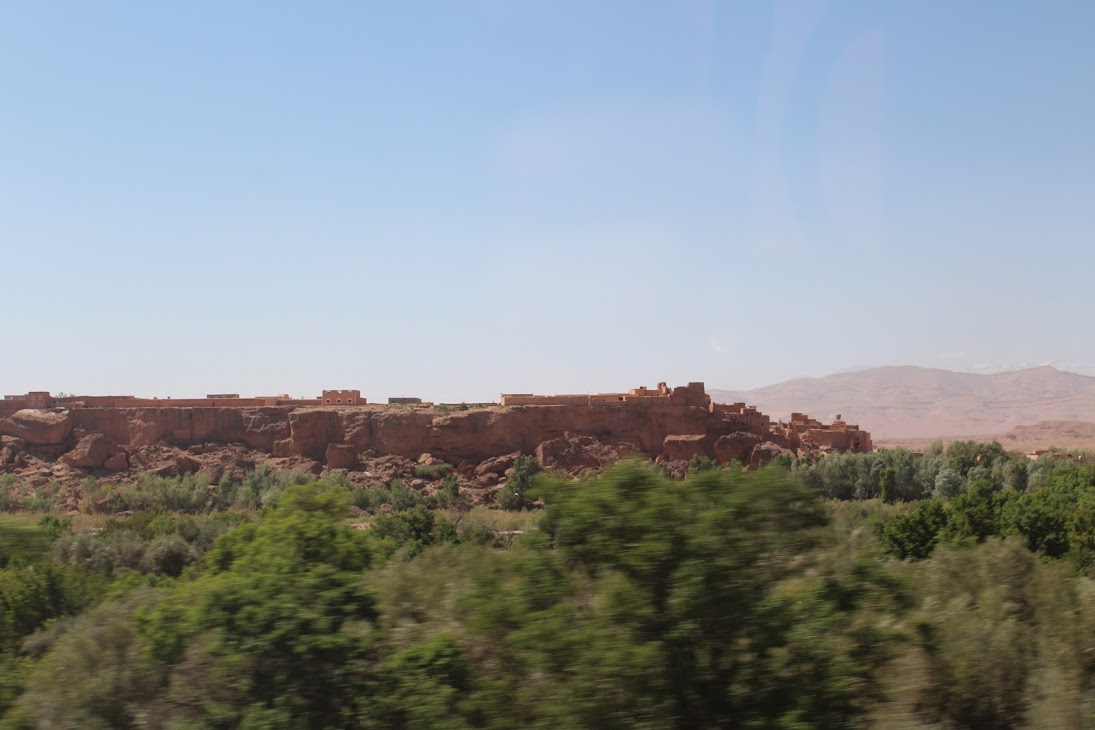
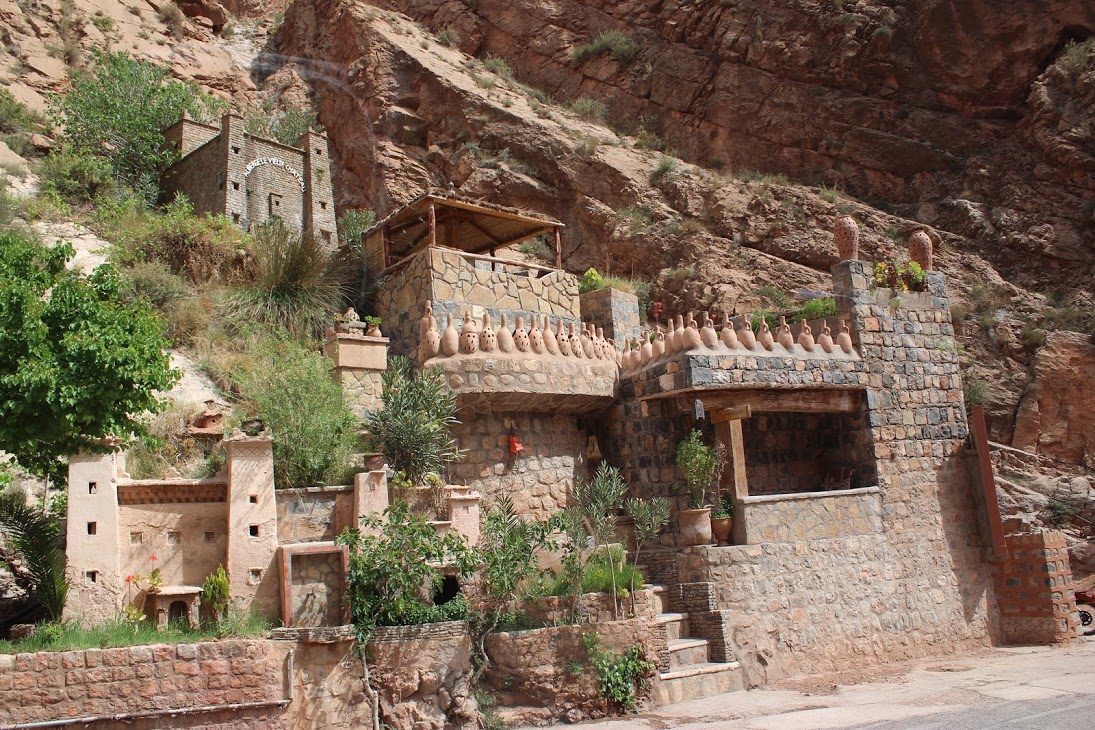
Whilst travelling around I saw a number of different interesting architectures built around the gorges and mountains. Here are a collection of images from the trip.
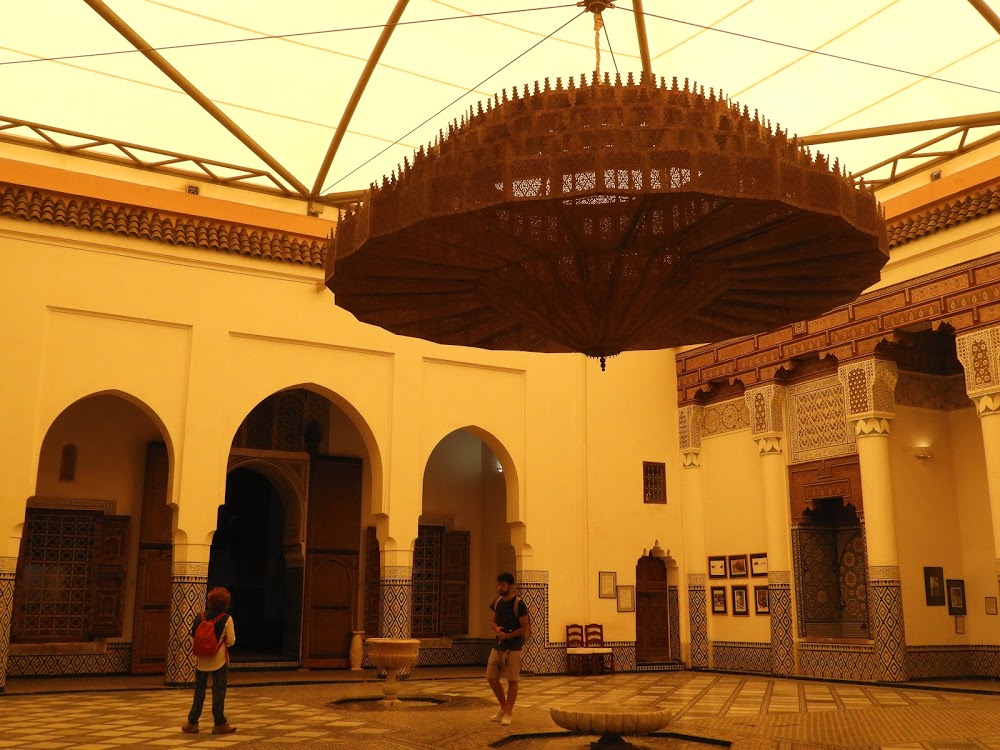
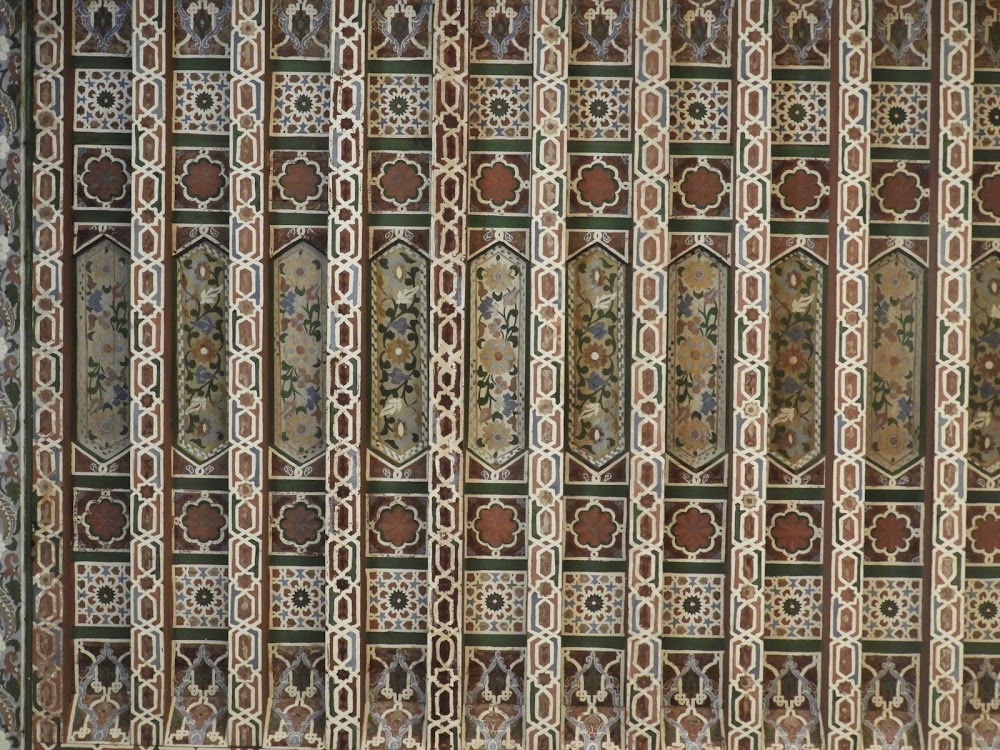
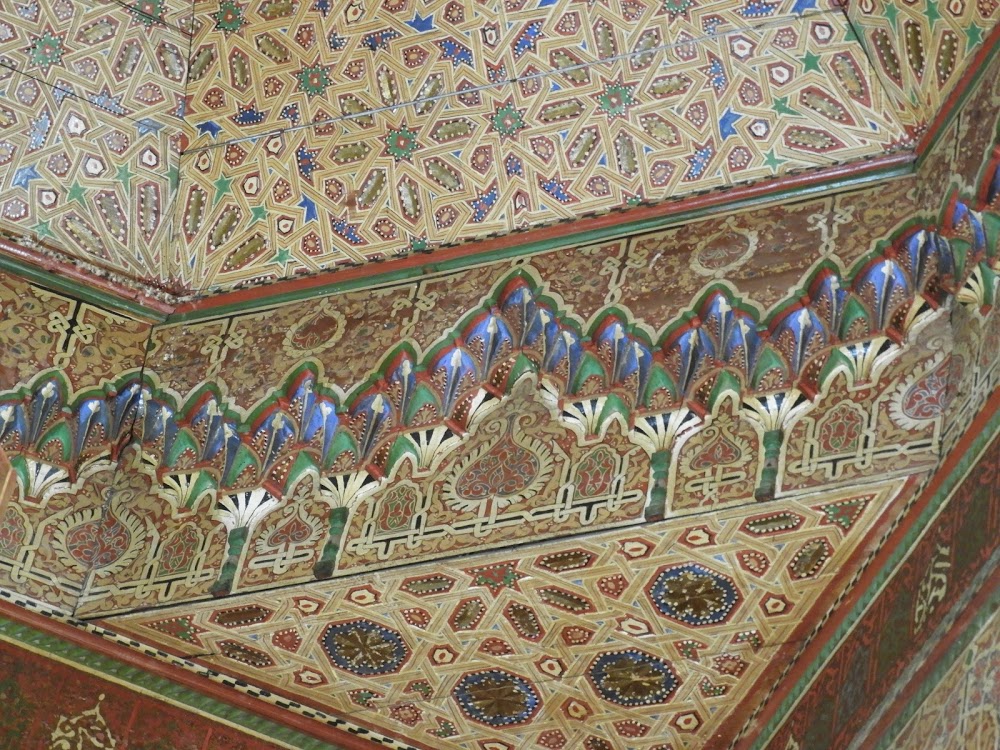
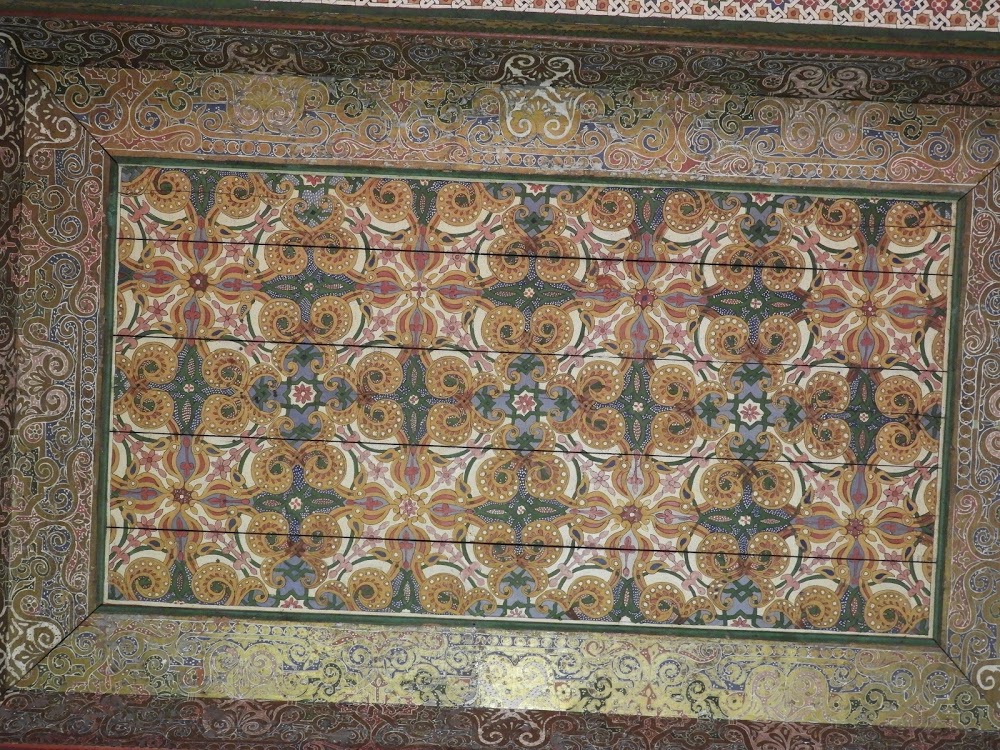
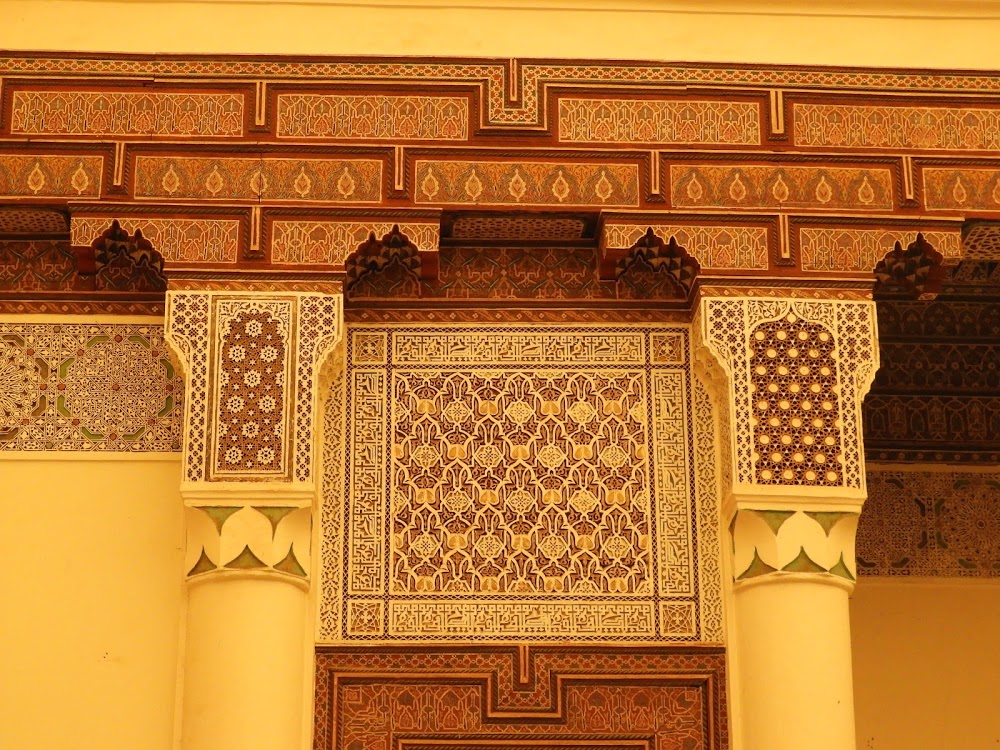
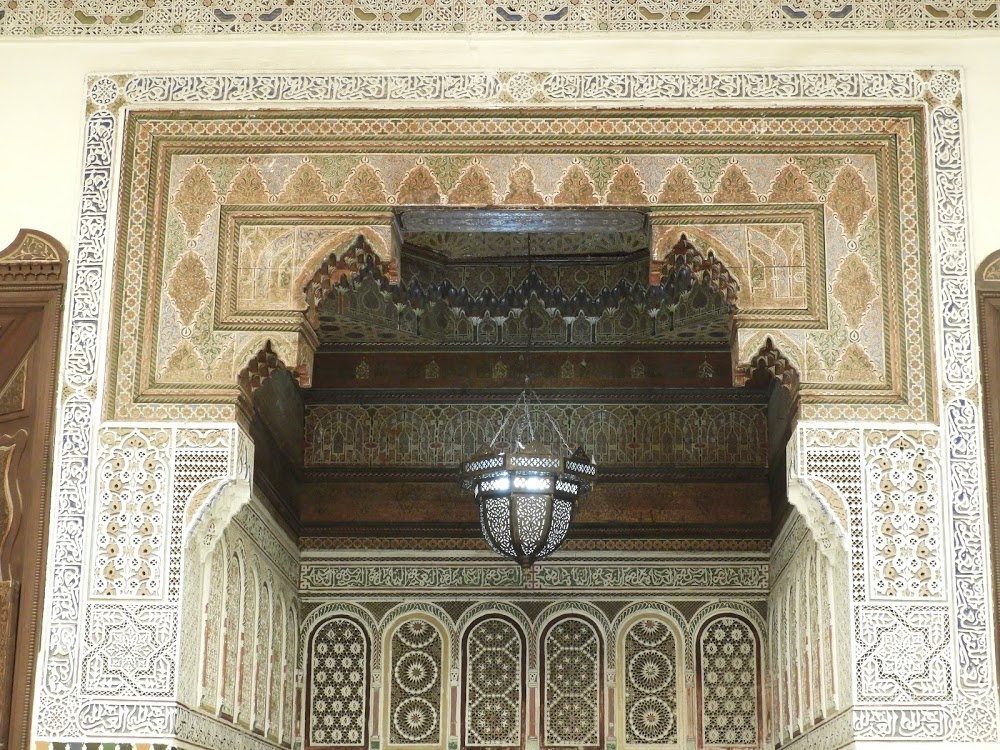
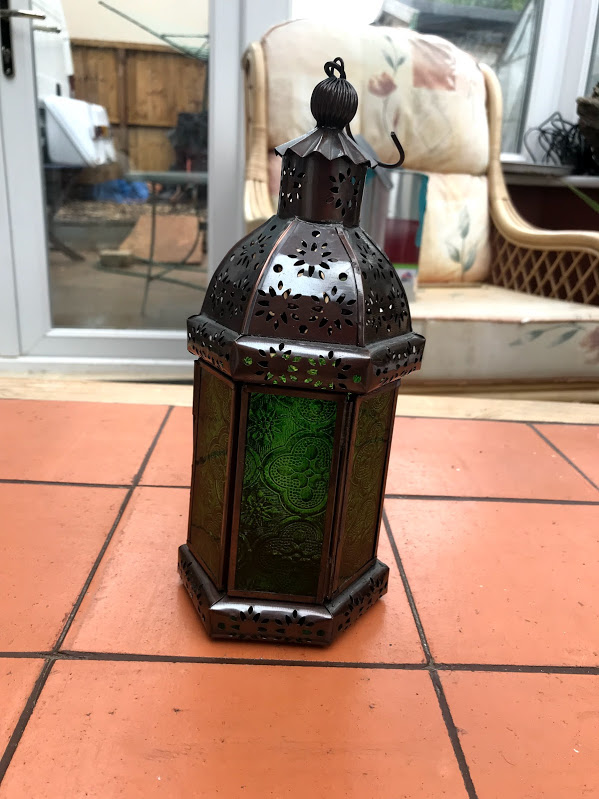
During our time in Marrakech we visited the Museum of Marrakech. Here are some of the pictures of the tiles and lamp in the main courtyard. Whilst we were there, they had a Berber Calligraphy exhibition in the area that was the Hammam.
Cuisine
I was inspired before we went by the BBC Good Food article on the top 10 Moroccan dishes to try. Whilst we did indeed have Tagine, couscous and mint tea, we did not experience much in the way of fish. Rob does not eat meat but he does eat fish. Therefore some of our experiences meant that he did not get a lot of protein.
On our way out, at Amsterdam airport we tried the Amsterdam Bread Company. We had a very nice Rye bread with smoked salmon. Unfortunately I did not go much on the cream-cheese mayo effect that came with it. Apart from that there was quite a choice of yummy things on offer.
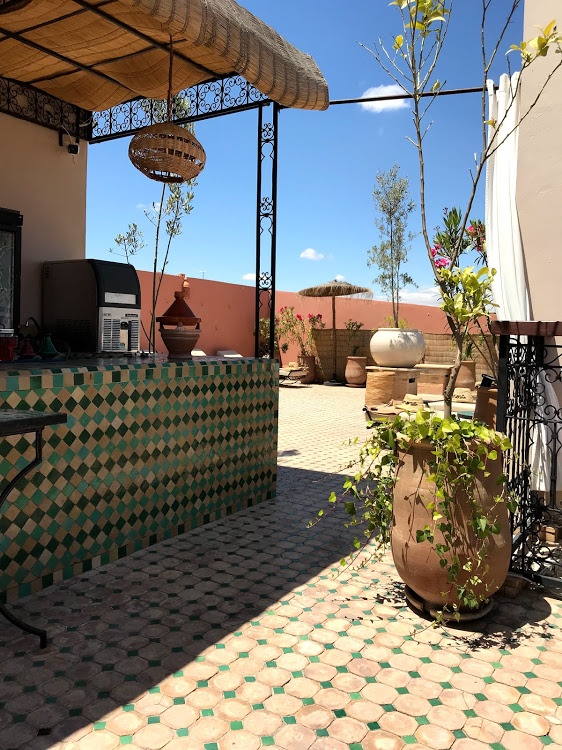
You may remember we started our trip staying at the Della Rosa hotel in Marrakech. The dinners we had as part of the Spainbirds tour package were the buffet dinners. At this hotel there was plenty to choose from: grated carrot, other types of salads, tagines both meat and fish, couscous and types of bread. When we returned to the hotel at the end of the tour, one of the nights we had a french cuisine buffet. We also enjoyed sandwiches on the roof terrace.
As we travelled about our lunches were predominantly taken in what appeared to be service-station cafes or town cafes. Predominantly we had a choice of the following:
- Moroccan Skewers of Chicken — Brochettes. Usually served with chips.
- Chicken with Lemon and Olive tagine. Usually served with couscous.
- Vegetable tagine. Usually served with couscous.
- Koftas — a minced beef patty, akin to a beefburger but quite thin. Sometimes in a tagine.
- Berber Omlette. In some places a pesto-like dish with eggs, in others just a plain omlette.
Usually washed down with a lemon drink. There was one notable exception. As we approached Merzouga we were booked into a remarkable cafe. It was heaving. Luckily our table was reserved inside (it was somewhat hot outside). We had a three course lunch for 100 dirham which included the drink. Best value all week. I had Berber salad to start, the chicken in lemon tagine, and a mille feuille to round it off. Rob was able to have lentil soup, rice, chips with mixed veg followed up with oranges and cinnamon.
Breakfast was a mixed experience throughout the trip. The Della Rosa had a wide variety on offer: yoghurt, sultanas, apricots, dates, continental style breakfast items of croissant, pain-au-chocolat, cheese and sliced meats, all with some french bread.
In all the other hotels the breakfast was somewhat carbohydrate heavy with plenty of sweet sugary bread items, mostly pancakes. The only fruit was often oranges and maybe some bananas if you were lucky. Mostly you could have some form of eggs — hard boiled or as an omlette. The orange juice was very good.
We had one issue at the Dar Chamaa hotel. Spainbirds had communicated ahead that we would have a specific dietary requirement for the set dinner that evening. Whilst we were sat drinking our mint tea, a waiter came up with John the guide and confirmed that Rob did not eat meat, and that the set dinner would be adjusted for him. However, during the dinner, the waiter asked in Spanish about anybody who was vegetarian. Now — this was in Spanish. I don't speak Spanish. We assumed having arranged everything earlier, that we did not need to worry. When the waiter placed the turkey in front of Rob, and we pointed out he was vegetarian, the waiter got a bit tetchy that we had not responded to his question. So Rob ended up with spaghetti and tomato sauce instead.
The Karam Palace bar had a list of what was supposedly on offer. I had imagined that the bar tender would understand what was on his list, but when we asked for half a bottle of white wine, he pulled out a full bottle of red. We tried again — half a bottle of white, asking in French this time. He pulled out half a bottle of red. Again, we tried... Eventually he pulls out a full bottle of white, tells us there are no half bottles but he could sell it to us by the glass. So we go for two glasses of white — which were then not measured out.
Culture
Hammam
Before I went I did a bit of research on the type of spa/bathing facilities I was likely to encounter. MarocMama seemed a good source, combined with a number of others.
What I discovered was that the Hammam was a bathing practice that involved sitting in a steamy room, rubbing yourself over with an exfoliating soap, or rather having somebody else rub you over with it, steaming for a bit, washing it all off, then moisturising yourself. Good clean fun. I also discovered that there are neighbourhood Hammams where it appears that women go in the afternoon with the men going in the morning.
At the hotel Della Rosa, I could have a private Hammam. And I did. It was fabulous.
Toilets
There were some mixed experiences as we travelled around. Mostly I found the type of toilet I was expecting as a UK individual — a flush toilet often without a seat. Only on one occasion was there just a squat type of toilet. The Lonely Planet has some good advice here. They quite rightly point out that flush toilets are "a luxury in a country struggling with water shortages".
In most places you had to pay an attendant at the toilet to go in. It was usually 2 Dirham.
Marrakesh
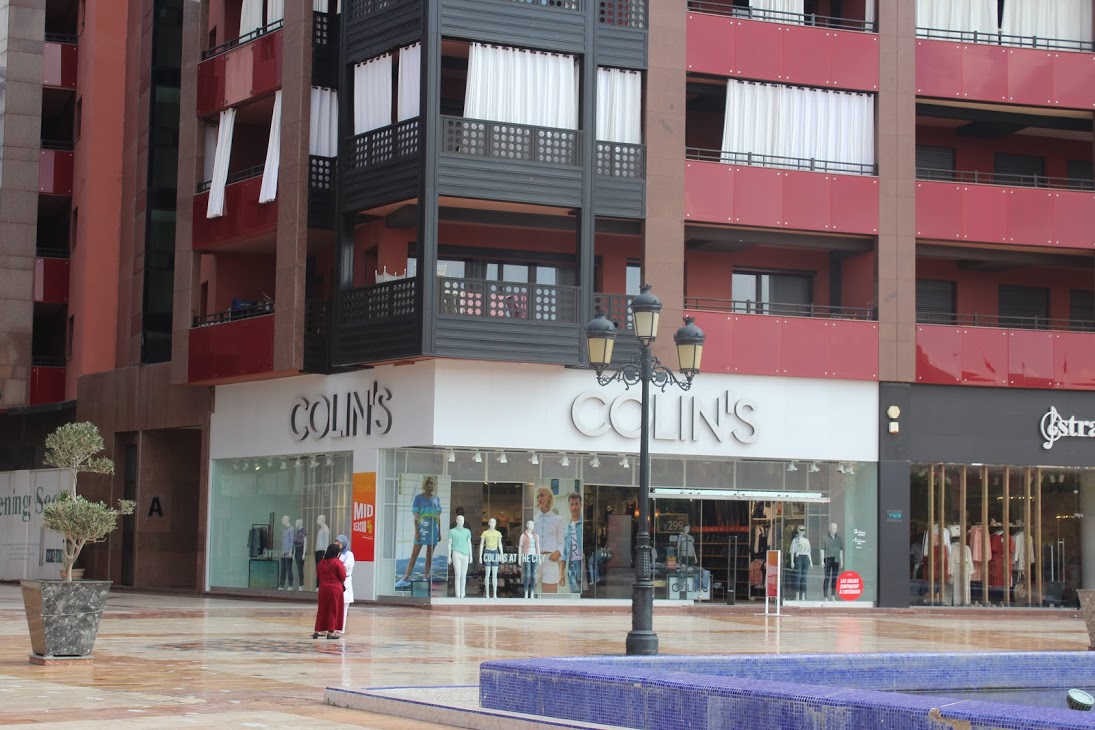
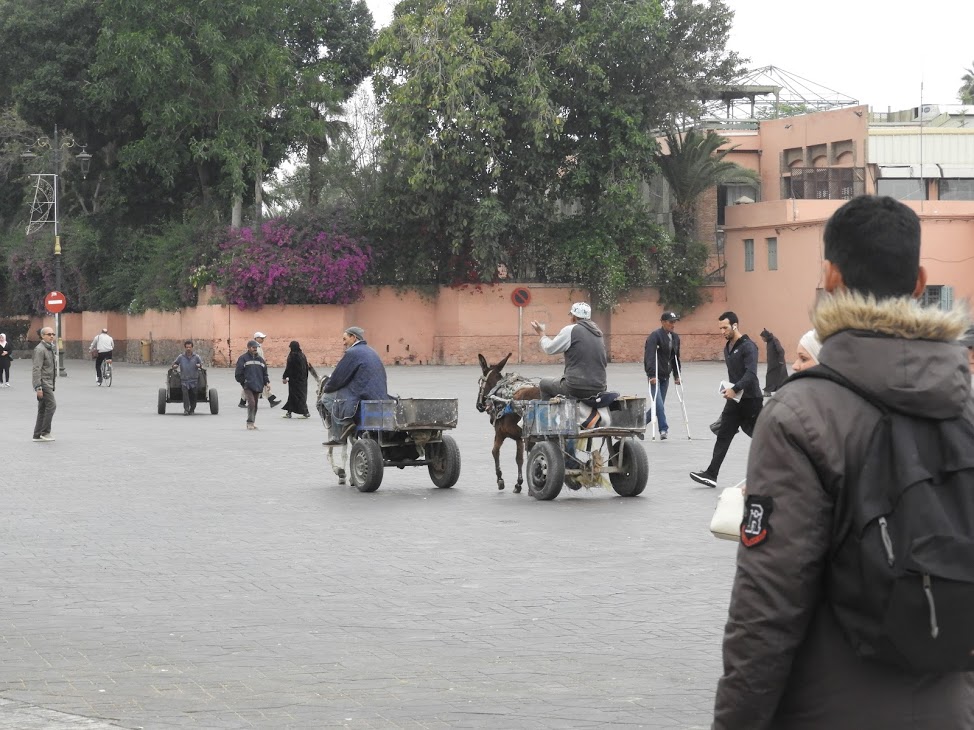
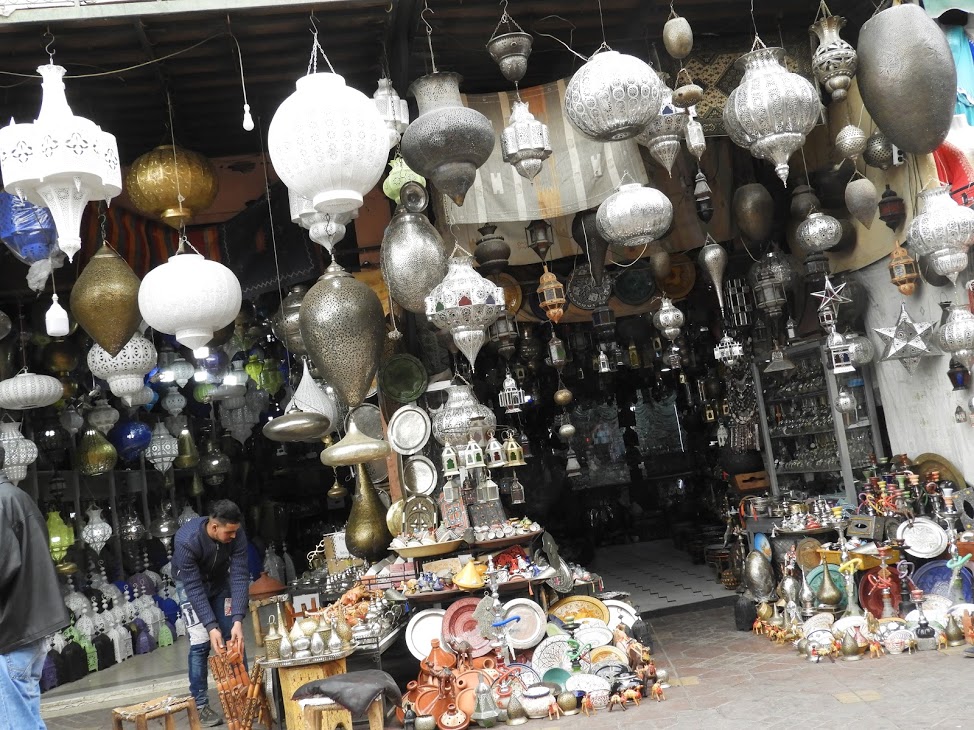
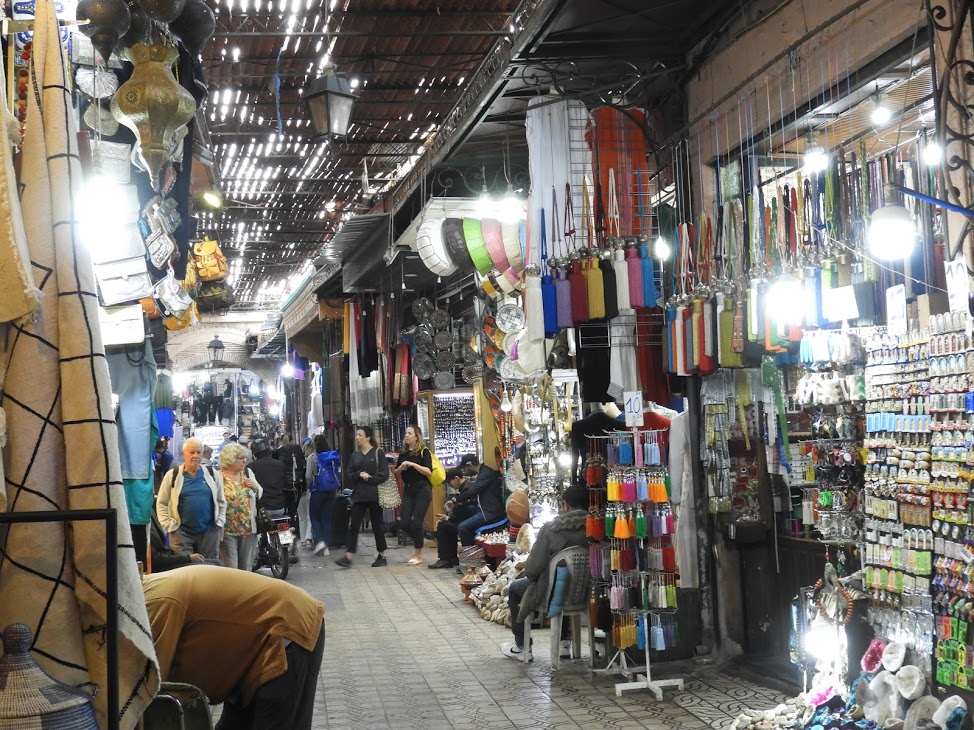
We had a couple of days extra at the end of our trip to explore the city of Marrakech. We mainly stayed around the Medina area which was close to our hotel. I enjoyed the walk around the Cyber Park — which despite its name was just a nice park dating from the 18th Century.
On our last day here we spent the day walking around the Medina, getting lost in the Souks (as the guide book suggested), visiting the Museum of Marrakech and visiting the Bahia Palace. We also visited the Ensemble d'Artisans — the Trip Advisor reviews stated that this was better than the Souks, you were less likely to be hassled, and they were right. There were plenty of cooperatives where you could buy from and you were not bullied into buying.
I did not enjoy the Souks. Think of small passage ways with crowded market stalls, with shopkeepers asking you at each step of the way to come and view their goods, smell the wood, taste the fruit, feel the cloth! It was a bit too much of a sensory overload for me. Add to that you have motorbikes and mopeds whizzing up and down each side. The locals would shout out to us that it was obvious we were English as we were not keeping to the right to avoid the traffic.
"Very helpful" people kept trying to direct us to the leather market which was only open on a Monday — but we didn't want to go to the market! We did experience some of the hustling and bullying in the main square from one of the snake "charmers". He invited us to take a photo of the snakes — and we made the mistake of not agreeing the price up front. He then demanded more and more money from us before I got very terse with him and we walked away. Trouble is it gave a bad impression for us. Again it reinforced the benefit for being with a good guide.